

From Dispatch Room


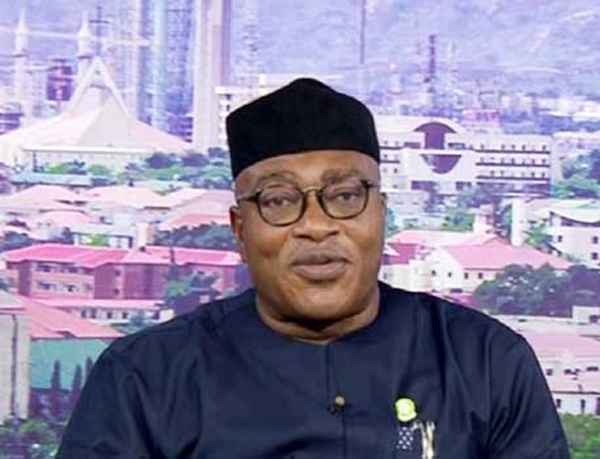
Former Director of the Department of State Services (DSS), Mike Ejiofor, has renewed his call for the establishment of state police, describing it as one of the most practical solutions to Nigeria’s growing security challenges.
Speaking during an interview on Frontline, a current affairs programme on Eagle 102.5 FM, Ilese-Ijebu, Ogun State, Ejiofor expressed concern over the delay in implementing the policy despite what he said is broad support from key stakeholders across the country.
According to him, the creation of state police would significantly improve coordination within Nigeria’s security architecture and strengthen local intelligence gathering.

“Well, for me, coordination will be more effective if we have the state police created. I have been a very strong advocate of the creation of state police. And I don’t know why the federal government has been dragging on this establishment of the state police,” he said.





Ejiofor noted that President Bola Tinubu, members of the National Assembly and state governors have all publicly expressed support for the idea, making its continued delay difficult to explain.
He questioned why critical security reforms appear to move slowly while other government matters receive speedy legislative attention.


“So what has been delaying it? There are some issues that are irrelevant. When they want to take a loan, within 48 hours or even two hours, it is passed,” he said.
The former DSS director argued that state police would be more effective because personnel would be recruited locally and would possess a better understanding of the terrain, language, culture and security dynamics of their communities.
He pointed out that many states already operate informal security structures such as vigilante groups and task forces, suggesting that formalising such arrangements could significantly enhance public safety.
“There is no state now without a form of state police in the name of task force or vigilante. So just formalize it, get new recruitment, get leadership and see that this gets into operation,” he said.
Ejiofor observed that one major limitation of existing vigilante groups is their lack of access to sophisticated weapons and equipment used by criminal gangs and terrorist groups. He argued that better-equipped state security structures would be more capable of confronting armed criminals.
Despite his support for state police, Ejiofor stressed that safeguards must be established to prevent political abuse and ensure professionalism.
He recommended a clearly defined operational framework in which state police would focus primarily on intelligence gathering, crime prevention and collaboration with federal security agencies, while crimes such as terrorism, insurgency and sabotage remain under federal jurisdiction.
“There must be a limit to their action. They shouldn’t go into state crimes like terrorism, sabotage and insurgency. But if they collect intelligence, their goal is to collect intelligence and pass it on through collaborative efforts with the federal police,” he explained.
Ejiofor also highlighted trust deficits between some communities and federal security agencies, arguing that local policing structures could improve cooperation and information sharing.
He maintained that states should be allowed to deploy technology, surveillance systems and other modern security tools necessary to tackle emerging threats effectively.
“There shouldn’t be any limitation if it must be effective. They can acquire technology on their own, they can acquire sophisticated weapons, cameras and everything. We are talking about security in a state,” he said.
The former DSS director further emphasized the need for transparent and merit-based recruitment processes, warning against the politicisation of any future state police system.
“Like I said, the process of recruitment must also be carefully undertaken so that you don’t recruit politicians and thereby compound our problems,” he warned.
Ejiofor concluded that properly implemented state police systems across Nigeria would strengthen local intelligence networks, reduce criminal activities and make it more difficult for criminal groups to operate freely across state boundaries.
— Newspot Nigeria