Major Patrick Chukwuma “Kaduna” Nzeogwu, an Igbo officer born in Kaduna in 1937 and commissioned at the Royal Military Academy Sandhurst in 1959, led the northern contingent of Nigeria’s first military coup on January 15, 1966. He personally oversaw the attack on Sir Ahmadu Bello’s residence in Kaduna, resulting in the deaths of Bello, the Sardauna of Sokoto and Premier of the Northern Region, his wife Hafsatu, and several aides. The coup also claimed the lives of other prominent leaders, including Prime Minister Abubakar Tafawa Balewa and Western Region Premier Samuel Ladoke Akintola.
While the stated objective was to eliminate corruption and regional favoritism, the operation was widely perceived as ethnically biased, as northern and western leaders were disproportionately targeted, while most eastern leaders were spared. The coup ultimately failed in the south but succeeded in the north, paving the way for Major General Johnson Aguiyi-Ironsi’s takeover, subsequent counter-coups, anti-Igbo pogroms in northern Nigeria, and the Nigerian Civil War (1967–1970).
Contrary to popular belief, there is no historical evidence that Bello personally sponsored Nzeogwu’s education or attended his Sandhurst graduation. This claim, widely circulated on social media, is a misconception. Nzeogwu joined the Nigerian Army in 1957 after completing his studies at St. John’s College, Kaduna, and underwent officer training at Sandhurst between 1958 and 1959. He came from a middle-class family in the Midwest Region (now Delta State) and earned his commission through standard military channels. Biographical records, academic histories, and declassified documents indicate that Bello, focused on northern political and regional development at the time, had no mentorship or godfather role in Nzeogwu’s military career.
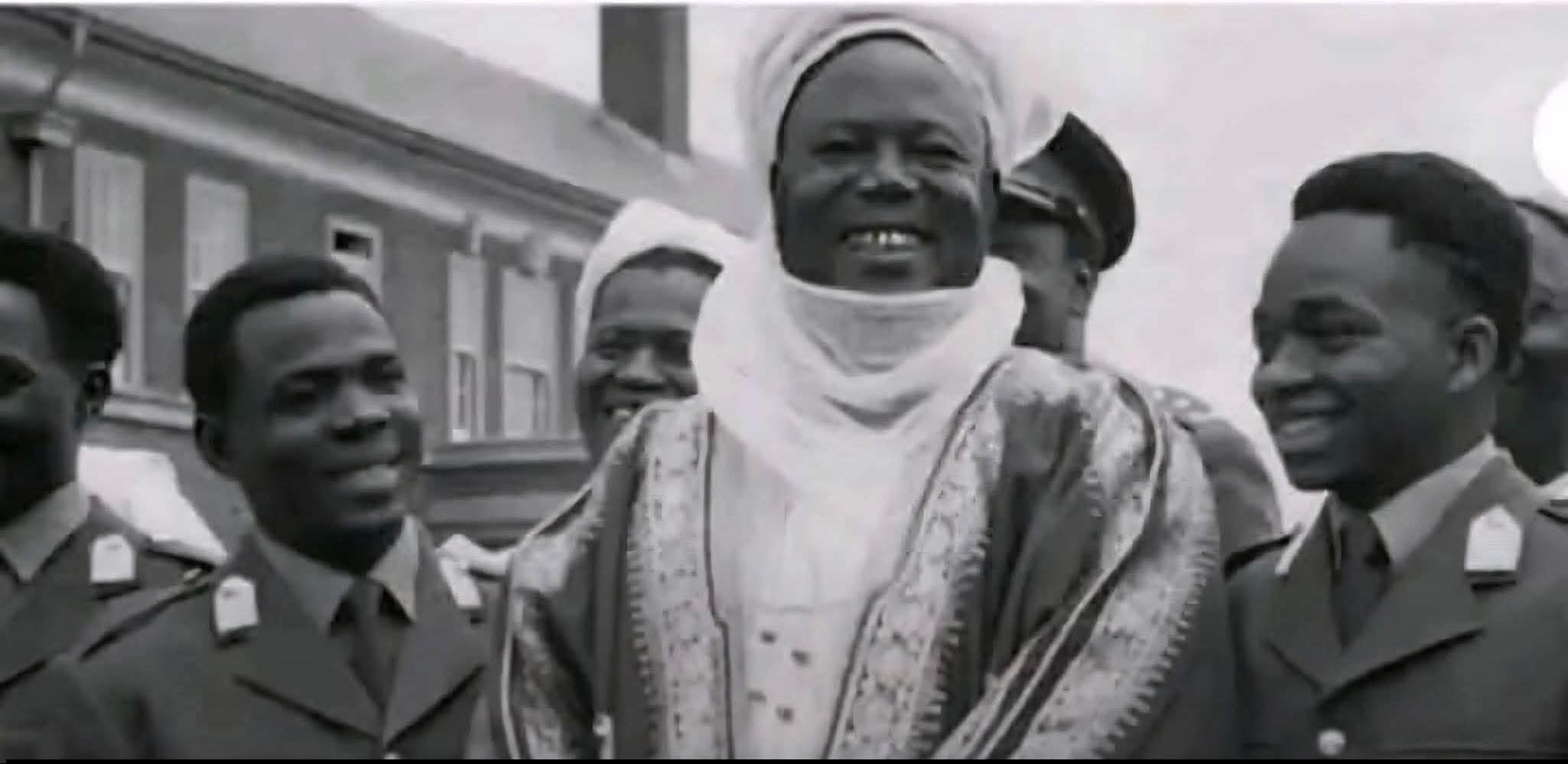
The photograph often cited to support this myth, showing Bello in the UK with Nigerian cadets at Sandhurst and the Mons Officer Cadet School is genuine but does not depict Nzeogwu’s graduation. By 1962, Nzeogwu had already been promoted to captain and was serving in Nigeria. The cadets in the image have been identified as Pius Obi and Ephraim Opara, not Nzeogwu. Misattributions like this have fueled narratives framing the coup as a “betrayal” of a personal patron, whereas historical analysis points to Nzeogwu’s frustration with systemic corruption, northern dominance in national politics, and controversial statements by Bello during a 1964 interview as primary motivating factors.

This widely circulated image that has been linked to Nzeogwu’s Sandhurst graduation aligns with this misperception but should be understood in its proper context, it depicts Bello with other Nigerian cadets and not Nzeogwu himself.




©️ Adebamiwa Olugbenga Michael is a Lagos-based political economy and policy intelligence analyst and publisher of The Insight Lens Project. He leverages open-source data to deliver insights on governance, public finance, socio-economic risks, and strategic investment opportunities across Nigeria and West Africa.