
By Newspot Nigeria News Desk
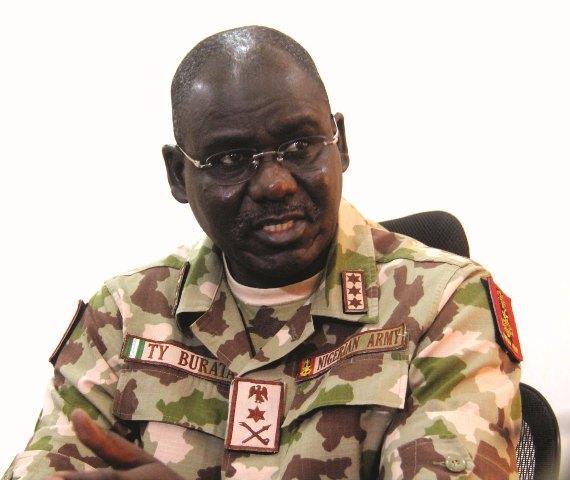
Former Chief of Army Staff, Lieutenant General Tukur Buratai (Rtd.), has questioned the inability of Nigerian security agencies to trace bandits and kidnappers who openly share videos online, arguing that authorities possess the technology and capability to locate such criminals.
Buratai made the remarks during an interview on TVC while reacting to growing public concerns over the activities of armed groups who frequently publicize their operations through social media videos and online communications.
His comments come amid nationwide outrage over the abduction of pupils and teachers from three schools in Oriire Local Government Area of Oyo State. The incident, which has drawn condemnation from across the country, took a tragic turn after reports emerged that one of the abducted teachers had been killed by the kidnappers.

Speaking on the issue, Buratai expressed doubt that the challenge facing security agencies was a lack of technical capacity.





“I don’t think they failed to locate. If they can locate ordinary citizens or social media influencers, I don’t believe they can locate these bandits that flaunt their loot or whatever activities they do,” Buratai said.
While stopping short of accusing security agencies of negligence, the former army chief suggested that there may be operational considerations influencing how authorities respond to such threats.


“I would not like to say it is a capacity-building challenge, but I think they may have their reasons,” he added.
Buratai emphasized that Nigeria’s security architecture requires continuous strengthening through increased recruitment, improved training, and enhanced welfare for personnel. According to him, the fight against terrorism, banditry, and kidnapping cannot be won without expanding the manpower available to the country’s security institutions.
“There is a need for more operatives. We need more troops to be recruited, more operatives and more policemen,” he said.
He also stressed the importance of regular training and retraining programs to ensure security personnel remain prepared to tackle evolving threats across the country.
On welfare, Buratai argued that decent accommodation and better living conditions are essential for maintaining morale and operational effectiveness among security personnel.
Addressing questions about hostage rescue operations, Buratai affirmed that the Nigerian military possesses specialized units capable of carrying out complex rescue missions.
According to him, formations such as the Nigerian Navy’s Special Boat Service and the Nigerian Army’s Special Forces are specifically trained for hostage rescue operations and other high-risk assignments.
However, he noted that rescue missions often involve difficult operational decisions, particularly where there is a risk of collateral damage or threats to the safety of hostages.
“The sensitivity of that type of kidnap, the location and those involved, and the danger of collateral damage may play a very important part,” he explained.
Buratai further called for the expansion of the National Counter Terrorism Centre under the Office of the National Security Adviser. He proposed the establishment of state-level branches equipped with advanced technology, real-time situation rooms, and enhanced intelligence-gathering capabilities to improve coordination among security agencies.
He expressed confidence that a stronger and more technologically advanced counterterrorism framework would significantly improve Nigeria’s ability to combat terrorism, banditry, kidnapping, and other forms of violent crime.
His remarks have added to the ongoing national debate over security, intelligence gathering, and the effectiveness of efforts to rescue abducted victims and dismantle criminal networks operating across various parts of the country.
— Newspot Nigeria