
From Dispatch Room
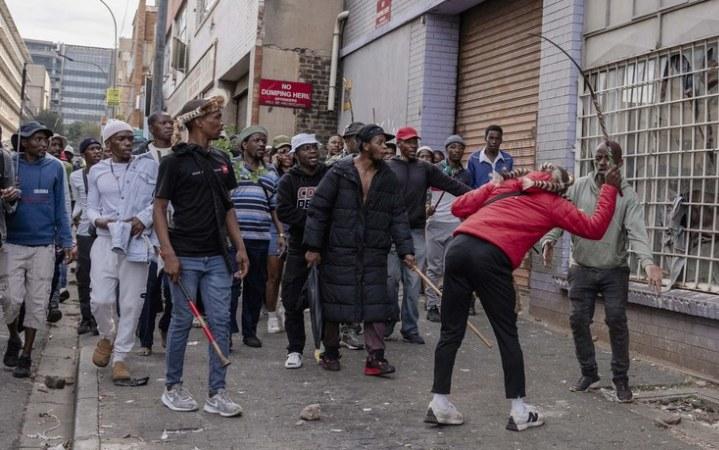
Human Rights Watch (HRW) has raised concerns over a fresh wave of xenophobic violence in South Africa, accusing vigilante groups of targeting African and Asian foreign nationals amid growing anti-immigrant tensions across parts of the country.


In a statement released on Wednesday, the rights organisation said violent attacks linked to anti-immigration protests in Pretoria, Johannesburg and Durban had resulted in assaults, intimidation and reported deaths, while authorities appeared to have responded inadequately.
According to HRW, the attacks were connected to a citizen-led movement known as March and March, which has been advocating stricter immigration enforcement and organising demonstrations against undocumented migrants.
“South Africa’s constitution and international human rights law protects the right to protest, but that does not include permission to commit violence,” said Nomathamsanqa Masiko-Mpaka, South Africa researcher at Human Rights Watch.

“The authorities should not allow vigilante groups to violently target foreign nationals and instead need to protect them and bring those who harm them to justice,” she added.





Human Rights Watch noted that South Africa has struggled with recurring xenophobic violence since 2008, when at least 62 people were killed during widespread anti-immigrant attacks.
The organisation said subsequent waves of violence occurred in 2015, 2019 and between 2021 and 2022, with groups such as Operation Dudula emerging during periods of economic hardship and rising unemployment.


According to HRW, worsening socioeconomic conditions and unemployment rates above 43 percent have contributed to renewed anti-immigrant activism and the emergence of newer vigilante groups.
The report stated that some groups have accused migrants of contributing to unemployment, crime and poor service delivery despite studies disputing those claims.
Human Rights Watch also said some anti-immigrant groups had attempted to block foreign nationals from accessing healthcare and education services.
A South Gauteng High Court ruling in November 2025 reportedly barred Operation Dudula supporters from preventing migrants from accessing healthcare facilities.
The report included testimonies from migrants who said they were attacked during recent demonstrations.
A Cameroonian shop owner in Durban alleged that individuals believed to be affiliated with March and March attacked him and his colleagues during protests targeting foreign-owned businesses on April 17, 2026.
“They whipped me and my three colleagues who are not South African with golf sticks and sjamboks, and sprayed pepper spray on us,” he said.
The victim said the attackers also used stun guns and chased them outside the shop while no security personnel intervened.
Human Rights Watch said it had not independently verified all reports of deaths linked to the protests but cited a separate incident in which a Malawian national allegedly died after police officers beat and tortured him during a documentation check.
The United Nations Secretary-General, António Guterres, had earlier expressed concern over the reported xenophobic attacks and harassment in South Africa.
The African Commission on Human and Peoples’ Rights also called on South African authorities to investigate the violence and ensure accountability for those responsible.
Human Rights Watch reminded South Africa of its obligations under international human rights treaties, including the International Covenant on Civil and Political Rights and the African Charter on Human and Peoples’ Rights.
The organisation further urged the South African government to strengthen protection for foreign nationals and intensify efforts to tackle anti-immigrant violence.
“Vigilante groups need to be held fully accountable, including through effective criminal prosecutions,” Masiko-Mpaka said.
— Newspot Nigeria