

By Newspot Nigeria Global News
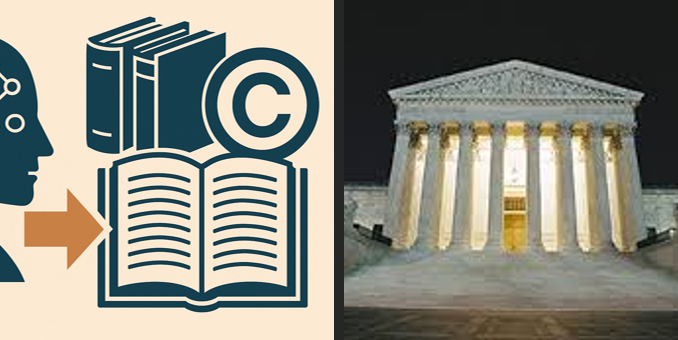
📚🤖 Artificial Intelligence developers can now legally use copyrighted books to train their models without authors’ permission, a U.S. federal judge ruled on Monday in a landmark case that’s likely to influence the future of AI development and copyright law worldwide.
The ruling, delivered by Judge William Alsup of the U.S. District Court for the Northern District of California, sided with AI firm Anthropic, the maker of the Claude language model series, in a lawsuit brought by authors Andrea Bartz, Charles Graeber, and Kirk Wallace Johnson. The authors accused Anthropic of illegally copying millions of books — including pirated versions — to develop its large language models (LLMs).
In his decision, Judge Alsup declared that training AI systems using copyrighted works falls under the legal doctrine of “fair use,” emphasizing that the use was “exceedingly transformative” and primarily aimed at creating something new — not replicating or supplanting the original work.

“The technology at issue was among the most transformative many of us will see in our lifetimes,” Alsup wrote. He concluded that “every factor but the nature of the copyrighted work favors this result.”
📘 Fair Use and Piracy — A Fine Line




While the court affirmed that using legitimately obtained copyrighted materials to train AI qualifies as fair use, Alsup also drew a firm line against piracy. He warned that downloading pirated books to train AI models remains illegal, and Anthropic will still stand trial for the alleged use of such pirated material.
“That Anthropic later bought a copy of a book it earlier stole off the internet will not absolve it of liability for the theft,” the judge stated, suggesting that statutory damages could still apply.
🎤 Responding to the ruling, Anthropic issued a statement saying, “We are pleased that the Court recognized that using works to train LLMs was transformative — spectacularly so.” The company emphasized that its goal was not to replace books, but to create something distinct and innovative.


⚖️ This decision marks the first major federal court ruling affirming fair use for AI training, setting a precedent for dozens of similar lawsuits pending in the U.S., including those filed by media firms, music labels, and authors concerned about their work being used without consent in machine learning systems.
🚨 However, this ruling does not give AI companies blanket immunity. The court’s distinction between legally acquired works and pirated copies means future lawsuits could still succeed if plaintiffs can prove theft or market harm.
As AI continues to evolve and challenge existing legal boundaries, this case is expected to shape not only U.S. copyright norms but also global conversations around the ethical use of content in artificial intelligence systems.
📰 Stay tuned for more updates on tech, policy, and justice in the AI age — only on Newspot Nigeria.