By Newspot Nigeria Editorial Board
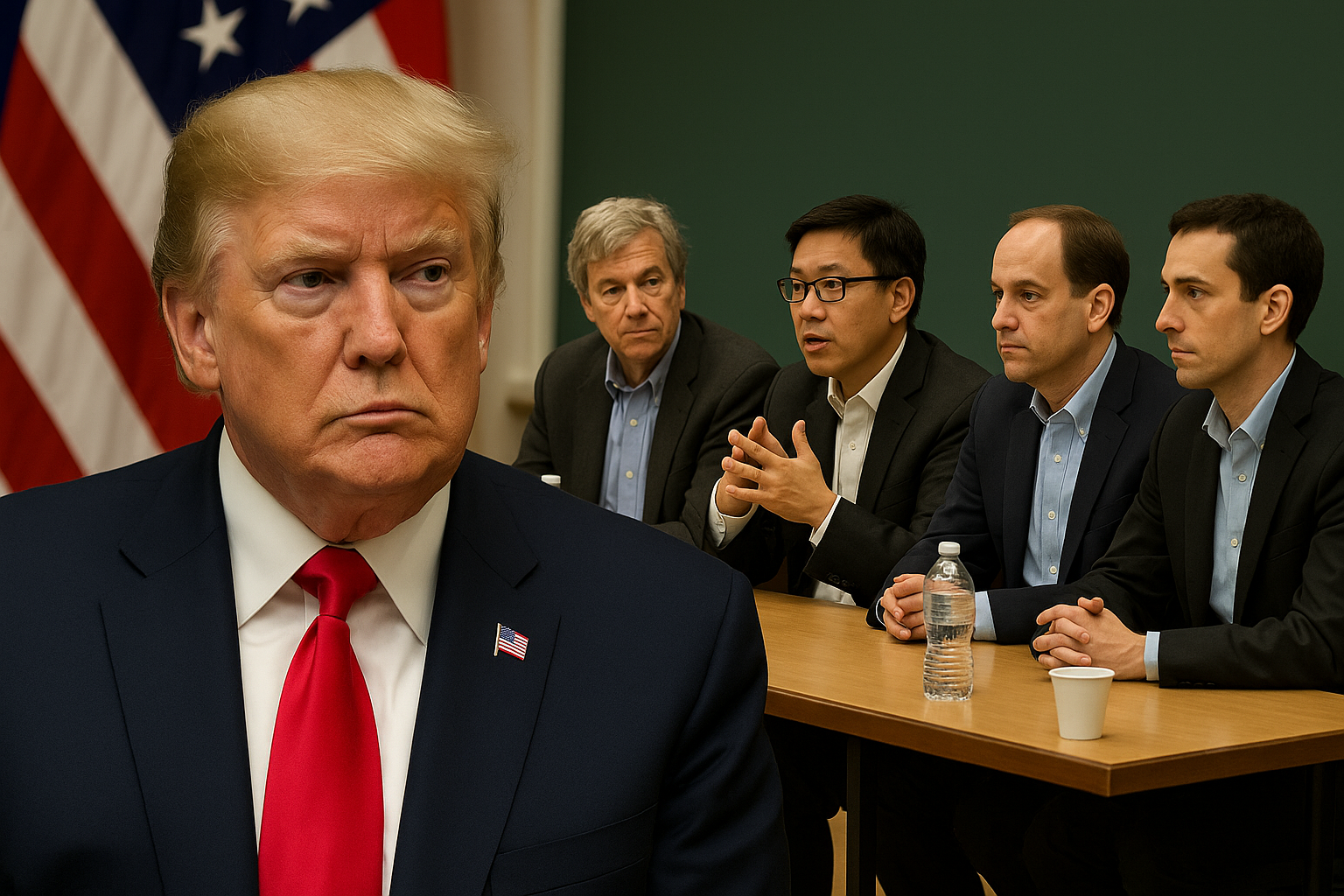
Harvard Law School professors have raised red flags over the seismic changes in global economic policy ushered in by President Donald Trump’s second term—specifically his aggressive tariff strategy and the temporary suspension of the Foreign Corrupt Practices Act (FCPA). During a high-profile panel discussion marking the final session of the “First 100 Days of the Second Trump Presidency” series, legal and economic scholars warned that the U.S. could be destabilizing the global economic order it once helped to build.
Professor Mark Wu, a leading voice on international trade law, declared that Trump’s tariff regime is “probably the largest shock we’ve seen since the 1970s.” The administration’s imposition of broad-based tariffs—including a 10% baseline on imports and targeted duties on steel, autos, and even fentanyl-related goods—has ignited economic uncertainty. Wu noted that while these tariffs may encourage some local production, the overall effect includes rising input costs, reduced demand, and sluggish investment decisions across global markets.
Adding further turbulence is Trump’s February 10 executive order to pause enforcement of the FCPA for 180 days—a law designed to combat international business corruption. This move, justified by the administration on national security grounds, marks a sharp departure from decades of bipartisan U.S. leadership in global anti-corruption efforts.

David Sorkin, Visiting Professor of Practice at Harvard, disputed the rationale behind the pause. He argued that rather than being a burden, the FCPA has become an indicator of sound business practices. “A company that might pay a bribe is unlikely to treat its workers well or respect environmental laws,” Sorkin remarked. “It’s a canary in the coal mine.”





Professor Matthew Stephenson warned of deeper institutional erosion. “The United States has more FCPA enforcement actions than all other OECD countries combined—and it’s not close,” he said. According to Stephenson, halting enforcement not only weakens domestic oversight but also reduces pressure on other countries to maintain anti-bribery laws of their own. “It’s hard to understate how much U.S. leadership on anticorruption has mattered over the last generation.”
While previous administrations—from Obama’s cooperative accords to Biden’s tariff retention—took more measured or multilateral approaches, Trump’s strategy appears more disruptive by design. Wu speculated that the administration may be aiming to completely reshape the system, even without knowing the final destination.


With American companies caught in a complex web of trade uncertainty and weakened anti-corruption norms, global markets are reacting cautiously. According to Wu, many firms are freezing long-term investment plans, unsure whether these new policies represent temporary turbulence or the new normal.
As global institutions grapple with this evolving landscape, one thing is clear: the early days of Trump’s second term are testing the resilience of the international economic system. Whether the U.S. emerges as a stronger economic leader—or a more isolated one—remains to be seen.
Newspot Nigeria will continue monitoring and analyzing the global impact of America’s shifting trade and governance policies as part of our ongoing commitment to delivering sharp, balanced, and credible reporting.