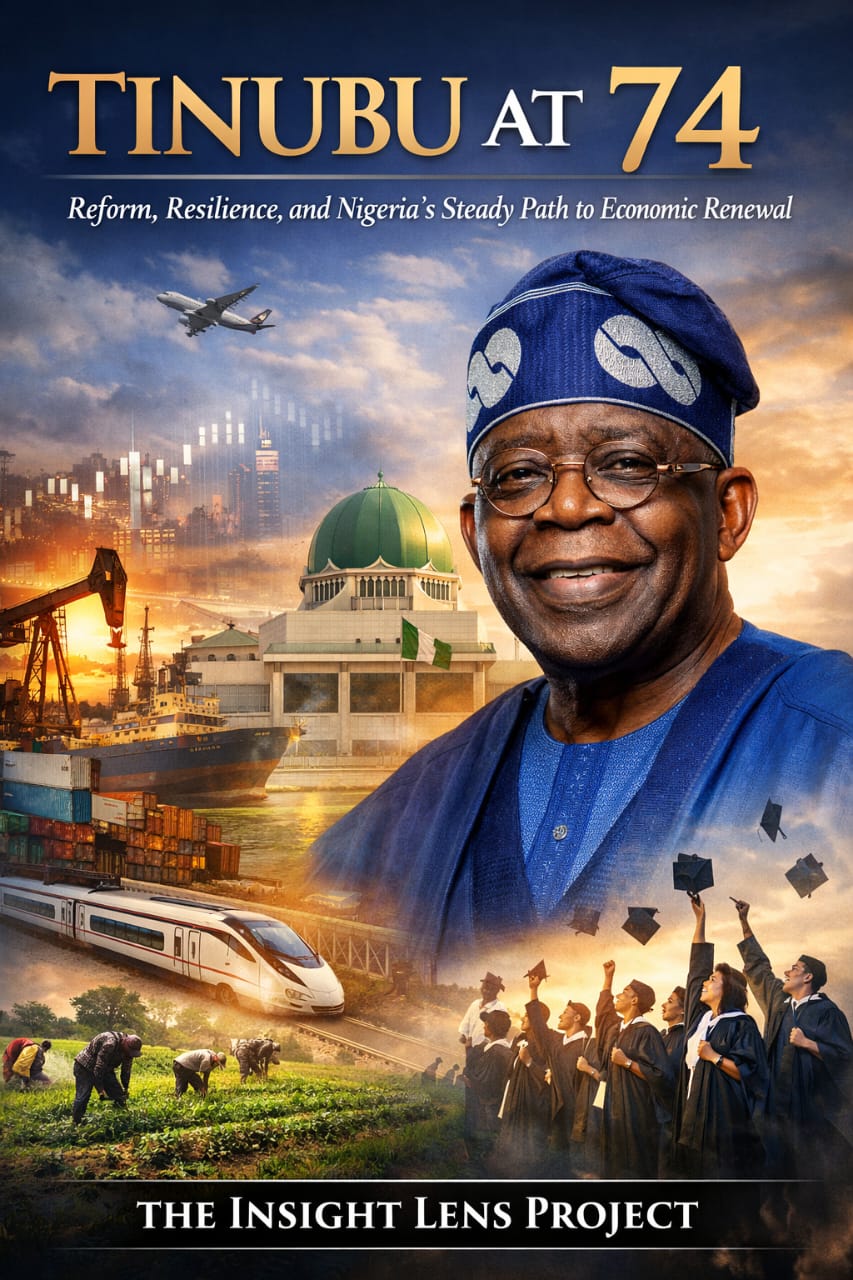
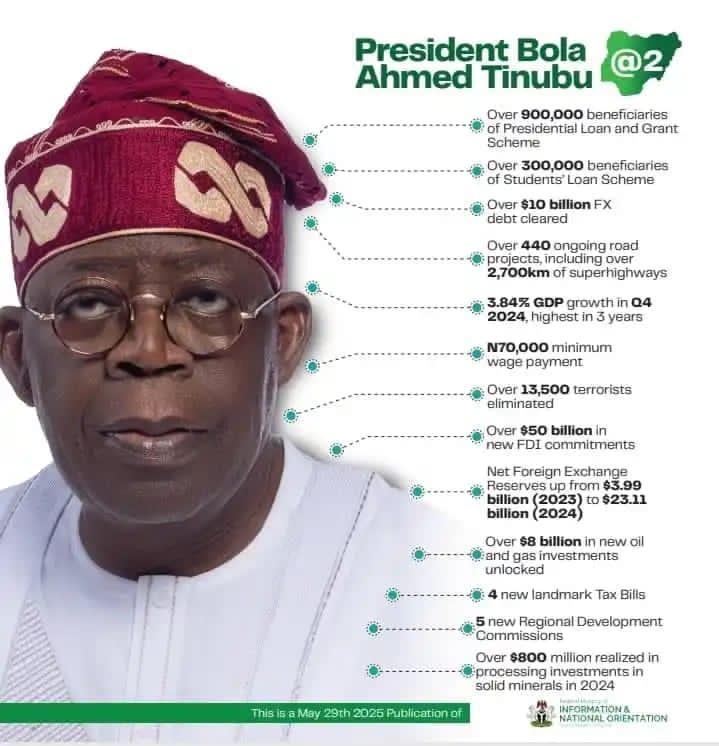
As Bola Ahmed Tinubu marks his 74th birthday, Nigeria stands at a defining moment shaped by bold leadership and far-reaching reforms. The period coincides with a significant phase in the nation’s political calendar, drawing attention to a governance approach that has prioritised structural transformation, strategic diplomacy, and institutional strengthening in pursuit of long-term national stability.
At the centre of this administration’s agenda are decisive economic reforms that have redefined Nigeria’s macroeconomic direction. The removal of petrol subsidies, the unification of foreign exchange windows, and ongoing fiscal and tax restructuring have addressed distortions that lingered for decades. These policies, though initially demanding, have been widely recognised by policy experts as necessary steps toward restoring fiscal discipline, improving transparency, and unlocking sustainable investment flows.
Significantly, early results are beginning to emerge. Inflationary pressures, which surged in the immediate aftermath of reforms, have shown signs of moderation from the peaks recorded in 2024, according to data from the National Bureau of Statistics. At the same time, government revenues have strengthened, driven by improved non-oil collections and exchange rate adjustments that have significantly enhanced public earnings in naira terms.
Nigeria’s external economic outlook has also improved under this reform-driven framework. Greater transparency in foreign exchange management has restored a measure of confidence among investors, while activity in the capital markets reflects renewed optimism. Notably, Nigeria’s removal from heightened financial compliance monitoring in 2025 marked a major milestone, signalling strengthened regulatory systems and boosting the country’s credibility within the global financial community.

On the international stage, the administration has pursued an energetic diplomatic strategy anchored on economic outcomes. Engagements with key global partners have translated into tangible agreements across infrastructure, energy, agriculture, education, and security. These partnerships ranging from export credit financing to private-sector investments underscore a clear commitment to leveraging diplomacy as a tool for national development and economic expansion.





Domestically, the government has introduced impactful social and institutional interventions. The Nigerian Education Loan Fund (NELFUND) is expanding access to higher education, while investments in healthcare infrastructure and agricultural systems are aimed at improving quality of life and stabilising food supply. These initiatives reflect a broader effort to ensure that the gains of reform are gradually translated into meaningful improvements for citizens across different sectors.
While challenges remain, particularly in areas such as security, power supply, and cost-of-living pressures, the overall direction points toward steady recovery and long-term resilience. As President Tinubu celebrates his 74th birthday, his administration’s record is increasingly defined by the courage to implement difficult but necessary reforms and the determination to reposition Nigeria on a path of sustainable growth and renewed global relevance.


©️ Adebamiwa Olugbenga Michael is a Lagos-based journalist and policy analyst, and publisher of The Insight Lens Project, offering principled, data-driven insights on Nigeria and West Africa.