
- … Lessons from South Africa, Identity and the Quest for Renewal
The debate over how a people preserve identity while pursuing development remains one of the most enduring conversations across Africa. From colonial rule and liberation struggles to today’s concerns around migration, culture, security, and economic control, societies continue to wrestle with how to protect heritage while building inclusive and prosperous futures. In southwestern Nigeria, this conversation has increasingly taken shape in renewed calls to rebuild Yorubaland and restore the values and institutions that once made the region a centre of education, enterprise, and social progress.
South Africa’s liberation from apartheid is often referenced in this debate as a major continental milestone shaped by sacrifice and broad African solidarity. Nigeria, among other countries, played a visible role by offering scholarships and refuge to South African students and exiles during the struggle. This period is frequently cited as an example of Pan-African cooperation, where the freedom of one nation was seen as connected to the destiny of the wider continent.





Among those who benefited from this academic and political refuge were South Africans who studied at the University of Ibadan during the apartheid era. Accounts from that time describe a vibrant international student environment in which future leaders, including Thabo Mbeki, later President of South Africa passed through Nigeria’s academic system. Alongside formal education, campus life also fostered informal cultural spaces such as the well-remembered Madam Bello gathering point, often recalled as a symbol of cross-cultural exchange and youthful adaptation within a diverse student community.


For critics and political analysts, however, the post-liberation trajectory of South Africa reflects the heavy burden of transition from liberation movement to governing state. They argue that the administrations that followed Nelson Mandela inherited deep structural inequalities and a divided society, and that managing this complexity required stronger institutional capacity than was initially available.
Within this context, South Africa’s post-apartheid experience is often interpreted as a lesson in state reconstruction under pressure. It highlights that symbolic social integration alone is insufficient without strong institutions, effective governance, economic inclusion, and consistent law enforcement. The importance of immigration management, job creation, and institutional discipline is frequently emphasized as essential to reducing social strain and maintaining public trust in the state.
A further point often raised in this interpretation is that South Africa did not expel or reject foreign professionals who were demonstrably contributing to national development. Foreign doctors, engineers, bankers, lawyers, academics, and other skilled professionals who were gainfully employed and adding measurable value to the economy were not broadly told to leave. Instead, the emphasis was placed on managing migration pressures, regulating entry, and addressing those perceived to be outside lawful or productive economic structures. This distinction, between productive contributors and non-contributing or destabilizing elements is frequently cited by proponents as a key policy lesson in balancing openness with national interest.
Applied to Yorubaland and Nigeria more broadly, this perspective underscores the need for stronger security frameworks, transparent land administration, and fair residency regulations that protect both community integrity and lawful participation. The emphasis here is not exclusion, but structured regulation, ensuring that settlement, investment, and access to resources are guided by clear laws that safeguard stability while promoting opportunity for legitimate contributors and residents.
Within Yorubaland discourse, some voices extend this argument further, insisting that historical identity, ancestral land, and cultural heritage must be more deliberately protected from uncontrolled acquisition and informal settlement pressures. In its most balanced interpretation, this translates into stronger land governance systems, clearer ownership frameworks, and safeguards against exploitation of communal assets, rather than arbitrary exclusion of lawful residents or investors.
Against this backdrop, South Africa’s relationship with other African migrants has experienced moments of tension, including incidents of xenophobic violence that have affected Nigerians and others. These episodes have generated continental concern and disappointment, particularly given South Africa’s symbolic role in Africa’s collective liberation history. Yet analysts also stress that these tensions are rooted in complex factors including unemployment, inequality, crime, and historical economic imbalance rather than a single cause.
Within this broader reflection, the music of Bob Marley remains a cultural anchor. In “Crazy Baldheads,” Marley warned against systems that undermine collective dignity and institutional integrity, while in “Redemption Song,” he emphasized mental liberation and self-responsibility as the foundation of true freedom. These messages continue to ring a bell in conversations about renewal, discipline, and societal transformation.
In the end, the call to rebuild Yorubaland is best understood as a call for balanced renewal rather than exclusion. It draws lessons from South Africa’s complex post-apartheid journey, reflects on shared histories of African solidarity, and engages global debates on identity, governance, and development. The central challenge remains the construction of a future anchored in justice, order, opportunity, and strong institutions that serve all who live within the framework of law and shared civic responsibility.
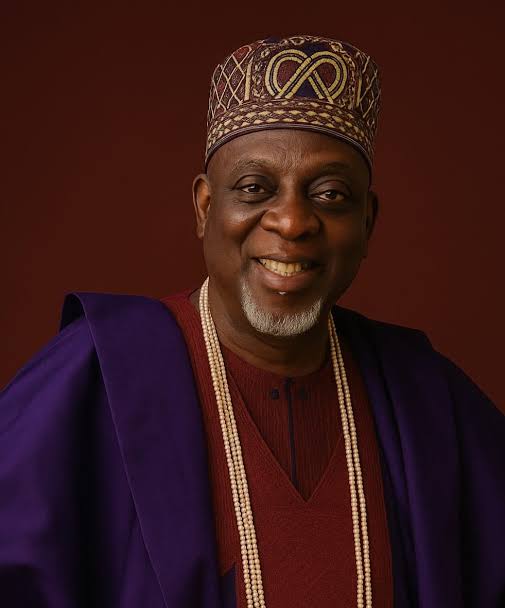
Otunba Giwa Ayodeji Osibogun writes from a socio-cultural and political perspective.