By Newspot Nigeria Editorial Desk

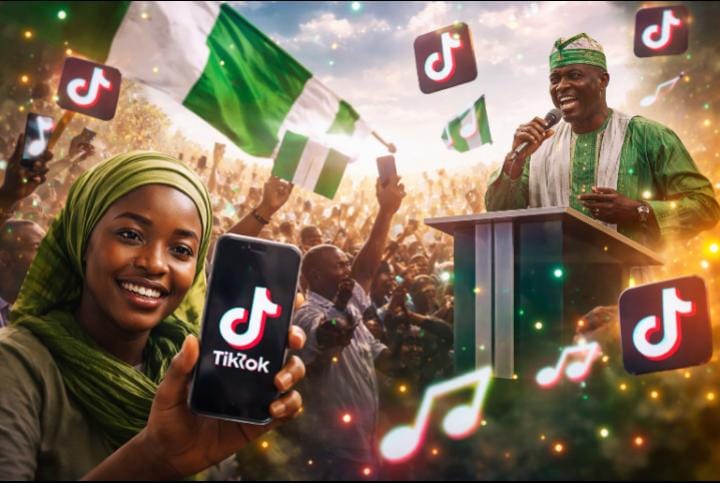
Politics is changing faster than many politicians are willing to admit. Long before campaign posters are printed or rally stages are built, battles for attention are already being fought on mobile phones, especially on TikTok.
A recent analysis from the political campaign and communications space shows how candidates are increasingly using TikTok to reach and influence voters. While much of the discussion is framed around the United States, its lessons travel far. For countries like Nigeria, where young people make up the bulk of the population yet feel increasingly disconnected from politics, the message is clear. Communication has changed, and those who fail to adjust will be left talking to themselves.
TikTok is not like Facebook or X. It does not reward long speeches or official statements. It rewards presence, emotion and relatability. People do not log on looking for policy documents. They log on to feel seen, entertained, understood or moved. That difference matters more than many political actors realise.

One clear lesson from recent campaigns is that influence now comes from interaction, not broadcasting. Politicians who succeed online do not simply post updates and disappear. They reply to comments, react to criticism, show their day to day movements and allow voters to feel part of the journey. This creates a sense of closeness, even if symbolic. In today’s politics, visibility itself has become a form of trust.




Another uncomfortable truth for traditional politics is that polish often works against credibility. Overproduced videos and carefully rehearsed speeches can feel distant in a digital space that rewards spontaneity. Short, imperfect clips recorded in real life settings often perform better because they feel honest. In a country like Nigeria, where citizens are deeply suspicious of political packaging, that rawness can go a long way.
Storytelling also sits at the heart of effective digital politics. People connect more easily to stories than to slogans. Background, language, culture and lived experience shape how messages travel. This matters deeply in a diverse society like Nigeria’s. Communication that reflects everyday realities, local expressions and shared struggles tends to travel farther than generic national messaging.


Another lesson is how much power audiences now hold. On TikTok, people do not just watch content. They remake it. They remix, parody, respond and reinterpret it. Once a message catches on, it no longer belongs fully to its creator. That loss of control can feel uncomfortable for politicians, but it is also how reach multiplies. Influence today is collaborative rather than tightly managed.
Sound has also become political currency. Catchy phrases, repeated lines or rhythmic slogans often outlive full speeches. A short phrase that sticks can travel across platforms and generations. In the digital age, how something sounds can matter as much as what it says.
For Nigerian politics, the lesson is not to copy TikTok trends blindly but to understand what they reveal about human attention. Young voters are not apathetic. They are selective. They want authenticity, clarity and presence. They want leaders who speak with them, not at them.
As future elections approach, political communication will continue to move away from podiums and into pockets. The campaigns that understand this early will shape the conversation. Those that do not may still speak loudly, but to fewer and fewer people.
Published by Newspot Nigeria.
Work Cited: Campaign and Elections