By BUKAR Mohammed
The recent suspension of Rivers State Governor Siminalayi Fubara, his deputy, and all elected members of the state House of Assembly by President Bola Ahmed Tinubu has sent shockwaves across Nigeria. The president declared a state of emergency in Rivers State and appointed Vice Admiral Ibok-Ete Ibas (retd) as the sole administrator, stripping the state of its elected leadership.
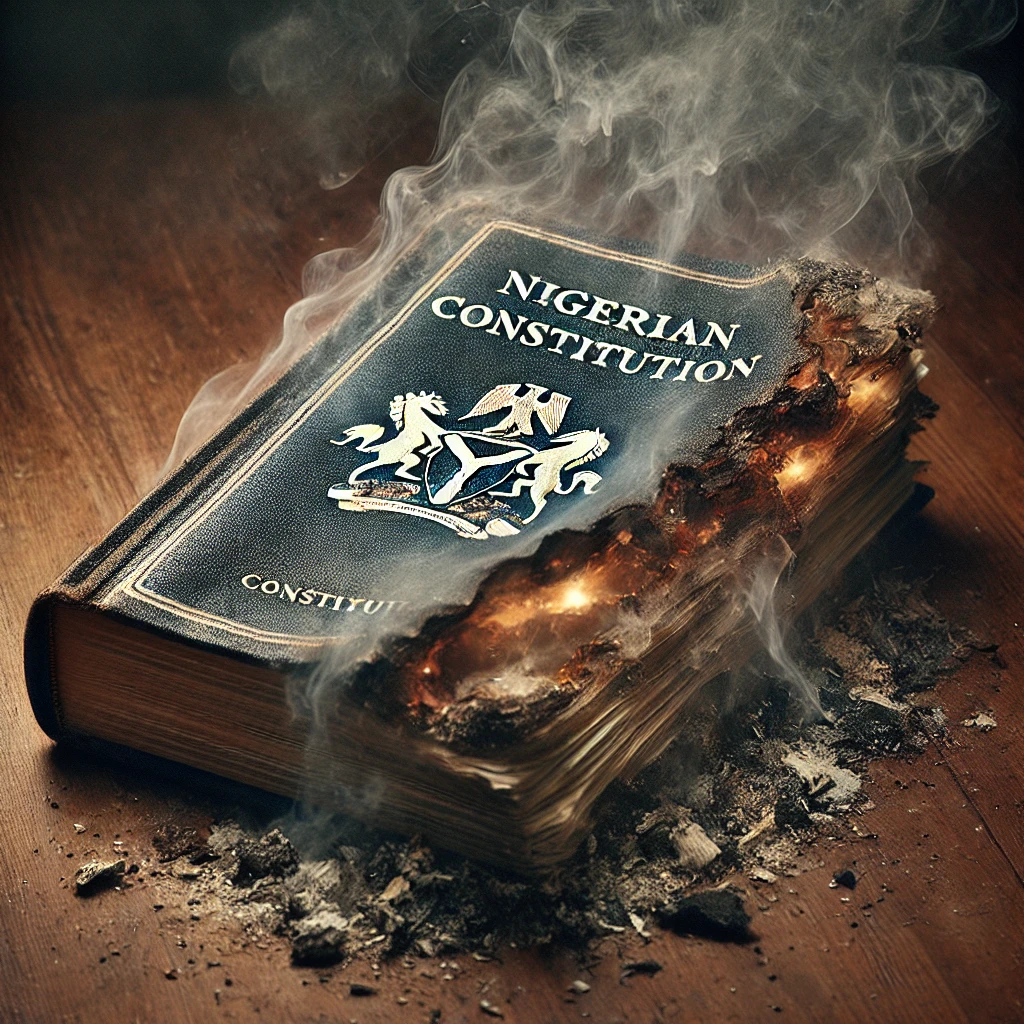
This move raises serious constitutional concerns. Under the 1999 Constitution of Nigeria, a governor can only be removed through impeachment by the state legislature or other due legal processes. However, Tinubu bypassed these procedures, justifying his action by citing insecurity and political instability. The question that arises is: Does the President have the power to unilaterally suspend a democratically elected governor and dissolve the legislature? The answer is NO , at least not without clear constitutional backing.
A Display of Brazen Power and Shamelessness

This move is not just unconstitutional; it is a brazen show of impunity. Nigeria appears to be inching towards a captured state, where democratic institutions exist only on paper but are manipulated at will. The silence of opposition parties, civil society groups, and even the legal community is deafening and disturbing. The same political actors who once criticized authoritarian excesses now watch in silence as the country slides toward lawlessness.





The Dangerous Precedent: Towards a One-Party State?
The suspension of a sitting governor without due process signals that no elected official is safe from arbitrary removal. If this move stands unchallenged, it sets a dangerous precedent where any governor, senator, or legislator can be removed simply by presidential fiat. This is the hallmark of a one-party state, where power is concentrated in the hands of a few, and opposition is either silenced or co-opted.


The scenario unfolding in Rivers State reinforces the idea that Nigeria is gradually transforming into a “Banana Republic”, a term used by Nnamdi Kanu to describe a country where democracy is an illusion, and the rule of law is secondary to political expediency. If the opposition and civil society fail to challenge this assault on democracy, what stops future administrations from dismissing any elected government at will?
What Next? The Fight for Constitutionalism
If Nigeria is to remain a true democracy, this undemocratic overreach must be resisted. The judiciary, legal scholars, and civil society must challenge this move in court. International observers must also be engaged to prevent Nigeria from descending into a dictatorship disguised as democracy.
The silence of the opposition and key democratic institutions is both frustrating and dangerous. If this unconstitutional act is allowed to stand, what will stop future presidents from doing the same in other states? Today, it is Rivers State tomorrow, it could be any other state. The fight for constitutionalism must begin now before it is too late.
BUKAR Mohammed is a public analyst from Kano