By the Newspot Nigeria Editorial Desk
Based on “The End of the Long American Century” by Robert O. Keohane and Joseph S. Nye, Jr. (Foreign Affairs, July/August 2025)
Editor’s Note: This article offers more than a summary of a major Foreign Affairs essay. It introduces readers to three foundational ways to view international relations—realism, liberalism, and constructivism—while using President Trump’s foreign policy as a real-world case study. These theories help explain why states act the way they do, how power is used, and what shapes global behavior. Whether you’re a student, analyst, policymaker, or concerned citizen, understanding these perspectives gives you a deeper grasp of world politics—and where Nigeria fits in.
As President Donald Trump embarks on his second term, the world watches a paradox unfold: a global superpower asserting its dominance while simultaneously dismantling the foundations of its long-standing leadership. In their co-authored essay, The End of the Long American Century, renowned international relations scholars Robert Keohane and the late Joseph Nye offer a powerful critique of Trump’s foreign policy, warning that his coercive approach may mark the collapse of the very order the United States helped build.
At the heart of their argument is the distinction between hard power (force, coercion, economic pressure) and soft power (persuasion, attraction, legitimacy). While America still commands enormous military and economic influence, its ability to lead by inspiration—the foundation of its soft power—has sharply declined under Trump.
Their analysis reflects deep theoretical roots. Let’s break down the three major schools of international relations and how Trump’s presidency reflects, disrupts, or rejects them:
🛡️ Realism: Power and Survival
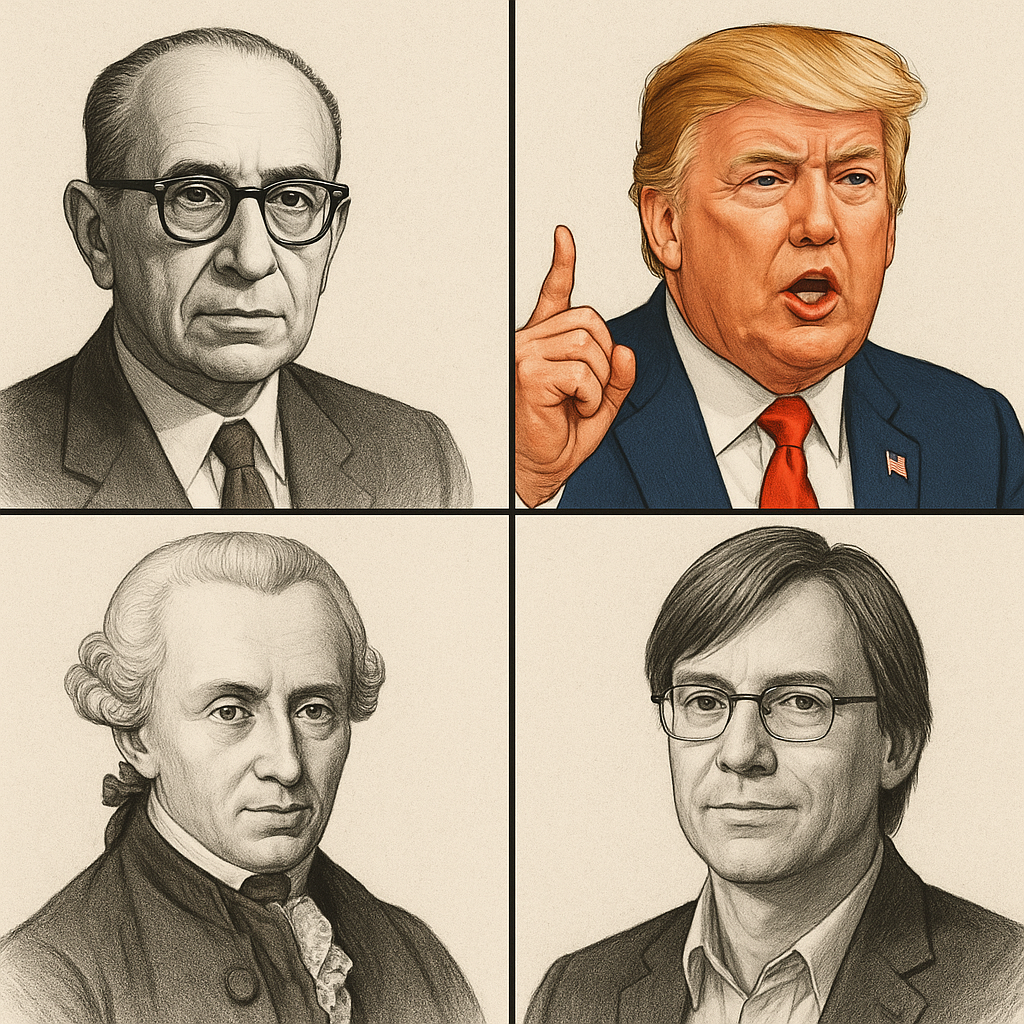
Founder: Hans J. Morgenthau
Famous Quote: “International politics, like all politics, is a struggle for power.”





Realism sees the world as a dangerous, anarchic arena where states compete for power and survival. Cooperation is rare and temporary. Realists value military strength, self-reliance, and national interest above all.
Trump’s foreign policy aligns closely with this view: he leverages America’s military and economic dominance to pursue short-term national interests, often at the expense of alliances or global institutions. His withdrawal from multilateral agreements and confrontational trade tactics reflect Morgenthau’s belief in politics as power dynamics rather than ideals.


Yet Keohane and Nye argue that this narrow focus on coercion ignores the long-term damage caused by alienating allies and undermining global norms.
🌐 Liberalism: Cooperation and Institutions
Founder: Immanuel Kant (philosophical); modern IR version by Woodrow Wilson and Robert Keohane
Famous Quote (Kant): “Perpetual peace is possible through republican constitutions, economic interdependence, and international law.”
Liberalism believes that cooperation is possible, especially through democracy, trade, and international institutions. Trust, transparency, and rules reduce the likelihood of war.
Keohane and Nye, themselves liberal theorists, argue that America’s long-term global power was built not only on weapons and markets, but on reliable alliances, institutional leadership, and values-based diplomacy. Trump’s retreat from the UN, WHO, and Paris Agreement disrupts this liberal system, reducing U.S. influence and credibility in the process.
In the liberal view, American power is most effective when it is embedded in rules, relationships, and shared responsibilities.
🧠 Constructivism: Ideas and Identity
Founder: Alexander Wendt
Famous Quote: “Anarchy is what states make of it.”
Constructivism shifts the focus from material power to ideas, beliefs, and identity. It argues that the international system is shaped by how states see themselves and how they are perceived by others. Behavior is not fixed—it evolves based on social norms, historical narratives, and shared meaning.
From this perspective, Trump’s presidency represents a radical transformation of American identity on the global stage. He abandoned the image of the U.S. as a global steward and replaced it with a more transactional, isolationist, and unpredictable persona. This identity shift weakens America’s legitimacy and damages the soft power it once used to inspire trust and imitation.
🔍 Asymmetric Power in a Changing World
Keohane and Nye revisit their influential theory of asymmetric interdependence—the idea that countries more dependent on the U.S. are more vulnerable to its pressure. Trump exploited this with China and Mexico, using tariffs and threats. But the authors warn that overplaying this advantage can backfire—pushing nations to diversify, retaliate, or turn to other powers like China.
🌍 Nigeria and the Global Rebalance
Why does all this matter for Nigeria and other African nations? Because America’s shift away from principled leadership and international cooperation creates a power vacuum—one that China, Russia, or regional blocs may try to fill.
U.S. soft power has influenced Nigeria for decades—through education, aid, democratic norms, and cultural exchange. If that influence fades, Africa’s strategic future could pivot elsewhere. Nigerian policymakers and citizens must understand these shifts and adapt strategically, strengthening our institutions, protecting democratic norms, and choosing partnerships that align with our long-term development goals.
In essence, Keohane and Nye warn that Trump’s fear-based, coercive diplomacy is not merely short-sighted—it is self-defeating. Power rooted in intimidation but lacking attraction and credibility becomes brittle. If this approach continues, the United States may not be facing a temporary setback—but the definitive end of the American century, as originally envisioned by publisher Henry Luce.
Attribution: This article is a summarized commentary based on “The End of the Long American Century” by Robert O. Keohane and Joseph S. Nye, Jr., published in the July/August 2025 edition of Foreign Affairs. Read the full article at foreignaffairs.com.
Published by Newspot Nigeria
📰 Insight. Integrity. Influence.