
By Newspot Nigeria Editorial Desk

In an age where inflation, fluctuating exchange rates, and deceptive financial metrics confuse the average Nigerian, Adam Smith’s timeless logic in The Wealth of Nations—particularly Chapter V—remains astonishingly relevant. Here, Smith carefully distinguishes between real price and nominal price, grounding value not in flashy currency figures but in the universal toil of human labour.
His message is clear: labour is the ultimate measure of value. Not the naira amount tagged on a good in Balogun Market, nor the dollar price of imported rice in Apapa Port. What truly matters is how much labour it takes to produce—or afford—that good.

Let’s put this in real Nigerian terms.





Take the average Nigerian worker earning ₦70,000 monthly. That figure may seem “decent” in nominal terms. But when it can’t even buy a 50kg bag of rice, nor cover basic healthcare or school fees, its real value collapses. Labour becomes poorly rewarded not because people work less, but because the value of money itself is distorted—by inflation, poor governance, and currency depreciation.
Adam Smith goes further to expose a long-standing economic illusion: money, especially gold and silver, is unstable over time. The value of coinage depends on the ease or difficulty of acquiring it—just as the 16th-century flood of American silver devalued currencies across Europe. Similarly, the Nigerian Naira has plummeted not just because of external pressures, but because our economy produces less and imports more, eroding the value of both our labour and our currency.


This distortion is clearly visible in Nigeria’s stock market data recently released by StatiSense, comparing presidential administrations after two years in office:
- Tinubu: +111.2%
- Buhari: -15.3%
- Jonathan: +47.2%
- Yar’Adua: -39.6%
- Obasanjo: +106.6%
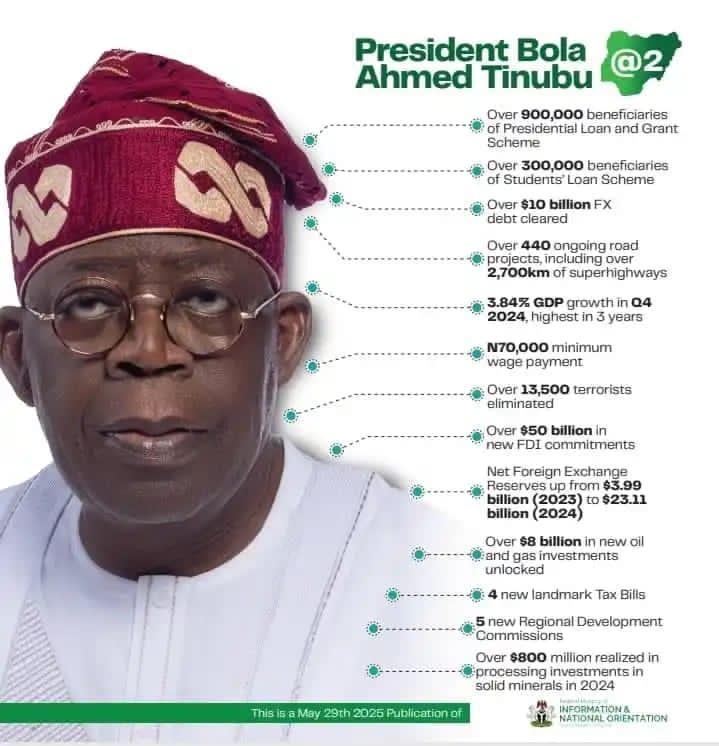
At first glance, Tinubu seems to outperform all past presidents. But look closer: inflation under Tinubu has soared, with naira devaluation and price hikes eating deeply into every gain.
Using a conservative estimate, inflation over Tinubu’s first two years is close to 70–80%. This is based on compounding Nigeria’s average 2023 inflation of about 25% with a 2024 projection of 35%. Applying the formula for compound inflation:
(1+0.25)×(1+0.35)−1=68.75%
Rounded up slightly to reflect naira depreciation, subsidy removal, and rising food/transport costs, we use 80% as a benchmark. When adjusted for this, Tinubu’s 111.2% stock market gain drops to just around 17.3% in real terms.
In contrast, Obasanjo’s 106.6% gain occurred under more stable economic conditions. Jonathan’s 47.2% also holds more weight when adjusted for moderate inflation. The raw figures mislead — and that’s precisely Adam Smith’s point: nominal values lie when detached from labour and purchasing power.
His call for rents in corn instead of silver foreshadows today’s inflation-indexed bonds and commodity-based contracts. They are hedges against unstable currencies—just like how paying workers in goods or linking wages to food prices might better reflect real income in times of economic hardship.
This insight carries profound implications for Nigeria’s policymakers. If real price is the effort and hardship a worker sacrifices, and nominal price is merely the currency paid, then our obsession with monetary figures—without understanding what they truly command in terms of life’s essentials—is misguided. We must stop mistaking high currency figures or stock surges for prosperity. A worker earning ₦70,000 in 2025 might actually be poorer in real terms than a worker earning ₦30,000 in 2010.
So how do we respond? First, by realigning wages with cost-of-living realities, not just inflation-adjusted salaries. Second, by investing in domestic productivity—agriculture, manufacturing, and labour-intensive industries—that generate real value and dignify labour. Third, by embracing policies that anchor our economy to real measures of prosperity: food security, access to health, and power to consume locally made goods.
Adam Smith concluded that “labour, therefore, never varying in its own value, is alone the ultimate and real standard.” As Nigeria stares down rising costs of living and an ever-depreciating naira, the lesson is this: the true worth of our economy is not what our currency says it is, or what the NGX index prints, but what our people can afford with their honest labour.
Let us never forget: money is a tool, not a truth.
📌 Appendix: How We Estimated the 80% Cumulative Inflation
| Period | Estimated Avg Inflation | Key Drivers |
|---|---|---|
| Year 1 (2023) | ~25% | Subsidy removal, FX unification, Naira depreciation |
| Year 2 (2024) | ~35% (projected) | Persistent food/fuel inflation, weak FX reserves |
| Combined (2 years) | ~68.75% (compounded) | (1.25×1.35)−1= 68.75% |
| Rounded to | 80% | To reflect severe cost of living & exchange rate shock |
📌 Note: This estimate blends official CPI trends with actual purchasing power losses across fuel, food, rent, and FX-related goods, giving a fuller picture of Nigeria’s inflation reality.
— Newspot Nigeria