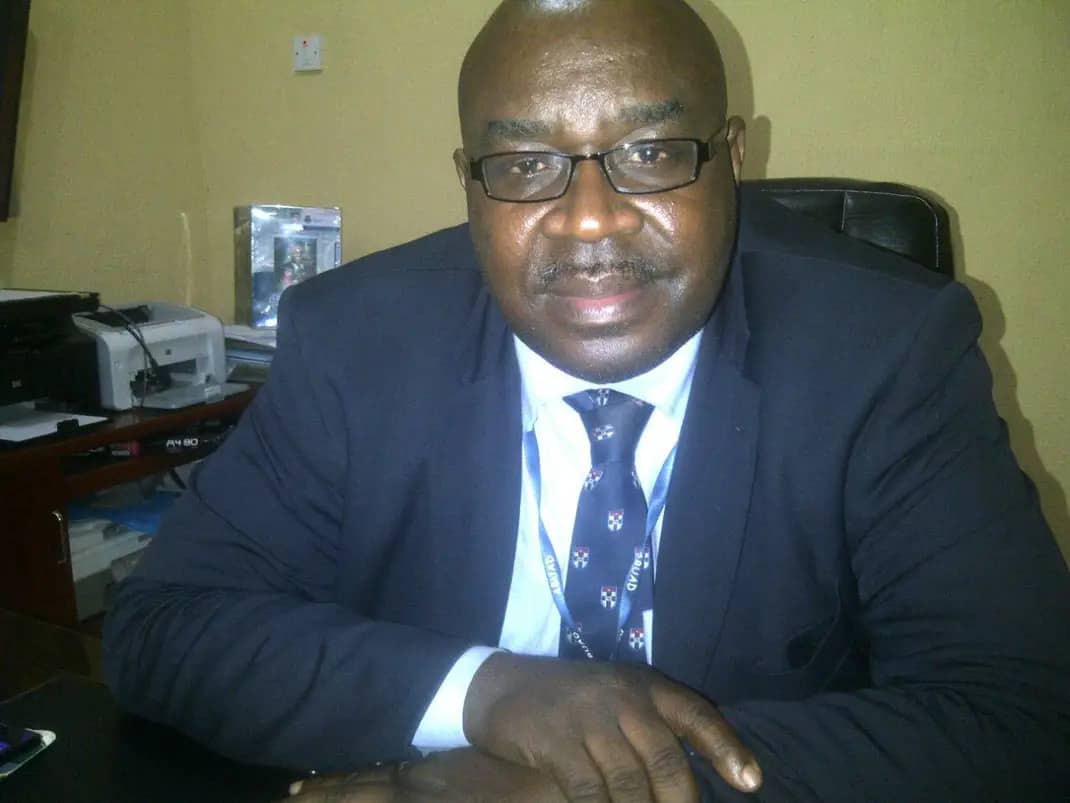
By Prof Abiodun Ojo

Nigeria stands at a troubling crossroads. As the federal government prepares to roll out a new tax regime from January 2026, aimed at expanding the tax base and boosting revenue, millions of Nigerians are already buckling under inflation, unemployment, poor healthcare, and decaying infrastructure. Yet, at the same time, revelations of immense and allegedly illicit wealth accumulations by politically privileged actors expose a deeper contradiction at the heart of Nigeria’s fiscal policy: the state is turning to the suffering masses for revenue while failing to decisively confront elite plunder.
A Fiscal Crisis Manufactured by Corruption
The reported discovery by the (EFCC) of assets valued at over ₦212 billion allegedly linked to a single former top public official is not merely a corruption story; it is a budgetary scandal. That amount alone could:
- Build and equip hundreds of primary healthcare centres
- Revitalize teaching hospitals across multiple states
- Fund universal basic education infrastructure in several local governments
- Strengthen public water, sanitation, and nutrition programmes
When such sums are siphoned away—whether through abuse of office, influence peddling, or opaque networks of ownership—the result is not abstract loss. It is underfunded hospitals, overcrowded classrooms, poor roads, and avoidable deaths.

The New Tax Regime and the Moral Contradiction
Taxation, in principle, is a legitimate tool for development. However, taxation loses moral authority when it is imposed in an environment where:





- Elite corruption remains insufficiently punished
- Stolen public wealth is not promptly recovered and redeployed
- The burden of revenue generation shifts downward to the poor and middle class
The proposed tax reforms—expanding VAT compliance, tightening personal income tax collection, formalising the informal sector, and increasing enforcement—may improve government revenue on paper. But in practice, they risk becoming a mechanism for transferring the cost of elite corruption onto ordinary citizens.
A market trader, civil servant, artisan, or small business owner is now expected to “pay their fair share,” while politically exposed persons allegedly accumulate billions in properties, hotels, schools, factories, and luxury residences far beyond what public salaries can justify.


Why This Worsens Physical Health and Social Development
The link between corruption, taxation, and human development is direct and devastating:
1. Reduced Social Investment
Money stolen by elites creates funding gaps that the government later tries to fill through aggressive taxation. Instead of investing in preventive healthcare, maternal care, nutrition, and public health systems, the state chases revenue after damage has already been done.
2. Health as a Private Burden
As public health systems deteriorate, healthcare becomes a private responsibility. Poor households pay more out-of-pocket, fall deeper into poverty, or forgo care entirely—leading to preventable illness and reduced life expectancy.
3. Taxation Without Trust
Citizens are more willing to pay taxes when they see results. When corruption is visible and consequences appear selective, taxation is perceived not as civic duty but as state-sanctioned extraction. This erodes compliance and deepens antagonism between citizens and the state.
4. Intergenerational Inequality
Elite illicit wealth is often converted into private schools, foreign education, luxury healthcare, and global mobility for a few families—while the majority face declining public services. The result is a locked-in inequality where birth, not merit, determines life chances.
Tax Justice Must Begin at the Top
If the 2026 tax regime is to be legitimate and effective, it must be accompanied by:
- Aggressive recovery of illicit assets, not just announcements
- Transparent prosecution of politically exposed persons, regardless of status
- Public accounting of recovered funds and their redeployment
- Wealth audits and lifestyle checks for senior public office holders
Without these, increased taxation becomes regressive in effect, even if progressive in language.
Comparative Lessons: When Tax Reform Works Only With Elite Accountability
Nigeria is not alone in confronting the challenge of financing development through taxation. Around the world, several countries have demonstrated that effective tax reform tends to succeed only when coupled with reductions in corruption, increased transparency, and accountability for elites:
1. Georgia (Post-Rose Revolution) – Anti-Corruption as the Foundation for Tax Reform
Following the 2003 Rose Revolution, Georgia embarked on sweeping reforms that blended anti-corruption measures with major tax simplification. Confronted with rampant corruption that weakened revenue collection, the government instituted a zero-tolerance stance on corruption, streamlined the tax code, reduced rates, and eliminated numerous minor taxes that fostered loopholes. Between 2003 and 2008, Georgia’s tax revenue as a share of GDP rose markedly—even as rates were lowered—because trust and compliance increased when citizens saw corruption curbed and the system made fairer. —
This shows that tax reform alone is insufficient if citizens believe elites are above the law; only when corruption was publicly tackled did compliance and revenue collection improve.
2. Rwanda – Strengthened Institutions Boost Public Revenue
Rwanda provides another instructive case. Over the past two decades, the government pursued comprehensive institutional reforms, including civil service professionalisation, fiscal system strengthening, and stricter scrutiny of large taxpayers. As corruption indicators improved, Rwanda’s tax revenue rose from around 9–10 percent of GDP in the late 1990s to about 15–16 percent in the 2010s. This shift was tied not just to better collection techniques, but to greater public trust in institutions that enforced rules more fairly. —
In contrast, when citizens feel that public funds are routinely diverted by powerful actors, willingness to comply with tax requirements diminishes—exactly the trap Nigeria risks falling into if elite corruption remains unresolved.
3. Senegal – Transparency and Public Trust in Taxation
In Dakar, Senegal has employed satellite and drone imagery to digitise property records, increasing property tax compliance threefold in pilot areas and broadening the tax base. These reforms were predicated on greater transparency and accessible information, which built citizens trust that tax funds would be used responsibly. Experts note that tax reform in Senegal is being framed as part of a broader movement toward fiscal accountability—so that taxpayers see value in participating in the system. —
4. Greece – Modernising Tax Administration to Regain Financial Stability
Greece’s recent financial crisis prompted a technology-driven overhaul of tax administration, integrating big data, real-time monitoring, and digital systems to detect tax evasion. These measures helped Greece generate revenues that allowed it to post budget surpluses and restore confidence in public finances, despite lingering criticism about austerity. While the Greek example isn’t solely about elite accountability, the reforms underscore that tax systems must be fair, transparent, and capable of addressing evasion at all levels for citizens to accept fiscal demands. —
Key Takeaways for Nigeria’s 2026 Tax Regime
These international examples share common themes:
- Elite accountability matters: Tax reform works best when political and economic elites are visibly held responsible for misuse of public funds.
- Trust underpins compliance: Citizens are more likely to pay taxes when they see governments enforcing rules on all, not just the poor.
- Transparency boosts revenue: Digitised systems and open data help reduce corruption and increase fairness.
- Institutional reform must complement fiscal policy: Tax reforms that ignore weak institutions or elite capture risk placing an unfair burden on ordinary taxpayers.
Without a credible commitment to tackling corruption at the top, expanding the tax base in Nigeria may simply transfer the cost of elite impunity onto ordinary citizens—deepening poverty and worsening health and social outcomes. The experience of countries like Georgia, Rwanda, Senegal and Greece shows that enhanced revenue mobilization must go hand-in-hand with strengthened accountability mechanisms if taxation is to serve development rather than perpetuate inequality.
Conclusion: A Question of Choices, Not Scarcity
Nigeria’s problem is not the absence of money; it is the misdirection and misappropriation of wealth. When billions allegedly stolen by a few are contrasted with new tax demands on millions struggling to survive, the injustice becomes stark.
A government that genuinely seeks development must first confront elite corruption with the same energy it applies to taxing the poor. Otherwise, the 2026 tax regime risks deepening poverty, worsening health outcomes, and reinforcing the very inequality that keeps Nigeria from fulfilling its vast potential.
— Prof Abiodun Ojo Is the Provost of Afe Babalola College of Postgraduate Studies