By Olugbenga Adebamiwa
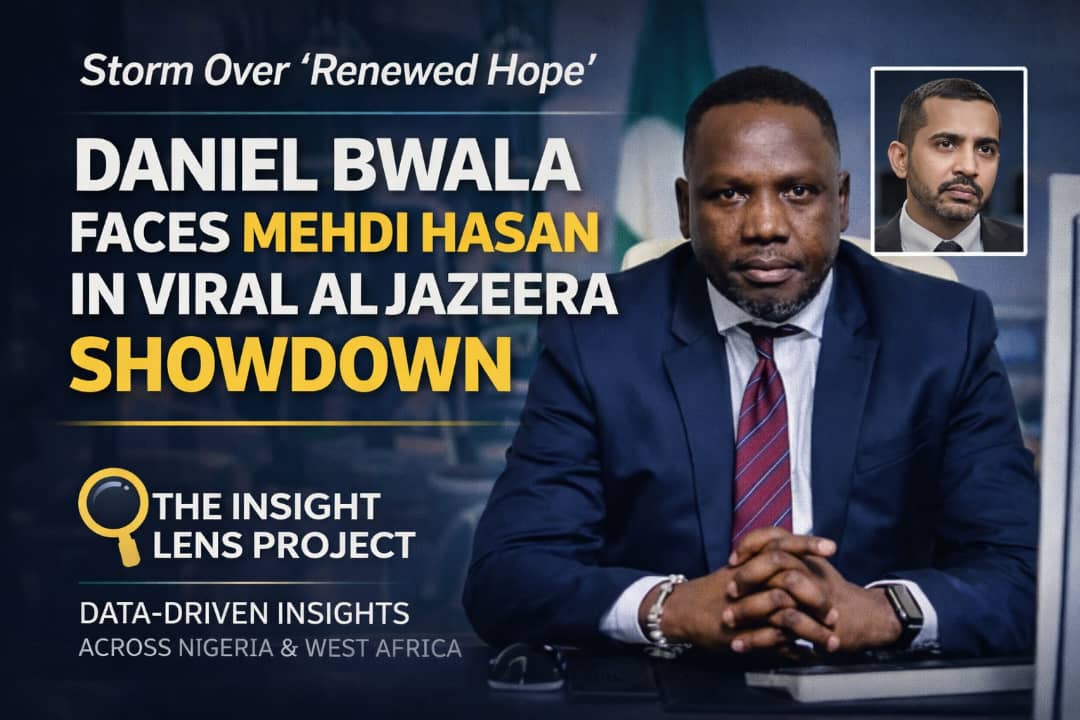
In a debate that has rippled across Nigeria’s political landscape, Daniel Bwala, Special Adviser on Media and Policy Communications to President Bola Tinubu, found himself at the centre of a storm following a high-profile interview on Al Jazeera’s Head to Head programme.
The episode, titled “Nigeria: ‘Renewed Hope’ or ‘Hopelessness’?”, aired on March 6, 2026, and featured British-American journalist Mehdi Hasan in a direct and uncompromising exchange with Daniel Bwala, one of the most visible defenders of the administration of Bola Ahmed Tinubu.






Recorded before a live audience at Conway Hall, the nearly 50-minute discussion examined the Tinubu government’s flagship reform agenda popularly known as “Renewed Hope” against the backdrop of Nigeria’s persistent struggles with insecurity, poverty, corruption and economic restructuring.


The programme has since gone viral online, attracting more than 400,000 views within a day of its release and igniting intense debate across social media platforms and political circles.
The interview followed the trademark style of Hasan, known internationally for sharp questioning and forensic debates. Drawing on reports from international watchdogs and research institutions, he challenged Bwala on the government’s handling of security, corruption and economic reforms.
Central to the exchange was Nigeria’s worsening security situation. Hasan cited reports describing Nigeria as among the world’s deadliest countries in recent years, referencing rising violence, kidnappings and militant activity.
Bwala rejected what he described as exaggerated narratives about the country’s security crisis. While acknowledging the global challenge of insecurity, he insisted the Tinubu administration had made significant progress and was strengthening cooperation with international partners.
The discussion also touched on controversial reports of United States military strikes on suspected extremist targets in Nigeria during the 2025 Christmas period. Bwala described the operation as intelligence-driven collaboration between Nigerian and American security agencies and denied claims that civilian communities were deliberately targeted.
Yet the most dramatic moments of the interview emerged when Hasan confronted Bwala with statements he had made during the 2023 presidential election campaign while serving as a spokesman for former Vice-President Atiku Abubakar.
In those earlier appearances, Bwala had sharply criticised Tinubu and his political camp. During the interview, Hasan replayed clips and quoted remarks suggesting allegations of vote-buying and militia activity during the election season.
Pressed on the remarks, Bwala repeatedly insisted he had never made some of the claims as presented, responding at one point, “I never said that.”
The exchange drew laughter from the audience when Hasan quipped that he appeared to know Bwala’s past statements better than the man himself.
Bwala later explained that his earlier remarks were made in the heat of opposition politics. “The job of opposition is to oppose,” he said, adding that political realities often evolve and that his present responsibility was to defend the administration he now serves.
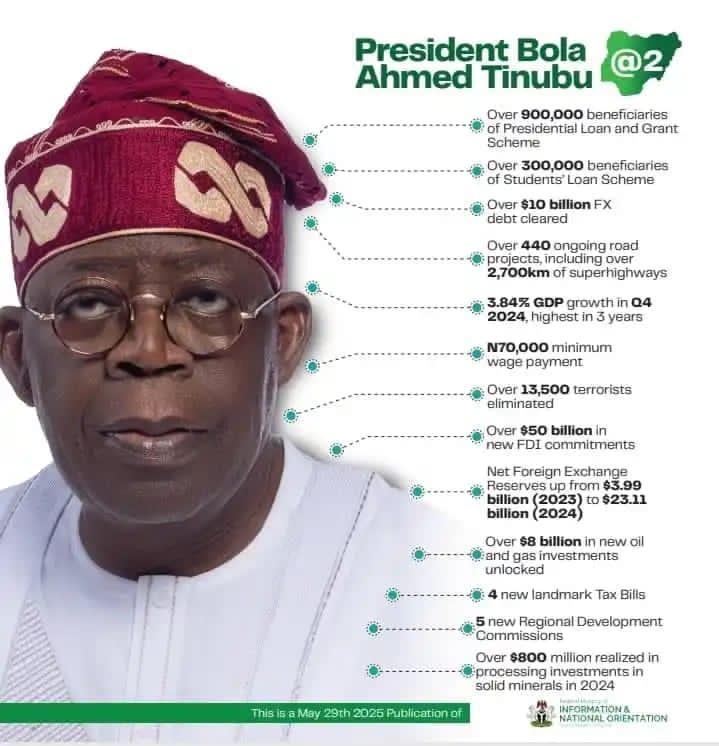
Beyond the personal exchanges, the conversation returned frequently to the Tinubu government’s economic reforms. Bwala argued that difficult policies, including the removal of the fuel subsidy and currency reforms were necessary to stabilise Nigeria’s finances and attract investment.
According to him, the reforms have begun to strengthen foreign reserves and reduce dependence on imports, while laying the groundwork for long-term growth.
Hasan countered with figures indicating deepening poverty levels and persistent infrastructure failures, including repeated national power grid collapses. He argued that millions of Nigerians were still struggling to feel the benefits of the government’s reforms.
Bwala responded with optimism, likening Nigeria’s situation to “a glass that is half full,” and insisting that structural reforms require time before their full benefits become visible.
Following the interview, a panel of analysts, including development expert Aisha Osori and journalist Aanu Adeoye offered their assessments.
Their commentary was largely critical, questioning whether the administration’s reforms had yet translated into measurable improvements in security or economic wellbeing.
However, Tunde Doherty, a senior member of the All Progressives Congress in the United Kingdom, defended the government, arguing that international cooperation and economic restructuring were already producing gradual progress.
Within hours of its broadcast, the interview spread rapidly online, with clips circulating across social media and sparking heated reactions among Nigerians at home and abroad.
Critics described Bwala’s performance as unconvincing, accusing him of struggling to reconcile his earlier criticisms of Tinubu with his present role in government.
Others praised his willingness to appear on a global platform and defend the administration under intense questioning.
Some observers noted that the debate highlighted the often fluid nature of political alliances in Nigeria, where yesterday’s critics frequently become today’s allies.
Responding to the wave of reactions, Bwala issued a statement on Saturday defending his decision to appear on the programme.
He said he accepted the interview knowing it would be confrontational and insisted that defending the administration publicly was part of his duty.
“I am prepared to appear before any interviewer, anywhere in the world, any day and at any time, to defend this government and its policies,” he said.
Bwala also criticised what he described as “opposition-style journalism,” claiming some of the data cited during the programme was inaccurate. He nevertheless expressed respect for Hasan, whom he called one of the world’s best debaters, and said he would welcome a second round of discussion.
For many observers, the interview has become more than a television exchange. It has developed into a wider conversation about Nigeria’s politics, the credibility of political messaging, and the challenges of defending government policy in an era of instant digital scrutiny.
Whether seen as a bruising encounter or a necessary test of democratic accountability, the debate between Hasan and Bwala has ensured that the conversation around Tinubu’s “Renewed Hope” agenda continues louder and more contested than ever.
©️ Adebamiwa Olugbenga Michael is a Lagos-based political economy and policy intelligence analyst and publisher of The Insight Lens Project, providing data-driven insights across Nigeria and West Africa using open-source data.