By Olugbenga Adebamiwa
The anger that followed the passage of the Electoral Act 2026 has been loud and dramatic. But beyond the strong words and warnings about democracy being in danger, there is a simpler reality, in politics, outrage can sometimes hide deeper political weakness.
The African Democratic Congress and the New Nigeria Peoples Party have described the new law as a step toward a one-party state. That is a serious claim. However, the law was not secretly forced on the country. It was debated and passed by the National Assembly, an elected body and signed into law by President Bola Ahmed Tinubu. People may disagree with the law, but it went through the proper constitutional process.






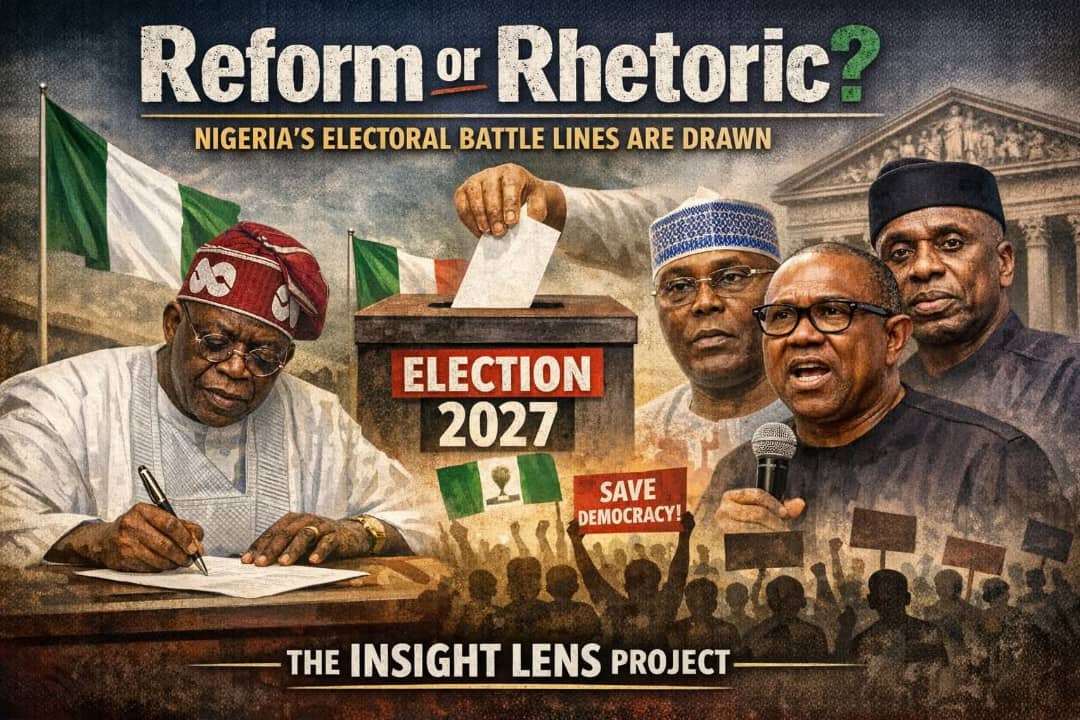
Disagreement does not equal dictatorship. When leading opposition figures such as Atiku Abubakar, Peter Obi, and Rotimi Amaechi speak out against the Act less than a year before the next election, it raises questions. It can sound less like a defense of democracy and more like preparing excuses ahead of time.


There is also some irony in hearing claims of authoritarianism from politicians who have themselves held powerful executive positions. If the Act truly breaks the Constitution, the proper place to challenge it is in court. Nigeria’s judiciary is still functioning. The Constitution is still in place. That is how democratic disputes are settled.
This situation also shows a deeper issue within the opposition. It appears divided and still searching for a clear message that connects with voters. Shouting “one-party state” may attract attention, but it does not replace strong grassroots work, clear policies, or party unity.
The Tinubu administration has the right to propose and sign electoral reforms, as long as they follow constitutional rules. If critics believe the law is wrong, they should test it legally and politically. That is how democracy works.
In the end, the real judgment will come in 2027. Elections are not decided at press conferences. They are decided at polling units across the country. That is where Nigeria’s democracy will speak.
©️ Adebamiwa Olugbenga Michael is a Lagos-based political economy analyst and publisher of The Insight Lens Project.