By Olugbenga Adebamiwa
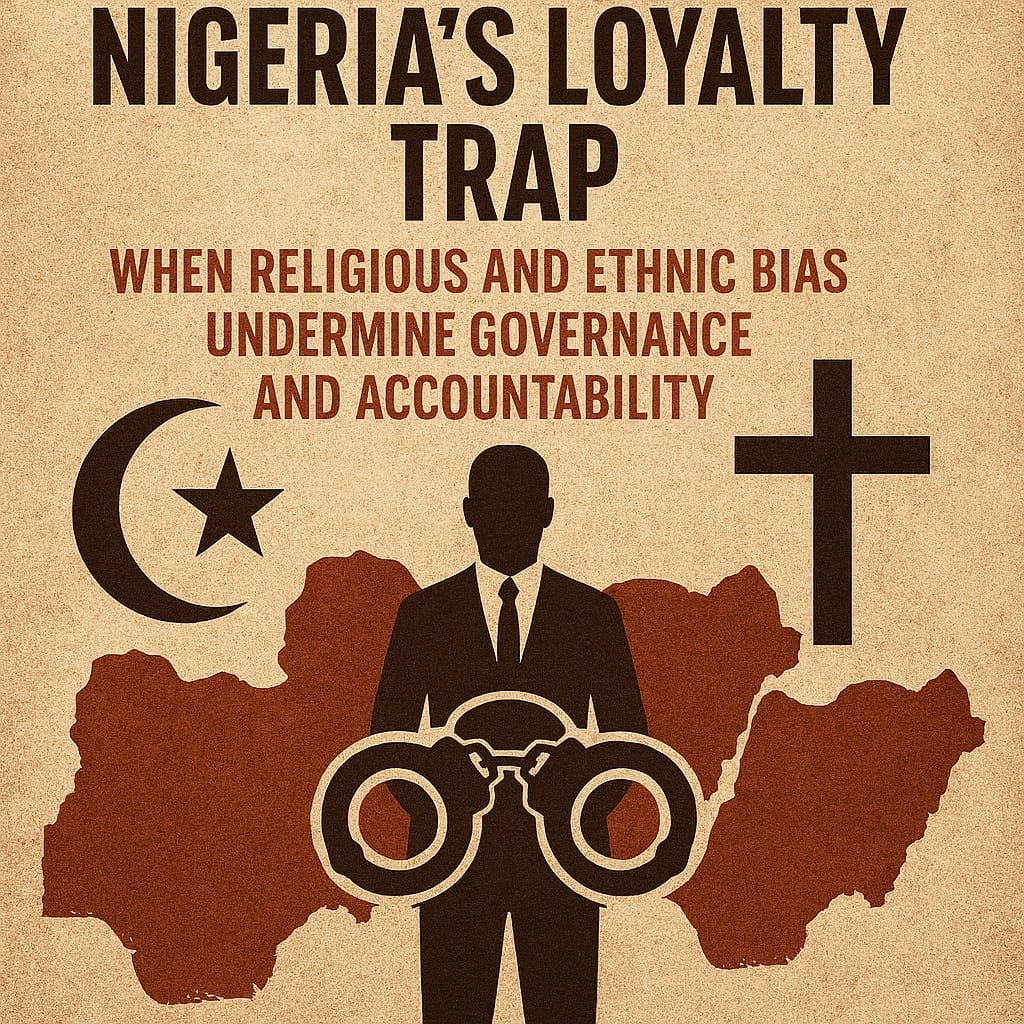
In a nation as diverse as Nigeria, the lens through which we view leadership, governance, and public accountability is often distorted by religious and ethnic loyalties. The adage “my thief is holier than your thief” reflects a delicate yet pervasive hypocrisy that has long shaped public discourse. When citizens excuse corruption or inefficiency in leaders from their own community while condemning similar behavior elsewhere, they not only weaken democratic accountability but also worsen social divisions. This phenomenon, often framed in loyalty to ethnicity or religion, risks undermining national cohesion and the very principles of governance and justice.
Religious and ethnic favoritism in Nigeria is neither new nor limited to any one region. Analysts like Professor Chidi Odinkalu and Dr. Yemi Kale have repeatedly noted that societal bias allows incompetence and corruption to thrive under the guise of communal loyalty. Citizens, consciously or unconsciously, adopt double standards, a scandal involving “our” leaders is downplayed or justified, while identical behavior by “others” is amplified as evidence of systemic failure. This selective outrage fuels division, erodes trust in institutions, and perpetuates cycles of impunity that affect governance, development, and security.
Empirical data underscores the cost of this selective moral lens. According to the 2024 Transparency International Corruption Perceptions Index, Nigeria scored 25/100, highlighting endemic corruption. Yet, public reactions to scandals often correlate less with the severity of misconduct than with the ethnic or religious identity of the actor. Social media analysis shows that narratives defending or condemning officials are disproportionately influenced by communal identity rather than objective assessment. This discrepancy demonstrates how bias shapes perception, distorts discourse, and often shields leaders from accountability.

The consequences of unchecked bias extend beyond politics. When individuals and communities prioritize loyalty over ethics, they normalize intolerance and dehumanize others. Experts like Dr. Akintunde Oyebode argue that such patterns foster social tension, increase susceptibility to misinformation, and weaken collective problem-solving. In essence, when people cease to recognize the humanity of those outside their immediate social or religious circles, societal cohesion suffers, and policy interventions, be it on security, healthcare, or economic reform become fragmented and ineffective.




Leaders and citizens alike bear responsibility for combating this moral inconsistency. Transparent governance, impartial media reporting, and civic education are critical tools for fostering objective evaluation of public officials. As demonstrated by recent anti-corruption campaigns in Lagos and cross-regional initiatives like the Civil Society Legislative Advocacy Centre (CISLAC), accountability thrives where citizens demand performance over parochial loyalty. Furthermore, political figures who model impartiality, judging policies and misconduct on merit rather than affiliation can help realign societal norms toward fairness and inclusivity.
Confronting religious and ethnic bias requires deliberate effort at multiple levels. Citizens must practice self-reflection, acknowledging their own vulnerability to double standards. Civil society and media must continue promoting fact-based reporting and ethical analysis. Policymakers should prioritize institutional reforms that make bias inconsequential in legal, economic, and administrative processes. Ultimately, recognizing that hypocrisy and bigotry undermine national progress is the first step toward creating a society where public service is measured by competence and integrity, not communal allegiance. Only then can Nigeria hope to foster a truly inclusive, accountable, and resilient democratic culture.


©️ Adebamiwa Olugbenga Michael is a Lagos-based political analyst who explores ethnic economics and urban policy through open-source data. He is also the publisher of The Insight Lens Project.