By Olugbenga Adebamiwa


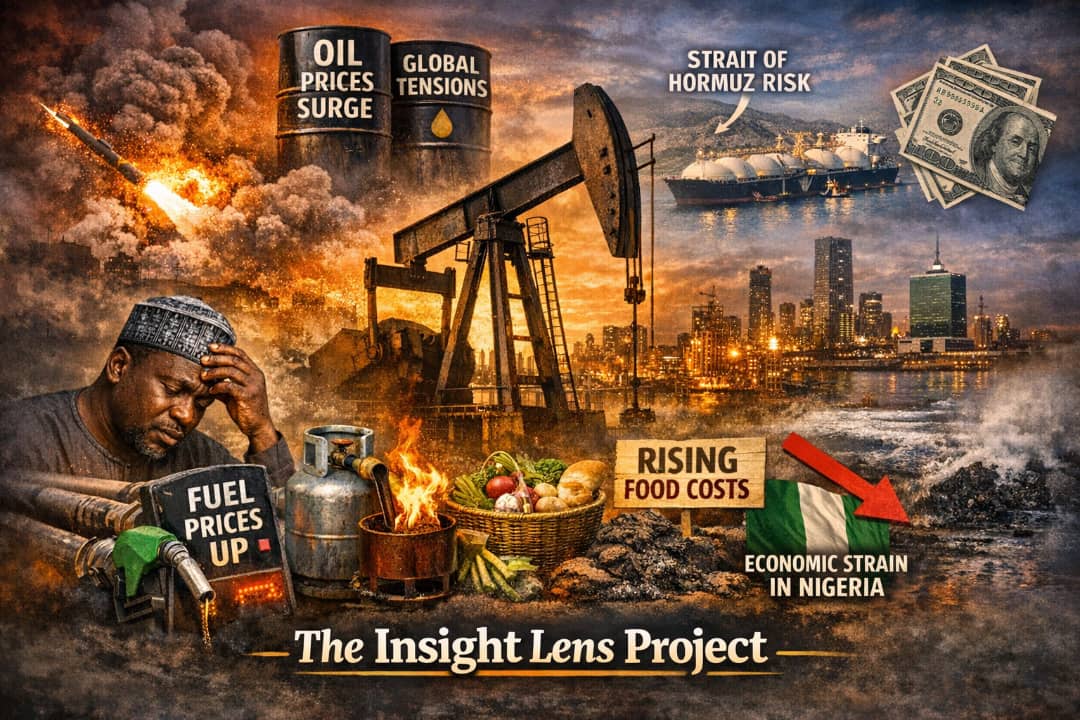
The latest escalation of conflict in the Middle East is sending fresh tremors through global energy markets, pushing oil and gas prices upward and raising new questions about how the shock will affect oil-producing countries such as Nigeria.
As at March 6, 2026, oil prices surged sharply, with West Texas Intermediate (WTI) crude closing at $90.90 per barrel, a daily gain of 12.21%, marking the highest level since August 2022. Brent crude rose to $93.16 per barrel, while Murban crude jumped to $103.24. The market saw an intraday WTI high of $92.61, reflecting the largest daily increase in recent memory and contributing to WTI’s five-day gain of over 35%. Year-on-year, U.S. crude is up 36.14%, highlighting one of the most dramatic short-term rallies in decades.





The surge is largely driven by escalating geopolitical tensions in the Middle East, particularly fears of conflict affecting the Strait of Hormuz, a critical oil transit route. Supply and demand dynamics also played a role, with U.S. drillers increasing rigs amid rising prices and Europe experiencing a sharp jump in natural gas costs. Additionally, India’s Reliance Industries returning to Russian crude imports has influenced global supply perceptions. Analysts warn of continued volatility, projecting WTI could average $74 per barrel by the end of Q1 2026, with potential rises to $82 within a year depending on unfolding geopolitical developments.


In early March, global energy markets reacted sharply to rising tensions after the United States and Israel launched strikes on Iran. Traders quickly priced in the risk of supply disruptions across the Gulf, a region that sits at the heart of the world’s oil and gas trade. Natural gas markets have responded even more dramatically, with European benchmark prices rising steeply as concerns grew over potential disruptions to liquefied natural gas supplies, particularly after attacks linked to the conflict affected facilities in Qatar. Energy analysts warn that the situation could worsen if shipping routes in the Gulf are threatened.
At the centre of global anxiety is the Strait of Hormuz, the narrow maritime corridor through which roughly one-fifth of the world’s oil and liquefied natural gas passes every day. Iran has warned that it could close the passage if hostilities intensify. Any disruption to that route would send shockwaves across the global economy and could push oil prices well above $100 per barrel.
For Nigeria, the implications are complex. On the surface, higher oil prices appear to offer relief. As one of Africa’s largest crude exporters, Nigeria stands to earn more foreign exchange when global oil prices rise. Increased revenue could strengthen government finances, improve dollar inflows, and ease pressure on the country’s strained fiscal position.
Yet the reality is less straightforward. Despite its vast oil resources, Nigeria still imports a significant share of the petrol, diesel, and aviation fuel it consumes. When global crude prices rise, the cost of refined fuel imports rises as well. That increase is quickly felt across the economy, from transportation and electricity generation to food distribution and manufacturing. For ordinary Nigerians, the result could be higher fuel prices, more expensive transport, and rising food costs. In a country where inflation already weighs heavily on households, another energy shock could deepen the pressure on living standards.
There is also the question of production. Nigeria has struggled in recent years to meet its oil output targets because of pipeline vandalism, crude theft, and underinvestment in infrastructure. If production does not increase, the country may not fully benefit from higher prices on the global market. That imbalance means Nigeria could face the contradiction of earning more from oil exports while its citizens grapple with rising domestic costs.
The ripple effects may also extend beyond the energy sector. If the conflict pushes global inflation higher, major central banks may delay cutting interest rates. That would keep borrowing costs high worldwide and make it harder for developing economies like Nigeria to access affordable financing or attract new investment.
For now, energy markets remain cautious rather than panicked. Prices are rising, but they are still below the inflation-adjusted peaks seen during previous global crises such as the oil shocks of the 1970s or the spike in 2008. Much will depend on how the conflict unfolds. If it remains contained, the surge in prices could be temporary. But if fighting spreads or key oil routes and facilities are damaged, the consequences for the global economy and for Nigeria could become far more severe.
In the end, the crisis serves as a reminder of a long-standing truth in global energy politics, when turmoil erupts in the Middle East, its economic echoes are felt far beyond the Gulf, reaching markets, governments, and households across the world, including here in Nigeria.
©️ Adebamiwa Olugbenga Michael is a Lagos-based political economy and policy intelligence analyst and publisher of The Insight Lens Project, providing data-driven insights across Nigeria and West Africa using open-source data.