

By Newspot Nigeria Editorial desk

The Quiet Gavel That Shook Patriarchy
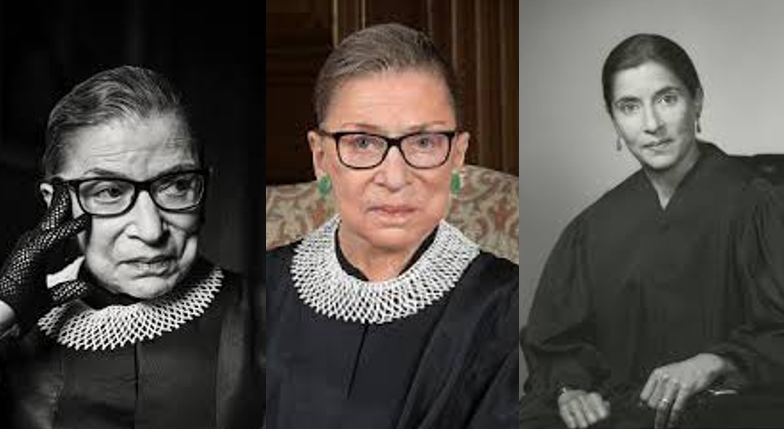
She stood barely five feet tall. But in the halls of justice, Ruth Bader Ginsburg cast a shadow that reached across generations and continents. Her voice was soft, but her convictions thundered.
Born on March 15, 1933, in Brooklyn, New York, Ginsburg’s life began like many in America’s immigrant families—with modest means, a strong mother, and a firm belief in the value of education. Her father, Nathan Bader, was a Jewish immigrant from Ukraine, and her mother, Celia Amster Bader, a New York native, encouraged her academic excellence. When Celia died the night before Ruth’s high school graduation, the lesson left behind was simple: independence matters.
Ginsburg attended Cornell University, graduating in 1954 with high honors in Government and distinction in all subjects. That same year, she married Martin D. Ginsburg. They had two children together. She enrolled at Harvard Law School—one of only nine women in a class of over 500. At Harvard, she endured persistent gender discrimination, often being asked why she took a man’s spot. Still, she excelled, earning a place on the Harvard Law Review. For her final year, she transferred to Columbia Law School, again making the Law Review and graduating first in her class in 1959.

Despite her exceptional academic record, Ginsburg struggled to find employment. Eventually, she secured a clerkship with Judge Edmund L. Palmieri of the U.S. District Court for the Southern District of New York. She later worked on the Columbia Law School Project on International Procedure before entering academia. In 1963, she became a Professor of Law at Rutgers University, where she remained until 1972. That same year, she became the first tenured female professor at Columbia Law School.





Ginsburg also played a central role in founding the ACLU’s Women’s Rights Project in 1971 and served as its general counsel from 1973–1980. She argued six major gender equality cases before the U.S. Supreme Court, winning five. These victories redefined the legal landscape for women’s rights in America.
In 1980, President Jimmy Carter appointed her to the U.S. Court of Appeals for the District of Columbia Circuit. Thirteen years later, President Bill Clinton nominated her to the U.S. Supreme Court. She took her seat on August 10, 1993, becoming the second woman—and the first Jewish woman—to serve on the Court.


There, for 27 years, she became a steady, progressive force on issues of civil liberties, gender rights, and fairness under law. Her calm demeanor and sharply reasoned opinions defined her jurisprudence. Her dissents—especially in cases involving voting rights and reproductive freedom—resonated widely, turning her into a pop culture icon dubbed “The Notorious R.B.G.”
One landmark opinion she authored was in United States v. Virginia (1996), which struck down the male-only admissions policy at the Virginia Military Institute. She also dissented powerfully in Ledbetter v. Goodyear Tire & Rubber Co., helping prompt legislative change through the 2009 Lilly Ledbetter Fair Pay Act signed by President Barack Obama.
Her death on September 18, 2020, from complications of metastatic pancreatic cancer, sent shockwaves through American politics and among global advocates of gender justice. Yet her legacy endures—not only in law books but in classrooms, courtrooms, and movements around the world.
In Nigeria, where women’s political representation remains among the lowest in Africa, and where laws are still shaped by invisible hierarchies, Ginsburg’s story offers both inspiration and instruction. You don’t need a megaphone to change a country. You need persistence, clarity, and a spine of steel.
As we continue our Icons of Modern Power series, Ruth Bader Ginsburg reminds us that patriarchy may shout, but justice whispers until it rewrites the rules.
She did not ask for power.
She took responsibility.
And in doing so, she changed history.
— Newspot Nigeria