
By Newspot Nigeria Editorial Desk

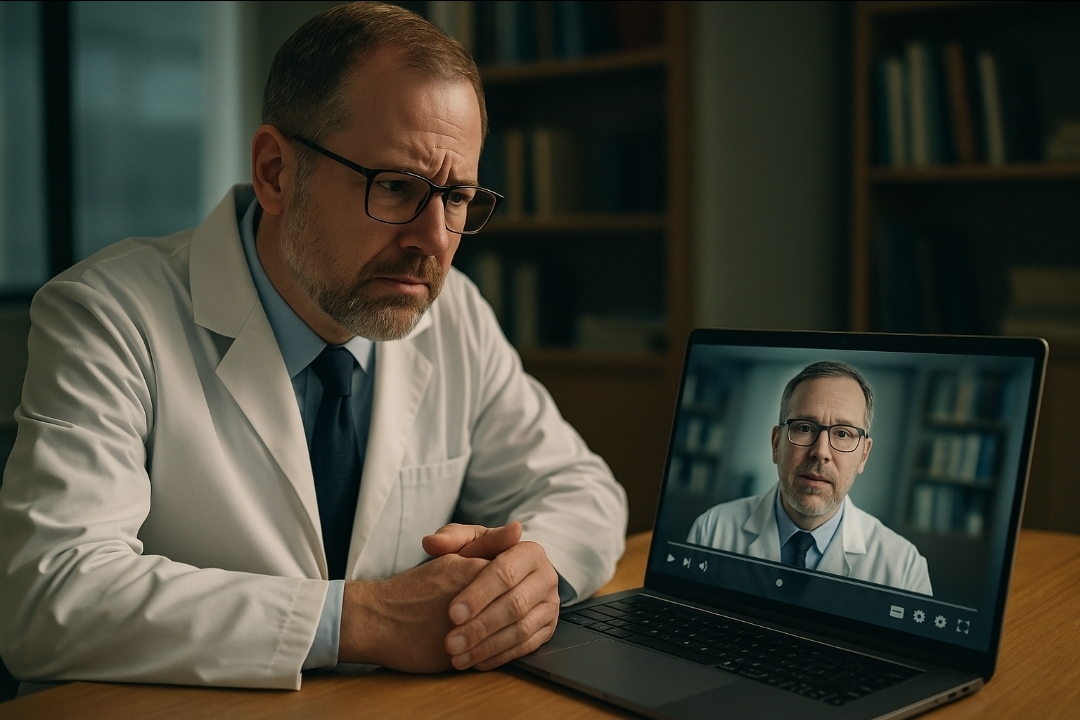
Something is deeply wrong in the digital world when a respected public health expert can become a viral personality without ever opening a social media account. That was the strange experience of Professor David Taylor Robinson of the University of Liverpool after a colleague alerted him that he was suddenly trending on TikTok.
He was not. But a digital copy of him was.
Someone had taken footage from a genuine Public Health England conference and altered his face and voice with startling accuracy. In the fake videos he appeared to offer medical advice on menopause and recommend specific supplements. Thousands of viewers watched and believed the claims. The real professor had never said any of it.

A wider investigation by Full Fact revealed that this was not an isolated case. Several academics and public health professionals, including former Public Health England chief Duncan Selbie and Russian economist Natalia Zubarevich, had also been turned into deepfake salespeople. Videos featuring fabricated versions of well known American doctors appeared across TikTok, Instagram, Facebook, YouTube, and X. Many of the victims had no idea the videos existed. Some do not even use social media at all.





TikTok initially refused to remove the deepfakes. Only after repeated reporting and a formal inquiry did the platform acknowledge that its moderation system had failed. By then some fake videos had already reached hundreds of thousands of views. The comment sections were filled with people who genuinely believed the fabricated advice because it appeared to come from a trusted expert.
This is the real danger. Deepfakes no longer look like playful edits or obvious hoaxes. They look polished and credible. They exploit the authority of real scientists and doctors and convert it into persuasive marketing. In many cases the videos directed viewers to purchase supplements through links that led to a company called Wellness Nest. The company has denied involvement, but the affiliate links and the sales traffic speak for themselves.


Social media platforms have been slow and inconsistent in their response. Some videos were taken down only after public pressure. Others remain available, continuing to gather views, likes, and comments. Meanwhile the technology used to create deepfakes grows more convincing each month, while the systems meant to identify and remove them fall further behind.
Public health communication relies on trust. When people cannot distinguish a real medical expert from an artificially generated imitation, that trust becomes fragile. Once trust is weakened misinformation spreads rapidly. Anyone can now create a realistic video of a doctor endorsing anything at all, from harmless supplements to dangerous treatments. Without firm rules and swift enforcement the public is left exposed to manipulation on an unprecedented scale.
Deepfakes are no longer a future threat. They are already here, widely circulated, profitable, and increasingly sophisticated. They undermine the credibility of genuine experts and mislead the very people who depend on accurate health information. If platforms and regulators do not act quickly this problem will grow beyond anything we can reasonably contain.
Truth cannot protect itself in a world where any face and any voice can be forged. The responsibility now lies with those who still have the power to defend it.
— Newspot Nigeria