By Newspot Nigeria News Desk

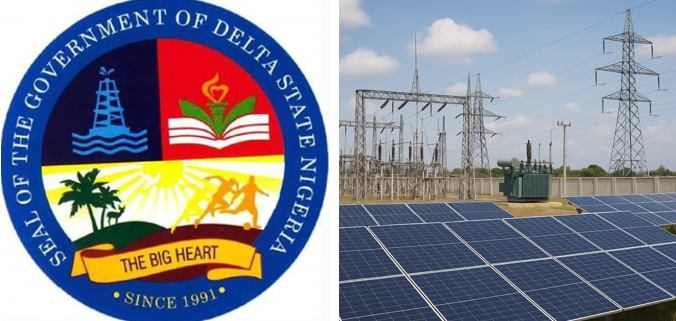
In a landmark move poised to redefine power delivery across Nigeria’s subnational landscape, Delta State has adopted a decentralized mini-grid electricity model and approved the establishment of key regulatory institutions to operationalize a competitive and inclusive electricity market.
Announcing the initiative at a post-Executive Council (EXCO) press briefing in Asaba, the Delta State Commissioner for Economic Planning, Mr. Sonny Ekedayen, said the reforms are part of Governor Sheriff Oborevwori’s MORE Agenda, which targets infrastructure expansion and improved service delivery for residents.
“This EXCO approval marks a major milestone in our journey,” Ekedayen declared, noting that the state had already laid the legal foundation by domesticating the 2023 Federal Electricity Act through legislative action by the Delta State House of Assembly.

Under the newly adopted model, the state will operate a mini-grid approach that allows multiple independent electricity providers to generate, distribute, and supply power in self-contained service areas. Unlike the conventional centralized grid—where a single fault can plunge entire regions into darkness—the decentralized model enhances system resilience and operational reliability.





“With this model, an outage in one zone does not affect other zones. Each operator manages their area independently, ensuring better service delivery and quicker response to local challenges,” Ekedayen explained.
Significantly, the new electricity framework allows service providers to tailor their energy mix to suit local realities, encouraging the adoption of renewable energy solutions such as solar and hydro, alongside traditional gas-fired options.


The Commissioner emphasized that the reform would be privately funded, with the state government playing only a regulatory and enabling role. “This is a private sector-driven initiative. Government’s job is to set the rules, ensure fairness, and create the atmosphere for investment and innovation to thrive,” he said.
To support the reform, the EXCO approved the creation of several key institutions:
- Delta State Electricity Commission – To act as the central regulator, responsible for licensing, compliance enforcement, and consumer protection.
- Rural Electricity Agency – To ensure rural communities are not left behind by focusing exclusively on extending access to under-served areas.
- System Operator – To manage the technical aspects of power coordination between generators and consumers.
- Market Operator – To track supply data, enforce standards, and guarantee delivery of minimum service hours to households and businesses.
A specialized consultant will also be engaged to midwife the transition process, develop implementation roadmaps, and offer expert guidance through the early stages of the electricity market rollout.
Ekedayen acknowledged the challenges ahead but underscored Delta State’s determination to lead in electricity reform among Nigeria’s states. “Only a few states have ventured this far, but we are determined to deliver not just power, but a system that works—one that supports jobs, industries, and improves life for our people.”
He concluded by describing the latest EXCO decisions as the “formal birth” of the Delta electricity market and expressed optimism that the business and manufacturing sectors would respond positively to the new investment climate.
“With this, Delta is on course to becoming a model for sub-national electricity transformation in Nigeria,” Ekedayen stated.
— Newspot Nigeria