
By Newspot Nigeria Science Desk


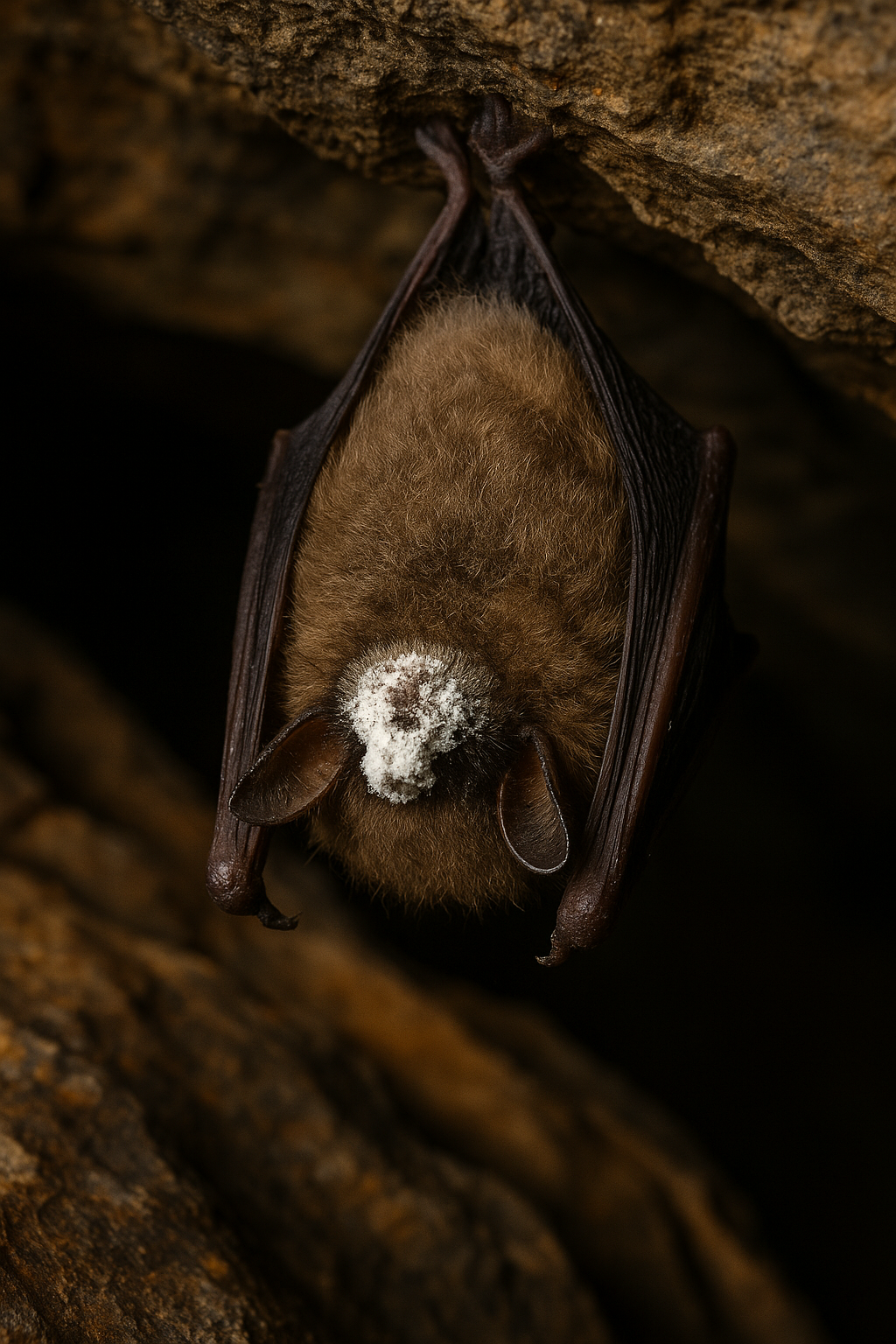
A groundbreaking international study has traced the origin of the deadly white-nose syndrome that has decimated millions of bats across North America to caves in western Ukraine. The disease, caused by the fungus Pseudogymnoascus destructans (Pd), first appeared in New York nearly two decades ago and has since wreaked havoc on native bat populations, triggering cascading ecological and economic consequences.
For years, scientists suspected a European origin for the fungus, but definitive proof had remained elusive. Now, new genetic evidence published in Nature pinpoints the likely source to vast cave networks in Ukraine—particularly the Optymistychna and Ozerna caves, which have long been popular among international caving communities.
According to the study led by Dr. Sébastien Puechmaille from the University of Montpellier, spores may have been unknowingly carried into the U.S. by cavers traveling from Ukraine to New York in the 1990s and early 2000s. “When you come out of this cave, you’re completely covered in mud,” Puechmaille explained, suggesting that contaminated gear or clothing transported the spores.

White-nose syndrome, which flourishes during bat hibernation, causes bats to wake frequently and deplete their fat reserves prematurely. The disease has wiped out over 90% of populations of some North American bat species, including the little brown bat, the tricolored bat, and the northern long-eared bat.





Beyond biodiversity loss, the economic impact has been severe. Insect-eating bats provide natural pest control to farmers, and their decline has driven a 31% increase in insecticide use in the northeastern U.S., contributing to a reported 8% rise in infant mortality linked to increased agrochemical exposure.
The researchers analyzed more than 5,500 samples of the Pd fungus from across Europe, revealing every cave had a genetically distinct population. However, the strain now rampant in the U.S. matched samples from Ukraine almost exactly. Alarmingly, the study also found a second lineage of the fungus—Pd-2—in Europe, which infects even more species than the current U.S. variant (Pd-1). Experts warn that if Pd-2 is accidentally introduced to North America, the results could be catastrophic.


“This is a sobering reminder of how fragile ecosystems can be in the face of accidental human interference,” said Kate Langwig, a disease ecologist at Virginia Tech. The study calls for strict decontamination procedures for anyone entering or exiting caves, both internationally and within countries.
Closer to home, the findings underscore the need for African conservationists, including those in Nigeria, to rigorously monitor cross-border wildlife interactions. As Nigeria continues to enhance its eco-tourism and biodiversity initiatives, ensuring that cave systems and bat colonies remain protected from foreign pathogens should become a top environmental priority.
This story is part of Newspot Nigeria’s commitment to global environmental reporting. 🗞️