
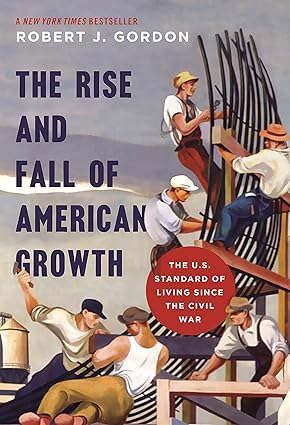

Economic growth has been a defining feature of national development, particularly in the United States, which has often been viewed as an economic powerhouse. However, recent economic trends have led many to question the sustainability of this growth and whether the factors that propelled the country to its peak are still at play. In his seminal book, The Rise and Fall of American Growth, The U.S. Standard of Living since the Civil War, Robert J. Gordon examines these issues, presenting a compelling argument about the nature of technological innovation and its role in driving economic productivity. His analysis offers important lessons for policymakers, economists, and the general public—insights that are equally relevant to Nigeria’s economic aspirations.
The Dynamics of Economic Growth: Understanding Gordon’s Argument
Gordon’s book provides a historical analysis of American economic growth from 1870 to the present, focusing on the role of technological advancements. He argues that the most significant period of growth occurred between 1870 and 1970, largely driven by the transformative impacts of inventions such as electricity, automobiles, indoor plumbing, and medical breakthroughs. These innovations drastically improved productivity and living standards, leading to an era of unprecedented economic expansion.
However, Gordon contends that the innovations of the past 50 years—such as the internet, smartphones, and digital communication—while significant, have not had the same profound impact on economic productivity. As a result, the U.S. economy has experienced a slowdown in productivity growth since the 1970s. This decline raises critical questions about whether modern economies can sustain high levels of economic progress or whether we have entered a period of long-term stagnation.
Comparing Economic Growth: Nigeria’s Developmental Challenges
Gordon’s insights hold valuable lessons for Nigeria, which is striving to achieve sustainable economic growth. While Nigeria’s economic trajectory is different from that of the United States, the underlying principles of economic development remain applicable. Nigeria, like many developing nations, must consider the following factors in shaping its economic policies:

- Investment in Infrastructure and Innovation:
- Gordon highlights how infrastructure developments—such as electrification, sanitation, and transportation—played a crucial role in American growth. Nigeria’s infrastructure deficit remains a significant impediment to economic progress. Expanding access to reliable electricity, transportation networks, and digital connectivity can spur industrialization and enhance productivity.
- Harnessing Technological Innovation for Productivity:
- While the world has entered a digital age, Gordon argues that modern innovations have not significantly boosted productivity compared to earlier industrial revolutions. Nigeria must ensure that its embrace of technology translates into tangible economic benefits, particularly in sectors such as agriculture, manufacturing, and services.
- The Role of Government in Economic Development:
- Gordon discusses how government-led investment in machine tools and industrial expansion during World War II contributed to America’s mid-20th-century economic boom. In Nigeria, government intervention should be strategic focusing on policies that encourage industrialization, enhance human capital development, and attract foreign direct investment.
- Addressing Demographic and Labor Market Challenges:
- Gordon notes that labor market shifts and demographic changes impact economic growth. Nigeria’s young and growing population presents both an opportunity and a challenge. To fully harness its demographic advantage, the country must invest in education, vocational training, and job creation initiatives.
The Political Economy of Innovation and Growth
A key aspect of Gordon’s analysis is the interplay between political economy and technological progress. He argues that technological development is not solely driven by market forces but is deeply influenced by government policies, investment decisions, and historical circumstances. This raises an important question for Nigeria: How can political and economic institutions create an environment conducive to sustained innovation and productivity growth?





For instance, Gordon discusses how World War II led to massive government investment in technology, which later drove civilian economic growth. Nigeria can draw parallels by investing in key sectors such as renewable energy, digital infrastructure, and industrial automation to stimulate long-term economic transformation. Moreover, the government must ensure that policy frameworks support entrepreneurship, industrial diversification, and technological adoption.
Newspot Nigeria’s Role in Public Enlightenment
As Nigeria navigates its path toward economic prosperity, platforms like Newspot Nigeria play a crucial role in informing and educating the public about evolving technologies and economic trends. Through in-depth analyses, expert commentaries, and accessible reporting, Newspot Nigeria bridges the gap between policymakers, economists, and the general public. By shedding light on how new technologies impact various sectors and the economy at large, Newspot Nigeria ensures that readers stay ahead in an ever-changing world.


The Future of Economic Growth in Nigeria
Robert J. Gordon’s The Rise and Fall of American Growth presents a thought-provoking analysis of economic progress, emphasizing the significance of transformative innovations in shaping national development. For Nigeria, the lessons from this work are clear: sustainable economic growth requires a combination of strategic investments, sound governance, and policies that prioritize infrastructure, education, and industrial expansion.
As Nigeria moves forward, it is essential to leverage historical insights and emerging technological advancements to drive economic transformation. Thanks to platforms like Newspot Nigeria, the public is continually enlightened on these critical issues, helping stakeholders make informed decisions about the future.
- Gordon, R. J. (2016). The rise and fall of American growth: The U.S. standard of living since the Civil War. Princeton University Press.
- Zigler, D. (2017). A return to political economy. American Affairs Journal, 1(1), 82–98. Retrieved from https://americanaffairsjournal.org