
By Newspot Nigeria News Desk


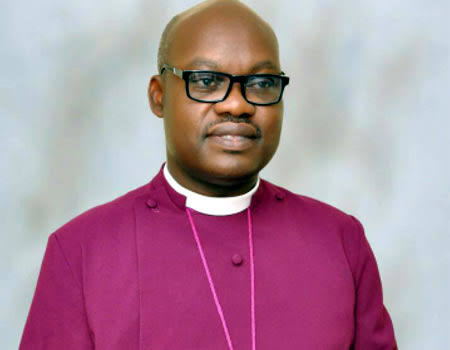
The Anglican Bishop of Owo Diocese, Rt. Revd. Dr. Stephen Ayodeji A. Fagbemi, has warned that Nigeria’s worsening insecurity has reached a frightening level and expressed support for international concerns that Christian communities may be facing targeted attacks, urging government to urgently strengthen security measures across the country.
Speaking during an appearance on Frontline, a public affairs programme on Eagle 102.5 FM Ilese-Ijebu, Ogun State, Bishop Fagbemi said Nigerians now live in constant fear due to attacks by terrorists, bandits, and kidnappers.
“The security situation has reached a level that is frightening for all Nigerians,” the Bishop said. “Parents are afraid to send children to school, farmers hesitate to go to their farms, and even worshippers attend church with fear.”

According to him, insecurity has become a defining feature of daily life across the country.





“Our system is reactive rather than proactive. Criminals take advantage of delays in response and weak enforcement,” he said.
Owo Church Attack Still Haunts Communities
Bishop Fagbemi recalled the June 5, 2022 terrorist attack on St. Francis Xavier Catholic Church in Owo, Ondo State, where gunmen opened fire and detonated explosives during a Pentecost Sunday service.


The attack left dozens dead and scores injured, shocking the nation and drawing international condemnation.
“It was Pentecost Sunday and chaos erupted suddenly,” he said. “I was barely 400 metres away and could hear the screams, the running, and the confusion everywhere.”
He explained that the emotional trauma from the attack continues to affect residents of the community.
“Even today some people remain afraid to attend church services,” he said. “The wounds remain deep.”
Security agencies later linked the attack to the Islamic State West Africa Province (ISWAP) and arrested several suspects who are currently facing terrorism-related charges in court.
However, Bishop Fagbemi criticised the slow pace of justice.
“More than three years later, the suspects are still awaiting trial. Justice delayed is justice denied,” he said.
Bishop Backs Concerns Over Possible Targeting of Christians
The Bishop also expressed support for concerns raised by international observers that patterns of violence against Christian communities in parts of Nigeria deserve serious scrutiny.
According to him, repeated attacks on churches, pastors and Christian villages cannot simply be dismissed as isolated criminal incidents.
“When places of worship and Christian communities are attacked repeatedly, it raises serious questions about motives and the choice of targets,” he said.
He referenced the United States designation of Nigeria as a Country of Particular Concern (CPC) under the International Religious Freedom Act.
“That designation reflects documented concerns about severe violations of religious freedom,” he said. “When international bodies review the evidence and raise alarms, we should not dismiss it.”
The Bishop stressed that insecurity in Nigeria affects people of different religions.
“Bandits and kidnappers attack Muslims and Christians alike,” he said. “But when worship centres are repeatedly attacked in particular areas, it must be examined honestly.”
Insecurity Disrupting Communities
Bishop Fagbemi warned that insecurity is severely disrupting economic and social life across the country.
Businesses struggle to operate, schools close in affected areas, and religious gatherings are often curtailed due to safety concerns.
“Insecure communities cannot thrive,” he said. “Fear undermines development, education, and commerce.”
He also criticised the financial burden placed on churches forced to support security operations.
“Some churches now contribute money to fuel police vehicles or maintain officers on duty,” he said.
“Security is a constitutional duty of government, not a favour citizens should pay for.”
Call to Arm Amotekun and Establish State Police
To strengthen security, the Bishop called for stronger support for regional security initiatives such as the Western Nigeria Security Network (Amotekun Corps).
He said Amotekun operatives understand local terrain and communities but lack sufficient legal authority and equipment.
“Amotekun has been crucial in community security, but they operate under severe limitations,” he said.
“They must be properly armed and legally empowered to act decisively.”
He also advocated the creation of state police, arguing that decentralised policing would significantly improve response times and accountability.
“Imagine criminals being pursued immediately by officers accountable to the communities they serve rather than waiting for orders from Abuja,” he said.
According to him, Nigeria’s centralised policing structure leaves many communities underserved and vulnerable.
Government Must Act Decisively
Bishop Fagbemi urged federal, state and local governments to prioritise security reforms and improve intelligence gathering, surveillance and rapid response capacity.
He warned that failure to act decisively could embolden criminals.
“When kidnappers succeed repeatedly without consequences, it encourages others,” he said.
The Bishop concluded by stressing that security remains the foundation of national stability.
“Without security, the economy suffers, education suffers, and communities cannot function,” he said.
“Our people deserve peace. Government must ensure that security is not optional — it is a fundamental duty.”
— Newspot Nigeria