By Newspot Nigeria Editorial Desk
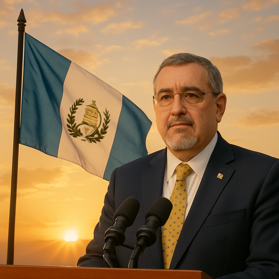
For a country long gripped by the shadows of institutional rot, Guatemala under President Bernardo Arévalo is daring to dream of a new dawn. This is not just the rhetoric of hope—it’s a turning point grounded in concrete actions, as Arévalo’s administration confronts entrenched corruption and seeks to restore the rule of law in Central America’s most populous nation.
Arévalo, whose ascent to the presidency was almost sabotaged by powerful political actors resistant to reform, now stands as a symbol of democratic resilience. His survival of the 2023 election crisis—fueled by civic resistance, Indigenous mobilization, and international pressure—was more than just a personal victory; it marked a rebuke of Guatemala’s long-standing oligarchic grip on power.
Now in office, Arévalo is pushing forward with an ambitious agenda centered on democratic renewal, anti-corruption, and state modernization. The significance of this cannot be overstated. In a region where democratic backsliding has become increasingly common, Guatemala’s efforts to clean house offer a counter-narrative—albeit one still vulnerable to political sabotage.

Security remains a core pillar of Arévalo’s governance. Though Guatemala’s homicide rate has been nearly halved over the past decade, high levels of organized crime, poverty, and impunity continue to undercut everyday safety. By linking development with security, Arévalo is signaling a broader strategy—addressing root causes, not just symptoms. This includes long-overdue infrastructure projects and efforts to streamline bureaucracy and attract job-generating investment.




Critically, Arévalo is extending a hand to the private sector, embracing public-private partnerships to stimulate economic growth and modernize the country’s connectivity. This signals a pragmatic shift away from ideological rigidity and toward inclusive statecraft that engages multiple stakeholders, from business elites to civil society.
His vision also goes beyond national borders. Renewed dialogue with Mexico and regional neighbors could help turn fragile borders into corridors of shared prosperity. If properly managed, this cooperation could stem irregular migration, boost trade, and diminish the influence of transnational criminal networks. But success will require bold diplomacy, mutual accountability, and sustained investment—none of which come easily in a region riddled with competing interests.


Still, optimism must be tempered. Guatemala’s judicial institutions remain compromised, and Arévalo’s reforms will face sabotage from powerful actors still embedded in the state. The president’s agenda is not guaranteed success; it’s a high-stakes gamble in a country accustomed to elite impunity and civic disillusionment.
Yet what makes this moment so consequential is precisely the possibility—the rare opening—for transformation. Guatemala is testing whether a democratic mandate, backed by citizen resolve and international solidarity, can hold back the tides of authoritarianism and institutional decay.
It is a test that resonates far beyond its borders. At a time when global confidence in democratic governance is wavering, Guatemala reminds us that fragile democracies can still defy the odds. And that, perhaps, is the most powerful message of all.
— Newspot Nigeria