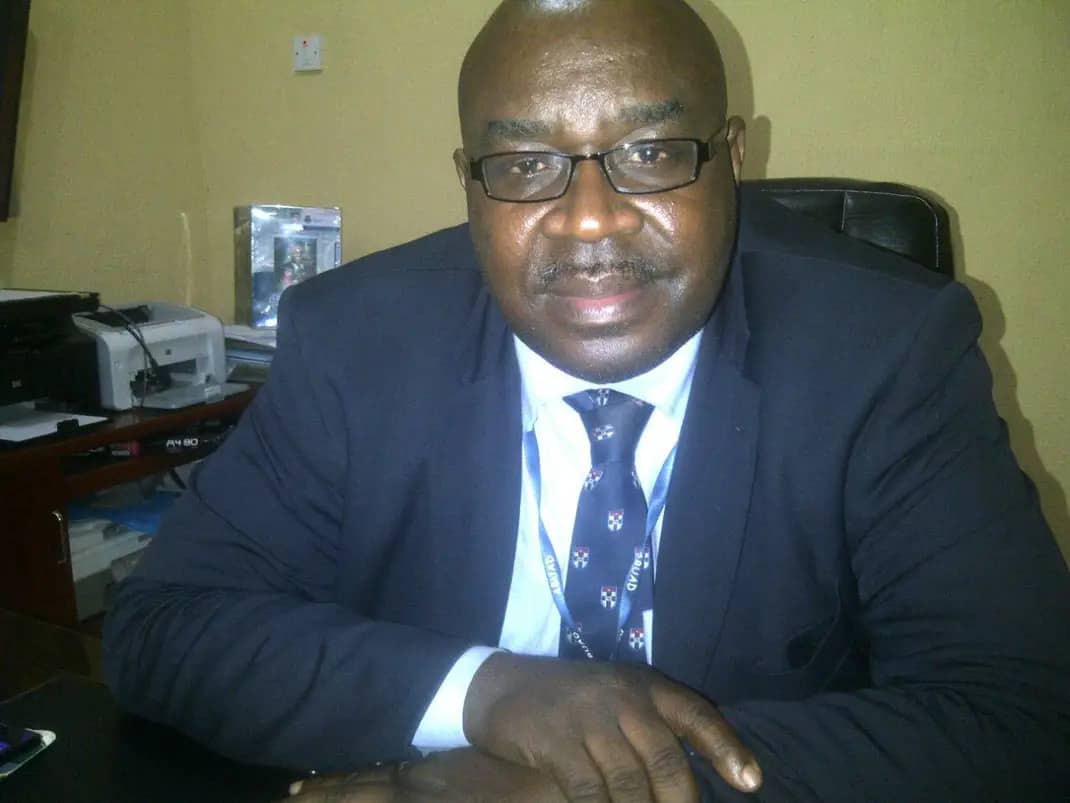

By Prof. Abiodun Ojo

Nigeria stands at a painful crossroads where the promise of governance has been dangerously hollowed out. Across towns, villages, and highways, ordinary Nigerians move through daily life with little assurance that help will come in moments of crisis. This is not an abstract fear. It is a lived reality, frightening, disturbing, and profoundly unjust.
Just days ago, that reality confronted us with chilling clarity. A distinguished professor of mathematics was involved in a lone road accident along the Ado-Ekiti Airport Road. There was no emergency number to call. No visible police patrol. No presence of the Federal Road Safety Corps. No ambulance on standby. No coordinated emergency response system of any kind. On a road serving a state capital and its airport, silence and abandonment prevailed.
But for the intervention of a passing good Samaritan, moved by conscience rather than duty, the incident would likely have ended in tragedy. The injured female driver was found in critical condition and rushed, not because the system worked, but because compassion intervened, to one of the few functional tertiary hospitals in Ekiti State, the Afe Babalola Multisystem Hospital. There, prompt emergency procedures, including urgent surgery to stop internal bleeding, saved her life.

This single incident raises a devastating question: what happens to the countless Nigerians who are not fortunate enough to encounter a good Samaritan?





The Absence of a Social Welfare Contract
In functional societies, government exists first to secure life and dignity. Roads are not merely paved; they are protected. Travel is not merely permitted; it is safeguarded. Emergency numbers work. Ambulances respond. First responders are trained, equipped, and deployed. These are not luxuries. They are the minimum obligations of governance.
In Nigeria, however, citizens are largely left to fend for themselves. There is no reliable, nationwide emergency response system. State and local governments operate without integrated trauma care networks. Highways are unpoliced, unmonitored, and unsafe. When accidents occur, survival depends more on chance than on policy.


This failure is not merely administrative. It is moral.
Two Nigerias, One Injustice
There are, painfully, two Nigerias. One Nigeria is insulated by convoys, security details, and immediate access to high-quality medical care, often abroad. Public officials routinely seek treatment overseas, funded directly or indirectly by public resources.
The other Nigeria is where the majority live. Here, a road accident can become a death sentence. Here, families sell land and personal belongings to pay hospital bills, if they reach a hospital at all. Here, emergency care is a privilege, not a right.
No nation can claim legitimacy when the lives of its leaders are valued infinitely more than the lives of its citizens.
What Must Happen Now
This is a cry not only of anguish, but of urgent reason. Government at all levels, local, state, and federal, must immediately review and rebuild Nigeria’s social welfare and public safety framework. At a minimum, this requires:
- The establishment of a functional, toll-free national emergency number that works everywhere, at all times.
- The deployment and proper funding of rapid-response ambulance and trauma services on major highways and within communities.
- Continuous patrols by police and road safety officers on strategic roads, particularly those leading to airports and state capitals.
- Sustained investment in public hospitals and trauma centers so life-saving care does not depend on isolated private institutions.
- A halt to publicly funded medical tourism for government officials until Nigerian hospitals meet acceptable emergency and care standards.
Making Life Worth Living in Nigeria
A country where citizens fear accidents more than disease, and journeys more than destinations, is a country failing its people. Governance must be felt not in speeches, but in survival; not in budgets, but in breathing bodies saved from needless death.
Nigerians are not asking for miracles. They are asking for systems that work, for roads that are safe, for help that comes when called, and for a government that treats every life as precious.
Until that happens, every lonely road remains a reminder of a broken promise, and every survivor owes their life not to the state, but to luck.
This must change. Lives depend on it.
Author Bio
Prof. Abiodun Ojo is the Provost of the Afe Babalola College of Postgraduate Studies