

At the centre of Nigeria’s most consequential corruption trial in recent years is not just a former minister, but a half-century-old ambition to transform the country’s electricity future. The Mambilla Hydroelectric Power Project, long described as a potential crown jewel of West Africa’s energy sector, has instead become a legal battlefield spanning Abuja courtrooms and an international arbitration chamber in Paris. The question now is not only who did what in 2003, but what Nigeria may still owe in 2026 for decisions made more than two decades ago.
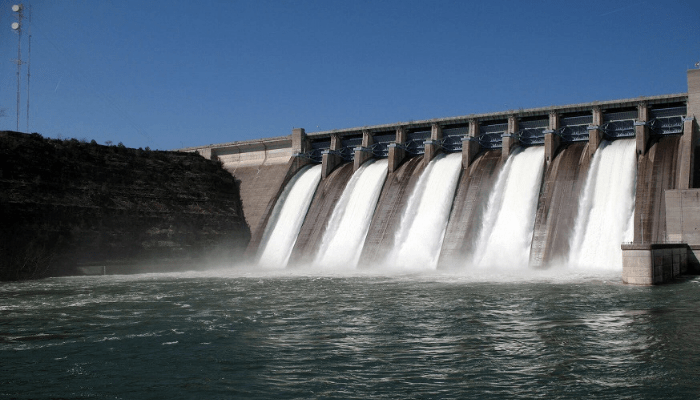
The project itself was conceived as a massive 3,050-megawatt hydroelectric dam on the Mambilla Plateau in Taraba State, near the Cameroon border. First proposed nearly 50 years ago, it has been repeatedly redesigned, delayed, and renegotiated across successive administrations. If completed as planned, it would rank among Africa’s largest hydropower facilities and significantly expand Nigeria’s electricity generation capacity. But instead of power generation, the project is now synonymous with stalled execution and legal controversy.
At the centre of the domestic criminal case is former Minister of Power and Steel, Dr. Olu Agunloye, who is facing a seven-count charge brought by the Economic and Financial Crimes Commission (EFCC). Prosecutors allege that in May 2003, he unlawfully conveyed Federal Government approval to Sunrise Power Transmission Company Limited for the construction of the Mambilla project, despite claims that such approval was either withdrawn or never properly granted. Among the most serious allegations is that he acted against a presidential directive, used a questionable document in awarding the contract, and received financial benefits linked to the company involved.

The prosecution’s case has increasingly turned on documentary evidence, particularly minutes of a Federal Executive Council (FEC) meeting held on May 21, 2003. Investigators argue that this meeting is critical in establishing whether the government approved, modified, or withdrew the proposed contract terms before the minister issued a letter of award the following day. Recent testimony from an Assistant Director in the Ministry of Justice confirmed certified extracts of those minutes, marking a key step in the EFCC’s attempt to establish an official record of government intent at the time.





Beyond the courtroom, the dispute has spilled into international arbitration. Sunrise Power is pursuing a claim at the International Chamber of Commerce in Paris, seeking compensation reportedly estimated at $2.3 billion for alleged breach of contract by the Nigerian government. The case has drawn comparisons with other high-value arbitration disputes involving Nigeria, raising concerns about long-term fiscal exposure tied to infrastructure contracts that were never fully executed. Nigerian officials, meanwhile, argue that corruption and procedural irregularities invalidate the original agreement.
Allegations surrounding the conduct of private-sector actors have further complicated the case. Government legal filings and media reports have referenced claims that senior officials were approached with inducements intended to influence decisions related to the project and subsequent arbitration. The EFCC has also pursued separate investigative leads involving interference with witnesses and attempts to obstruct inquiry processes. These allegations remain contested and are yet to be tested in full judicial proceedings.


In response, Agunloye’s defence has advanced a multi-layered argument. He denies wrongdoing and maintains that he acted within the scope of authority granted by higher government structures at the time. His legal team argues that he received prior presidential “no objection” clearance, complied with Federal Executive Council processes, and that no binding law at the time explicitly required the approvals now being cited by prosecutors. The defence also frames him as a scapegoat in a more extensive political and institutional dispute over responsibility for the project’s failure.
A central point of contention is the interpretation of government equity in the proposed project. Prosecution witnesses have suggested that the minister reduced Nigeria’s equity participation in a way that was not formally authorised, while the defence argues that the adjustment reflected a more cost-efficient structure for the state. One prosecution witness even acknowledged during testimony that the arrangement potentially reduced Nigeria’s financial exposure by hundreds of millions of dollars, though this remains legally separate from the question of procedural authority.
Another layer of complexity comes from conflicting legal opinions issued years after the initial award. Successive Attorneys-General reportedly expressed differing views on the validity of the project agreements over time, reflecting shifts in government position across administrations. The defence has cited these opinions to argue that the contract was repeatedly recognised by state authorities, while prosecutors maintain that later endorsements do not erase alleged procedural breaches at the point of origin.
As the case continues, its implications extend far beyond one former minister or one disputed contract. It highlights systemic issues in Nigeria’s infrastructure governance, where major projects are shaped by overlapping political decisions, unclear documentation trails, and prolonged legal uncertainty. With proceedings still ongoing and arbitration unresolved, the final cost of the Mambilla project remains unknown, not only in dollars, but in institutional credibility.
What is ultimately being tested is not just the legality of a single contract award in 2003, but Nigeria’s ability to draw a definitive line between state authority, private influence, and personal accountability in its largest infrastructure ambitions. Until the courts in Abuja and the arbitrators in Paris reach final decisions, the Mambilla project will remain what it has become for two decades, a symbol of promise suspended between engineering possibility and legal uncertainty.
Adebamiwa Olugbenga Michael is a Lagos-based journalist, political economy and policy analyst, and publisher of TheInsightLensProject.com, delivering data-driven open-source intelligence insights on Nigeria, Africa, and global affairs.