
By Emmanuel Ndon


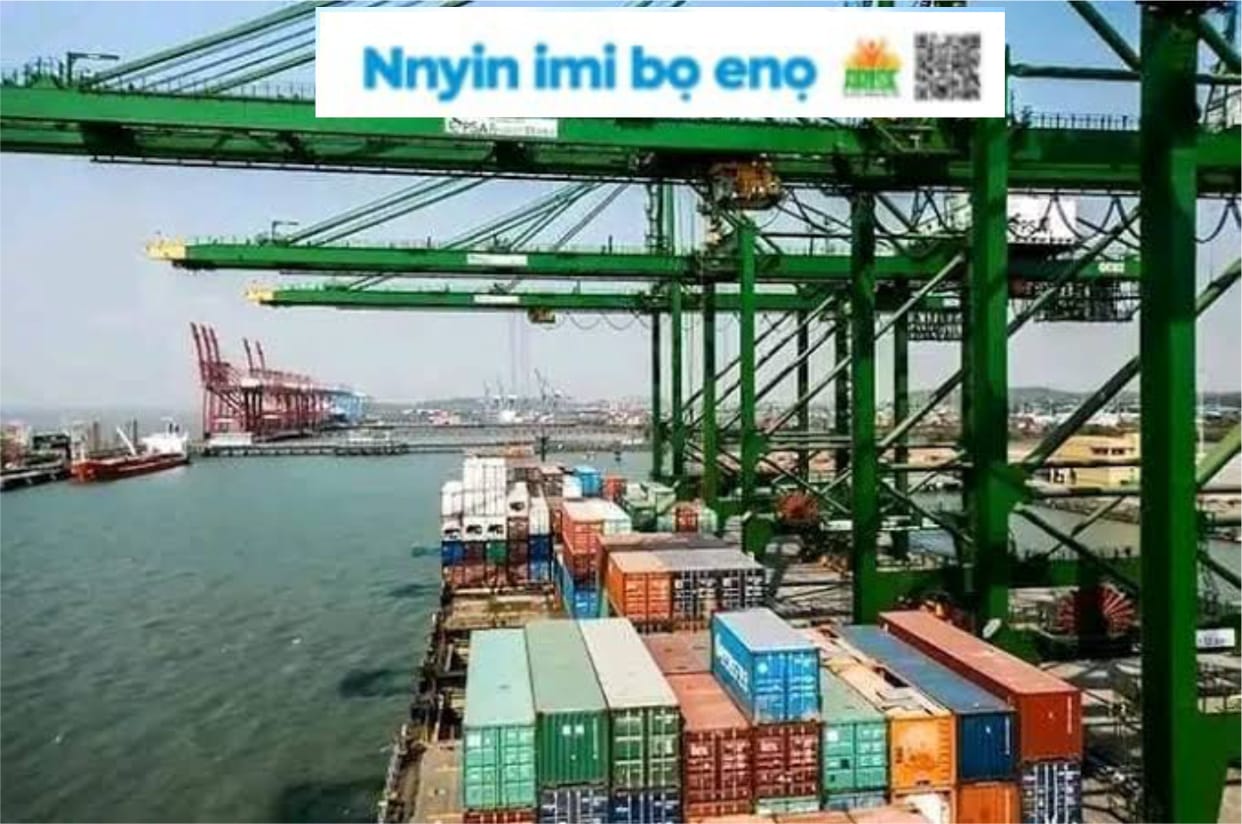
After more than two decades of planning, the Ibom Deep Seaport is approaching reality. In April 2026, Governor Umo Eno received the project’s comprehensive feasibility report—a professional validation of its viability as a transformative economic asset for Akwa Ibom.
Designed as a Public-Private Partnership, the port will accommodate New Panamax vessels with a natural depth of 17.5 metres, eliminating the need for extensive dredging. Phase 1 spans 505 hectares with 7.4 km of quay length, integrated with the Ibom Industrial City as a Free Trade Zone hub. Ongoing geotechnical surveys, access road construction and the establishment of a dedicated project office signal clear movement towards a projected groundbreaking in 2026.
The technical and financial outlook reinforces this viability. Studies confirm the site’s coastal advantages, including its proximity to oil infrastructure, existing power supply and secured land backed by a Certificate of Occupancy. Environmental assessments indicate that impacts can be effectively managed through controlled engineering measures. Financial models outline a well-defined PPP approach that combines state participation, federal concessions and private investment across container and bulk terminals. Operational projections position the port to handle high cargo volumes and support regional transshipment, easing pressure on Lagos ports while benefiting from Free Zone incentives that enhance investment returns.

Governor Umo Eno has played a central role in restoring momentum to a project that had long been delayed. Through investor engagement, regulatory coordination and early infrastructure work, the administration has moved the project from concept to execution. The official presentation of the report underscores institutional commitment, alongside directives for continued stakeholder engagement and integration with existing aviation and logistics assets. This marks a transition from prolonged planning to deliberate implementation.





For residents, the projected benefits are significant. Employment opportunities will emerge across construction, operations and support services, with emphasis on local participation and skill development. Coastal economies stand to gain from improved export access for agricultural and marine products, reducing logistics costs and strengthening income potential. Training initiatives and small-scale enterprise participation are expected to broaden economic inclusion, particularly within host communities.
At the state level, the seaport strengthens industrial expansion. Its linkage with the Ibom Industrial City positions Akwa Ibom as a processing and export hub, supporting increased trade volumes and attracting manufacturing investment. Improved logistics will enable small and medium enterprises to scale beyond regional markets, while broader infrastructure connections extend opportunities across multiple local government areas.


Host communities are likely to experience direct transformation. Reskilling programmes, environmental management efforts and community-based investments in education and healthcare will shape local development. The transition from subsistence activity to structured maritime participation offers a more stable economic base while preserving existing livelihoods through targeted interventions.
Environmental considerations further support the project’s feasibility. The natural depth reduces dredging requirements, while planned adoption of energy-efficient equipment aligns with global sustainability standards. Protective coastal infrastructure and ecosystem management strategies aim to balance development with environmental preservation, strengthening long-term resilience.
Risk management frameworks are also embedded within the project design. Diversified revenue streams, regulatory backing and private-sector participation reduce financial exposure, while institutional coordination supports continuity. Although competition exists within the regional port landscape, the project’s structural advantages like depth, location and industrial integration provide a clear strategic position.
Governor Eno’s collaborative approach, which include federal agencies, private investors and local stakeholders, has compressed years of inertia into measurable progress. Current timelines indicate a transition from feasibility to construction, reinforcing a governance style focused on execution rather than speculation.
Beyond infrastructure, the project carries broader social implications. Expanded training pathways in maritime and logistics fields will create new professional routes, while inclusive participation strategies ensure that benefits extend across gender and community lines. Cultural and economic integration within coastal areas will further anchor the project locally.
As development scales, the seaport is positioned to support wider industrial ecosystems, including logistics parks, fabrication yards and export processing zones. Increased non-oil revenue potential strengthens the state’s fiscal outlook, providing capacity for sustained public investment.
Ultimately, the Ibom Deep Seaport represents a shift from long-standing aspiration to actionable reality. The feasibility confirmation establishes a credible foundation, while ongoing implementation signals intent. Governor Umo Eno’s steady leadership and commitment to delivery deserve commendation for driving this progress. If sustained, the project positions Akwa Ibom as a viable maritime and industrial centre within the Gulf of Guinea.
Newspot Nigeria.