
By Mohammed Abubakar
Prof. Chiemela Enyinnaya Chinma, FNIFST, has made a bold move to advance food security by advocating the wider adoption of bioprocessing techniques to unlock the full nutritional and functional potential of plant-based foods.
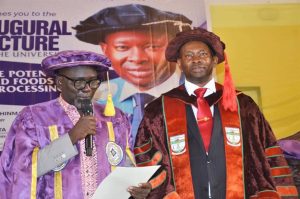

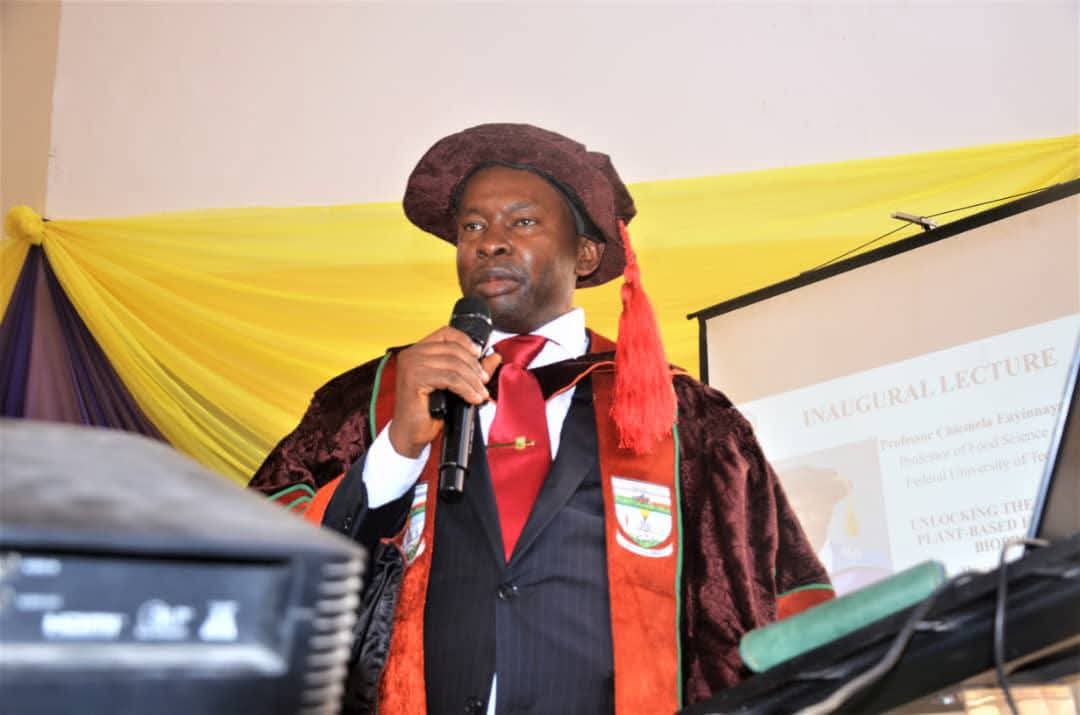
He made the call while delivering the 121st Inaugural Lecture of the Federal University of Technology, Minna, titled “Unlocking the Potentials of Plant-Based Foods Through Bioprocessing.” The lecture was presented on Thursday, 12th March 2026, at the University Auditorium, Main Campus.





Prof. Chinma, who serves as Director of the Directorate of Research, Innovation and Development (DRID) of the University, emphasised that plant-based foods remain major sources of essential nutrients such as proteins, dietary fibre, micronutrients and phytochemicals needed for human health.
He however, explained that many cereals, legumes, roots and tubers contain anti-nutritional compounds that hinder nutrient digestibility and bioavailability.


According to him, bioprocessing, which involves the use of biological materials such as enzymes, bacteria and plant cells, provides a natural and effective approach to improving the nutritional, antioxidant and techno-functional properties of plant-derived foods.
The Professor of Food Science and Technology further noted that techniques such as soaking, germination, fermentation, enzymatic processing and combined bioprocessing methods can significantly reduce anti-nutritional factors while enhancing nutrient availability and food functionality.
Prof. Chinma also identified key factors limiting the utilisation of plant-based foods in food product development, including the presence of anti-nutrients, poor functional characteristics and limited processing technologies.
Drawing from years of academic research, he presented his scholarly contributions in the bioprocessing of plant-based foods, focusing on improving the nutritional quality, functionality and utilisation of indigenous crops through innovative processing approaches.
He explained that his research has explored various bioprocessing techniques aimed at enhancing the value of plant-based food materials, thereby making them more suitable for diverse food applications and industrial use.
Prof. Chinma stressed that harnessing the potentials of plant-based foods through both modern and traditional processing techniques could significantly help in addressing malnutrition, reducing food waste and improving the livelihoods of farmers and food processors.
He therefore recommended stronger collaboration among researchers, food processors, policymakers and rural farmers to facilitate technology transfer, encourage value addition and promote the commercialisation of Bioprocessed food products.
The inaugural lecturer also called for further research on process optimisation, product standardisation, consumer acceptability and the long-term health implications of Bioprocessed plant-based foods.
According to him, increased investment in capacity building, small-scale processing infrastructure and supportive policies would encourage the wider adoption of bioprocessing technologies, reduce post-harvest losses and lessen dependence on imported food raw materials.
In his remarks, the Vice-Chancellor, Prof. Faruk Adamu Kuta, commended Prof. Chinma for his outstanding scholarly contributions and impactful research in the field of food science and technology.
He noted that the inaugural lecture reflected the University’s commitment to research that addresses national and global challenges, particularly in the areas of food security, nutrition and sustainable development.
Prof. Kuta described the lecture as timely and intellectually stimulating, adding that research on plant-based foods and innovative processing techniques would play a vital role in ensuring adequate nutrition for the growing population.
He also urged researchers and stakeholders to translate academic findings into practical solutions capable of benefiting society, industry and the agricultural sector.
The Vice-Chancellor congratulated Prof. Chinma on the successful delivery of the inaugural lecture and acknowledged the presence of numerous guests who graced the occasion.