
By Prof Abiodun Ojo
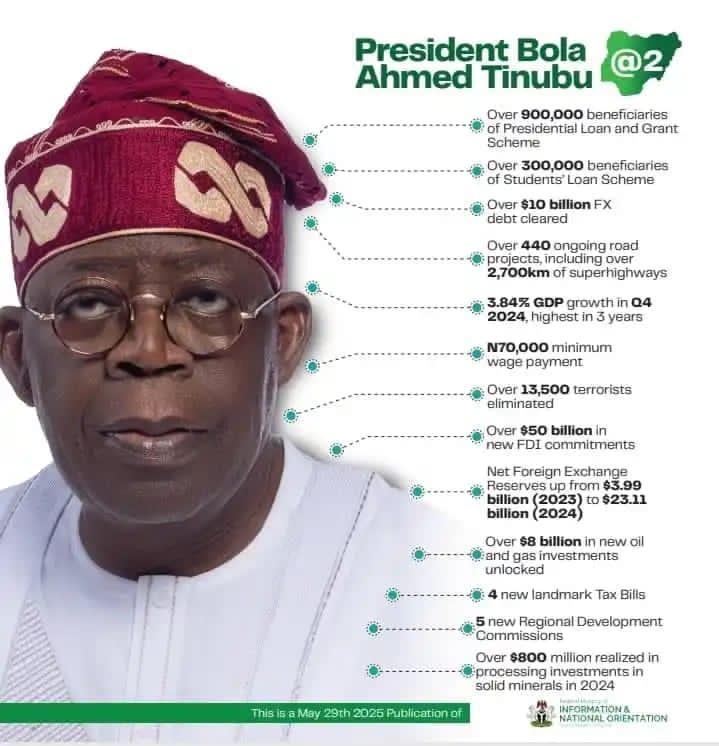
The Federal Government, led by President Bola Ahmed Tinubu, has consistently emphasized what it characterizes as significant improvements in Nigeria’s public finances. Government officials cite rising revenues, increased foreign reserves, and ongoing fiscal reforms as evidence that the economy is stabilizing and progressing toward recovery.
Official data appear encouraging, and government statements indicate that recent reforms are establishing the groundwork for enduring economic recovery.
However, beyond government briefings and policy documents, the lived experiences of millions of Nigerians present a starkly different narrative.

In markets, transport stations, farms, and homes, daily life is marked by increasing hardship rather than recovery. Inflation erodes household income, employment opportunities remain limited, and insecurity persists in numerous regions. For many Nigerians, the disparity between official optimism and lived experience is particularly pronounced.





Petrol Price Shock and the Rising Cost of Living
A significant and immediate impact on household budgets has resulted from the rapid increase in petrol prices following the removal of fuel subsidies. Recently, petrol prices have risen from approximately ₦800 per litre to over ₦1,200 in many regions.
In Nigeria, petrol serves multiple critical functions. It fuels transportation, powers generators essential for small businesses, and influences the cost of transporting food from farms to urban markets.


Increases in petrol prices have rapid and widespread effects throughout the economy.
Transport fares rise, small businesses encounter higher operating costs, farmers incur greater expenses to move produce, and food prices subsequently increase.
Staple foods such as rice, garri, beans, yams, and tomatoes have become increasingly unaffordable for many households. For millions, providing adequate nutrition has become a daily challenge.
Inflation and the Cost-of-Living Crisis
Recent economic data underscore the severity of the crisis. By late 2024, Nigeria experienced one of its most significant inflation surges in decades, with inflation reaching approximately 34.8 percent, the highest level in nearly thirty years.
Following the National Bureau of Statistics’ statistical rebasing, inflation remained elevated at approximately 24 percent in early 2025. Food prices and transportation costs continue to be the primary drivers.
Food inflation has been especially damaging because it directly affects the fundamental human need for adequate nutrition.
For workers whose wages have not kept pace with rising prices, real purchasing power has declined significantly.
Exchange Rate Pressure and Currency Depreciation
The naira has experienced sustained depreciation.
By early 2026, the official exchange rate hovers around ₦1,350 per US dollar, while the parallel market fluctuates between ₦1,425 and ₦1,440.
Currency depreciation increases the cost of imports. Nigeria remains highly dependent on imported goods, including fuel, machinery, pharmaceuticals, and various processed food products.
As the naira depreciates, businesses reliant on imported inputs encounter higher production costs, which are ultimately passed on to consumers through increased prices.
Rising Poverty Across the Country
One of the most concerning indicators of Nigeria’s economic distress is the increasing prevalence of poverty.
World Bank estimates indicate that poverty increased from approximately 40 percent of the population in 2018 to about 46 percent by 2023. Millions of Nigerians have fallen below the poverty line within a few years.
More recent estimates suggest that up to 129 million Nigerians, nearly 60 percent of the population, live in conditions of poverty.
Analysts warn that ongoing inflation and currency depreciation may push an additional 13 million Nigerians into poverty by 2025.
These statistics reflect the lived experiences of families struggling to afford food, parents unable to pay school fees, and households forced to choose between health care and necessities.
Record Revenues and the Question Nigerians Are Asking
Notably, these hardships are occurring while the government continues to report stronger revenue performance and improved foreign reserves.
By early 2026, Nigeria’s external reserves reportedly exceeded $50 billion.
Nevertheless, a fundamental question remains.
If government revenues are increasing, why does economic hardship continue to intensify?
Why do contractors continue to await payment for completed projects?
Why have infrastructure projects stalled across the country?
Why are wages unable to keep pace with rising prices?
These questions have become central to the national economic discourse.
Insecurity and the Agricultural Crisis
Economic hardship is closely linked to Nigeria’s ongoing security challenges.
Farmers in multiple regions confront threats from banditry, kidnapping, and violent attacks, leading many to abandon their farms due to safety concerns.
These challenges have widespread economic consequences. Food production declines, prices rise, rural economies weaken, and young people increasingly migrate to urban areas in search of livelihoods.
Economic growth is severely constrained when farmers cannot cultivate their land, and traders are reluctant to travel due to security risks.
The Political Question Before Nigerians
The ruling All Progressives Congress argues that the country is experiencing temporary pain as part of necessary reforms. Officials claim that removing subsidies and liberalizing the exchange rate constitute essential steps toward correcting long-standing structural problems.
Economic reforms frequently require significant societal sacrifice.
However, Nigerians increasingly question when the benefits of these sacrifices will translate into tangible improvements in daily life.
While government officials reference macroeconomic indicators, citizens often evaluate the economy through everyday realities.
They consider food prices.
They assess the cost of transportation.
They reflect on the safety of their communities.
They measure their ability to provide for their families.
Nigeria at a Critical Juncture
Nigeria stands at a critical moment.
The country possesses vast natural resources, a young and energetic population, and enormous economic potential. Yet potential alone does not put food on the table or renew public confidence.
Nigerians urgently seek concrete improvements in daily living conditions, including affordable food, stable energy costs, reliable electricity, functional infrastructure, and enhanced security.
As future elections approach, the ruling party will present its record and seek another mandate.
However, the ultimate judgment will not be determined by campaign rhetoric.
It will be delivered in markets where families struggle to buy food, in the transport fares workers pay every morning, and in villages where farmers must decide whether it is safe to return to their farms.
Government statistics must begin to reflect the everyday experiences of Nigerians. Otherwise, the country will continue to face a profound crisis of economic confidence.
Nigeria is not only experiencing economic challenges but is also confronting a widening disparity between official accounts and the lived realities of its citizens.
Bridging this gap will require more than policy declarations. It will require visible improvements in the welfare, dignity, and security of the Nigerian people.
Prof. Ojo is the Provost of the Afe Babalola College of Postgraduate Studies