
Sponsored Advert

🔴 Breaking News:
By Newspot Nigeria Editorial Desk
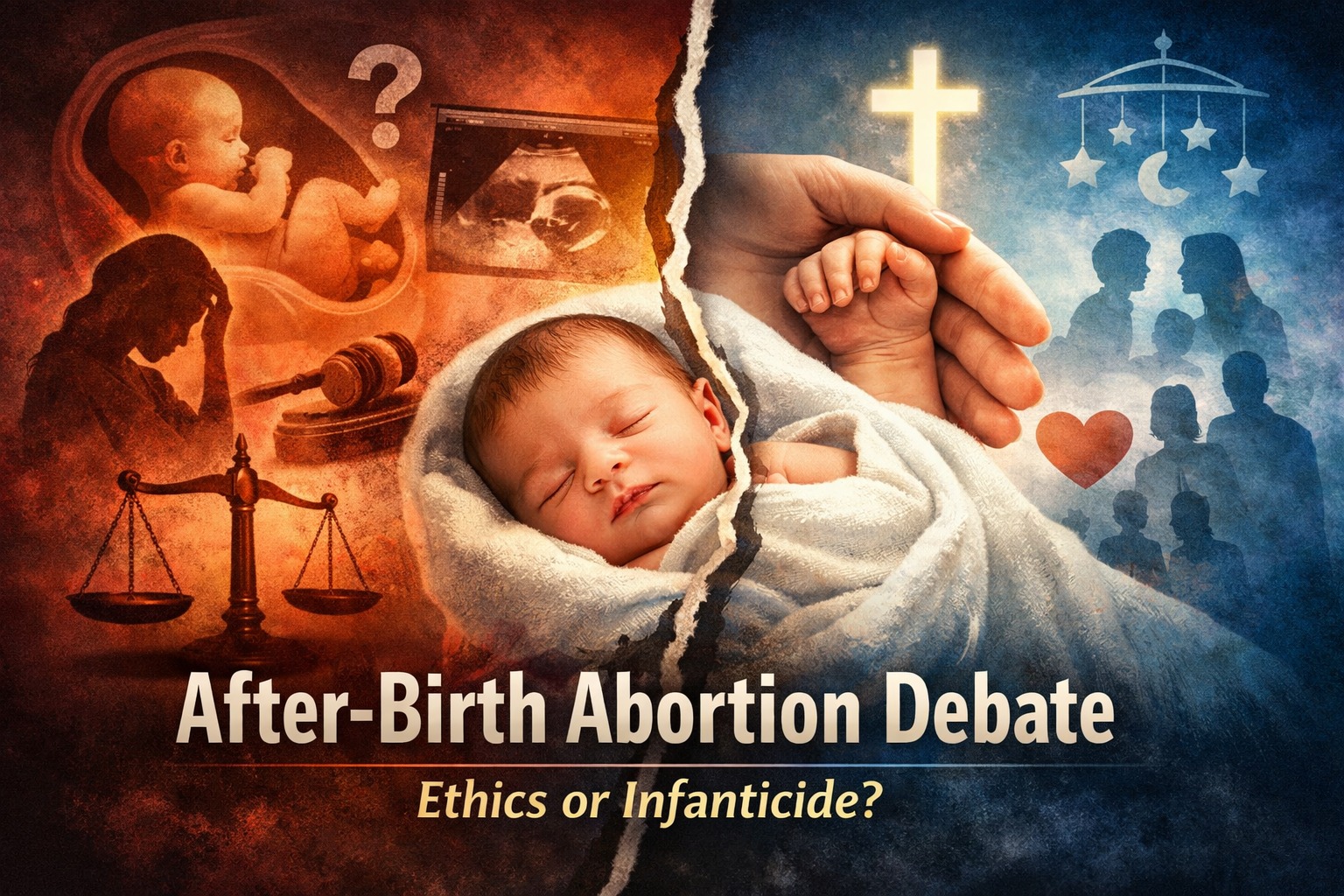
In 2012, bioethicists Alberto Giubilini and Francesca Minerva published a controversial article titled “After-birth abortion: why should the baby live?” in the Journal of Medical Ethics. The paper argued that the moral reasoning often used to justify abortion could logically extend to the killing of newborn infants under certain circumstances.
The article ignited one of the most intense debates in modern bioethics. Critics condemned it as a defense of infanticide, whereas supporters argued that it was a legitimate philosophical attempt to examine the rational coherence of abortion ethics.
The controversy surrounding the article reveals deeper disagreements about personhood, moral rights, parental autonomy, and the intrinsic value of human life. Examining the arguments on both sides helps explain why the issue provoked such powerful reactions.
The Authors’ Ethical Argument
Giubilini and Minerva attempt to address what they see as a philosophical inconsistency in modern bioethics. In many societies, abortion is legally and morally accepted for reasons that go beyond immediate threats to the mother’s life. These reasons can include severe fetal abnormalities, psychological hardship, monetary pressures, or the inability of parents to raise a child. The authors ask a provocative question: if these reasons justify abortion before birth, why would they suddenly cease to apply immediately after birth? Their argument rests on several core claims.
The Personhood Distinction
- The authors distinguish between human beings and persons.
In their view, a person is an individual capable of valuing their own existence and forming goals for the future. According to this theory, newborn infants, like fetuses, lack the cognitive capacities necessary to possess this form of self-awareness. Because of this, the authors argue that newborns do not yet possess the full moral status that confers an absolute right to life. If fetuses can be aborted because they are not yet persons, the authors contend that newborns occupy a similar moral position. This reasoning builds on earlier philosophical schools associated with thinkers such as Michael Tooley and Peter Singer, who also linked moral rights to cognitive capacities instead of biological humanity alone.
The Argument from Ethical Consistency
- Supporters of the authors’ reasoning point out the importance of logical consistency in moral reasoning.
Many legal systems permit abortion not only for medical reasons but also for social or economic reasons. If the justification for abortion rests on the absence of personhood and the burdens placed on existing individuals, then drawing a sharp moral line at birth may appear philosophically arbitrary. The authors therefore argue that birth alone does not transform a non-person into a person. Cognitive development occurs gradually, and newborns do not immediately gain the capacities that the authors consider necessary for personhood. From this perspective, the article does not necessarily advocate the practice itself but attempts to test whether common moral assumptions about abortion remain logically coherent.
The Interests of Existing Persons
- Another component of the argument concerns the interests of existing persons, including parents, siblings, and society.
The authors note that caring for children with severe disabilities can impose serious emotional, financial, and psychological burdens on families. If such circumstances are considered sufficient grounds for abortion before birth, they argue that discovering the same condition immediately after birth should not fundamentally change the moral evaluation. The authors also question the assumption that adoption is always a morally preferable solution. They suggest that some parents may experience profound psychological trauma from relinquishing a child for adoption, making the ethical calculus even more complex.
Major Criticisms of the Argument
Despite its philosophical structure, the article encountered overwhelming criticism from ethicists, religious leaders, disability advocates, and members of the public. Critics maintain that the authors’ reasoning rests on deeply problematic assumptions about the value of human life.
The Intrinsic Value of Human Life
- One of the strongest objections concerns the concept of human dignity.
Many ethical traditions, including natural law theory, religious ethics, and modern human rights frameworks, hold that every human being possesses inherent worth simply by virtue of being human. Under this view, moral rights do not depend on cognitive capacities such as self-awareness or rational planning. A newborn infant, though lacking advanced mental abilities, still possesses full moral worth. Critics warn that tying moral rights to cognitive ability endangers the protection of other at-risk groups, including people with severe disabilities, dementia, or diminished consciousness.
Birth as a Moral Boundary
- Many ethicists also argue that birth represents a morally significant threshold.
Before birth, the fetus exists entirely within the body of the mother, creating complex questions about bodily autonomy and reproductive rights. After birth, however, the child becomes an independent member of society. This transition creates new social, legal, and moral relationships between the child and the wider community. Because of this change, critics claim that birth gives a clear and meaningful moral boundary.
Slippery Slope Concerns
- Another common criticism is that the authors’ argument risks opening the door to dangerous ethical consequences.
If moral status depends on cognitive capacities, critics ask where the line should be drawn. Some people with severe intellectual disabilities may never develop the abilities the authors associate with personhood. Critics, therefore, worry that adopting this system could erode moral protections for some of the most vulnerable members of society.
Adoption as an Ethical Alternative
- Opponents also reject the authors’ dismissal of adoption as a viable alternative.
They argue that when parents cannot raise a child, adoption provides an option that preserves the life of the infant while allowing another family to provide care. From this perspective, the ethical challenge consists in strengthening social support systems rather than reconsidering the right to life of newborns.
The Global Backlash
- Outside academic criticism, the article provoked extraordinary public outrage.
Media outlets around the world quickly framed the article as a defense of infanticide. Headlines in major newspapers and television programs portrayed the authors as advocating the killing of newborns. The controversy escalated rapidly. Both authors received thousands of hostile messages, including death threats. Francesca Minerva reported fears for her safety and temporarily withdrew from public academic engagement. The scale of the backlash raised concerns within academia about the treatment of scholars presenting controversial ideas.
The Journal’s Defense of Publication
- Despite the intense criticism, the Journal of Medical Ethics defended its decision to publish the article.
Editor Julian Savulescu argued that academic journals exist to examine difficult ethical questions and that controversial arguments should be addressed through debate rather than censorship. The journal emphasized that the article had undergone peer review and that publishing it did not constitute endorsement of its conclusions. In response to the controversy, the journal also published numerous rebuttals and responses from scholars representing a wide variety of perspectives.
Broader Ethical Significance
The discussion around the article highlights a deeper divide in contemporary bioethics between two major moral paradigms.
Personhood-Based Ethics
This approach grounds moral rights in cognitive capacities such as self-awareness, rationality, and the ability to form future-directed preferences.
Human Dignity Ethics
This theory holds that every human being possesses equal moral worth regardless of intellectual capacity or developmental stage. These competing perspectives result in profoundly different conclusions about abortion, euthanasia, and the moral status of at-risk individuals.
Conclusion
The controversy surrounding “After-birth abortion: why should the baby live?” illustrates how philosophical arguments can challenge deeply held moral intuitions. Giubilini and Minerva sought to test the logical foundations of abortion ethics, but their conclusions collided with widely held beliefs about the sanctity of human life and the protection of newborn children. Whether one finally agrees or disagrees with the authors’ reasoning, the debate stresses the importance of carefully examining the philosophical principles that shape ethical and judicial judgments about life, personhood, and moral responsibility. The article’s continuing significance does not lie in its conclusions but in the questions it forced society to confront: What makes someone a person? When does the right to life begin? And what obligations do societies owe to the most vulnerable members of the human community?


Sponsored


Advertisement