
By Newspot Nigeria Business Desk


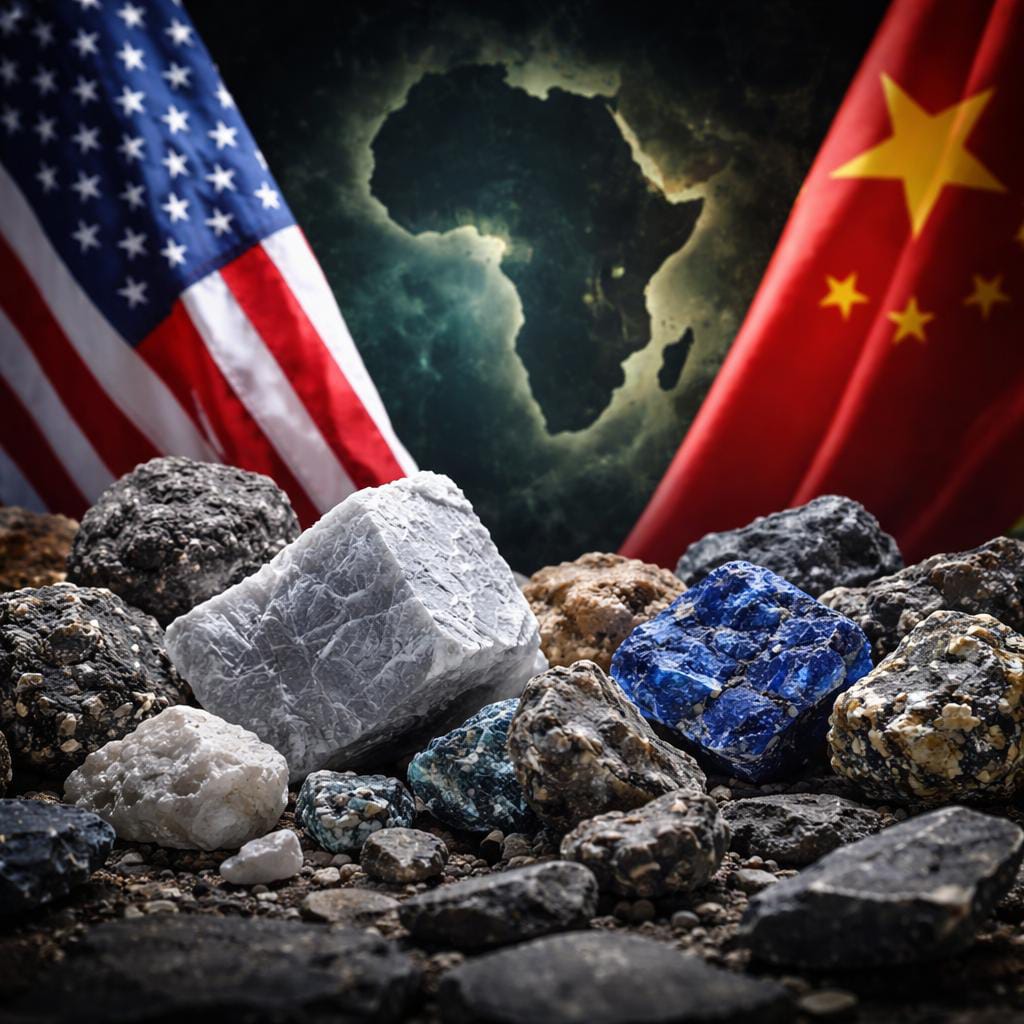
Newly compiled foreign direct investment data shows that the United States recorded higher investment flows into Africa than China in 2023, marking the first time since 2012 that annual US flows exceeded China’s.
According to figures from the China Africa Research Initiative, CARI, at Johns Hopkins University, US foreign direct investment flows into Africa reached approximately $7.8 billion in 2023, compared with about $4 billion from China.
The data refers specifically to annual FDI flows, meaning new investment recorded within that year.
A One-Year Reversal, Not a Structural Shift
While the 2023 figures drew attention to a changing investment pattern, more recent updates suggest the shift may not represent a sustained trend.





CARI’s subsequently released 2024 data shows China recorded approximately $3.37 billion in FDI flows into Africa in 2024, while US flows reportedly turned negative on a net basis, reflecting divestments and capital movements.
The contrast underscores how volatile annual FDI flows can be, especially when driven by large transactions or corporate restructuring.


Critical Minerals Driving Competition
Much of the renewed investment interest centers on Africa’s vast reserves of lithium, cobalt, rare earth elements, tin, tantalum, and tungsten, minerals critical to electric vehicles, artificial intelligence systems, renewable energy technologies, and advanced defense applications.
China has historically maintained strong supply-chain dominance in mineral processing and infrastructure development across the continent. The United States, meanwhile, has sought to diversify supply chains and reduce strategic dependence in key sectors.
US Strategic Financing Efforts
The US International Development Finance Corporation, DFC, has played a visible role in supporting mineral-linked projects.
In Rwanda, Trinity Metals secured roughly $3.9 million in technical assistance funding from the DFC to expand operations producing tin, tantalum, and tungsten. The company has positioned itself as part of efforts to strengthen alternative supply chains.
In South Africa, ReElement Africa, a subsidiary of US-based American Resources, has announced plans to develop mineral processing capacity aimed at local value addition.
Industry observers note that in-country processing and joint-venture models may provide more durable economic benefits than raw mineral exports alone.
Understanding the Data
It is important to distinguish between:
• FDI flows, which measure net new investment within a single year
• FDI stock, which measures total accumulated investment over time
Even when annual flows shift, long-term cumulative investment patterns may remain largely unchanged.
The Broader Picture
The evolving data reflects a fluid global investment environment rather than a definitive geopolitical realignment. African governments continue to engage with multiple partners, including China, the United States, Europe, India, Japan, and Gulf states.
For policymakers, the key question is not which country leads in a single year’s investment flows, but how to convert foreign capital into long-term industrial development, job creation, and technological capacity.
— Newspot Nigeria