Boxing has always been the theatre of rebellion. A place where men rise from nowhere, break rules written and unwritten, speak truth to power with their fists—and sometimes with their mouths.

Before Terence “Bud” Crawford, there was Muhammad Ali, the Louisville Lip, the poet-warrior who refused to fight in Vietnam, refused to bow to the American establishment, refused to apologise for his stand. They took his title. They took his prime years. They took his licence. But they never took his voice. They never took his soul. They never took his rebellion.
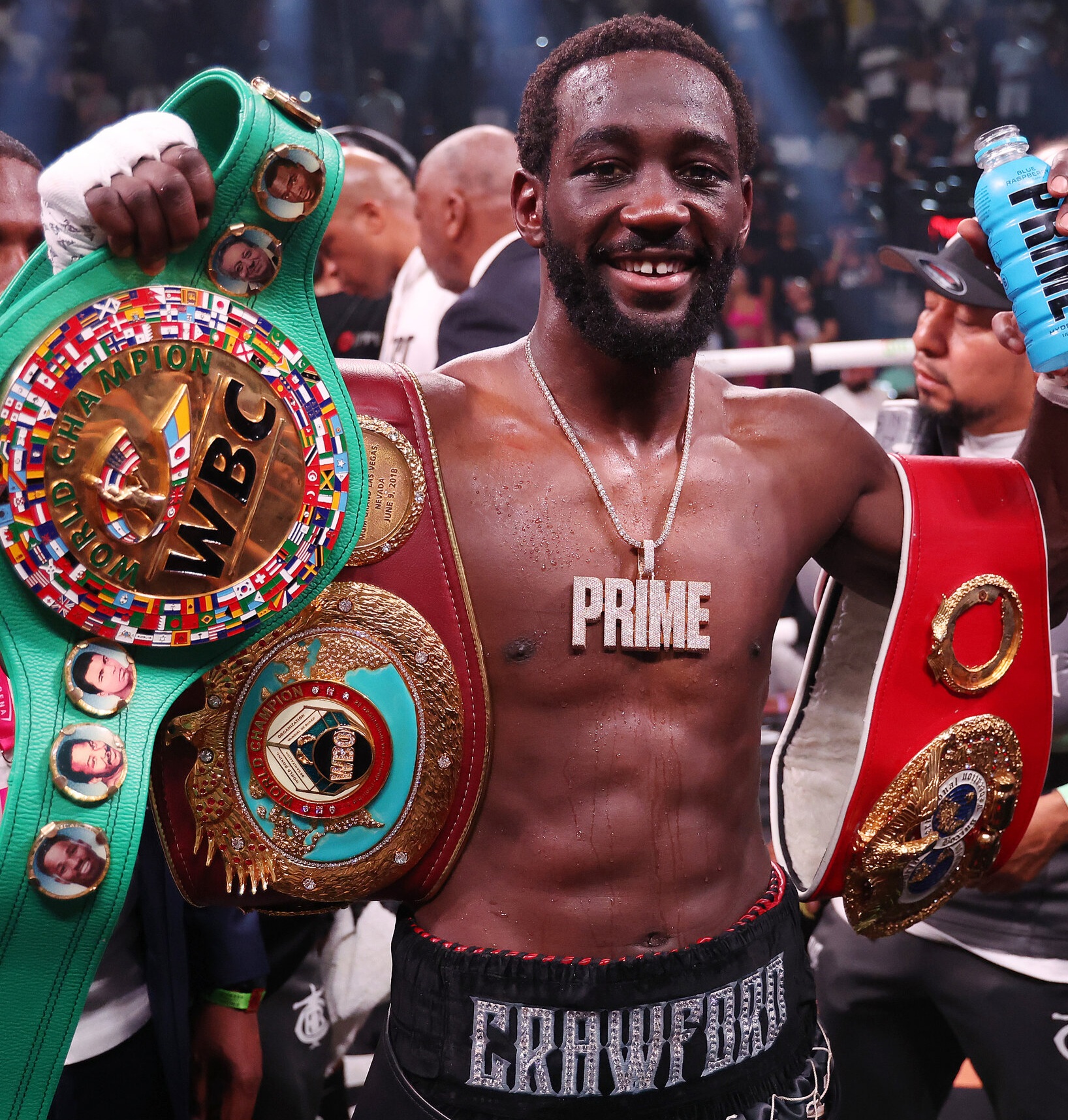
History has a way of repeating itself—not in the same language, not in the same decade, not in the same style, but in the same spirit. And this year, I saw that spirit come alive again in Crawford: the soft-spoken assassin from Omaha who, like Ali, has decided that he will not be controlled, not by promoters, not by networks, not by sanctioning bodies, and certainly not by the alphabet soup of organisations that treat champions like tenants owing rent.
Crawford’s rebellion reached a climax this year when the WBO slapped him with a directive to pay $300,000—a sanctioning fee—for a fight he wasn’t even allowed to defend because politics robbed him of a chance to fight. And Crawford, in the language of the streets that raised him, fired back:

“I’m not giving them no fucking $300,000.”





It was the sound of a man tired of being milked. Tired of being used. Tired of a system that punishes champions for breathing. You could hear Ali’s ghost chuckling somewhere: “There goes another one.”
For decades, sanctioning bodies have lived fat off the sweat of fighters—collecting 3%, 5%, sometimes more of fighters’ purses. A champion wins and immediately loses a chunk of victory to men in suits. A fighter bleeds, another man counts the money. And now the voices are speaking. Listen to them:


Teddy Atlas, veteran trainer who once trained Mike Tyson and boxing commentator, thundered:
“Sanctioning bodies shouldn’t feed off fighters like parasites. The fighters take the punches. They take the risks. And now Crawford is standing up to them. Good.”
Andre Ward, himself once a rebel champion who retired undefeated after fighting the system more than opponents, nodded in solidarity:
“If Bud says no, I’m with Bud. Fighters have been paying for too long without asking why.”
Even Shawn Porter, a former champion who suffered defeat in the hands of Terrence Crawford, then turned boxing analyst, added:
“These fees don’t protect fighters. They don’t help fighters. They help organisations survive off fighters.”
Not everyone agrees. Some insiders insist that sanctioning bodies provide order—rankings, mandatory challengers, legitimacy. One promoter, requesting anonymity, argued:
“Without sanctioning bodies, boxing becomes a free-for-all. You pay because you want the belt. Crawford is great, but rules are rules.”
Rules? Ali heard that in 1967 when Uncle Sam demanded he serve in a war he did not believe in. “I ain’t got no quarrel with the Viet Cong,” Ali famously said. They stripped him of everything except his conscience. That was the ultimate rebellion. And history eventually bent in his favour.
Crawford knows this history. He knows what rebellion costs. He knows what silence costs more. And so he stands—alone, unbroken, unbowed—saying in effect: “Enough is enough.”
The question is: Is this the beginning of the end for Crawford—or the beginning of a new era?
Boxing has a way of punishing its rebels before rewarding them. Ali was exiled. Lennox Lewis was stripped. Riddick Bowe dumped a belt in the trash. Floyd Mayweather paid his way through fines and fees. Tyson Fury was suspended, reinstated, fined, forgiven. Boxing loves the rebel but only after it first crucifies him.
Crawford may be entering that zone. The zone where champions lose belts outside the ring. The zone where fighters get labelled “difficult.” The zone where doors close quietly. He may be stripped. He may be sidelined. They may crown a “new” champion on paper—a man who won a belt Crawford never lost. They’ve done it before. They will do it again.
But what they cannot strip from him is truth—his truth. The truth that he has earned every drop of respect through sweat, blood, and brilliance. The truth that he has kept boxing honest by fighting anyone, anywhere, anytime. The truth that he has carried the sport on his back when politics almost killed it. The truth that he is the most complete fighter of his era.
And this year, even with all the noise, even with all the controversy, Crawford reminded us who he is. A maestro. A surgeon. A sniper. A man who studies his opponent like a teacher reading an essay full of errors.
Crawford in the ring is poetry without rhyme, music without sheet, jazz without rehearsal. He starts slow, downloading data off his opponent. He switches stances like a painter switching brushes. He creates beauty in brutality. And when he decides the fight is over, the fight is over. The judges can go home. The crowd can stop arguing. The commentators can keep quiet. Because Crawford has spoken. He has spoken with his lethal fist of fury.
This is why he is my Fighter of the Year—not just for what he did inside the ring, but for what he dared to say outside it. For the way he carried the torch passed down from Ali—the spirit of defiance, the courage to say no, the bravery to speak unfiltered truth even when it comes out raw, like:
“I’m not giving them no fucking $300,000.”
Some say rebels destroy. But in boxing, rebels save the sport. They force conversation. They expose rot. They challenge power. They remind us that fighters are human beings—not ATMs.
So, is this the end for Crawford?
No. This is the beginning of his second fight—the fight outside the ring. The fight Ali fought. The fight every great champion eventually faces: the fight for dignity, for fair treatment, for respect beyond belts.
Crawford may lose titles. He may lose rankings. He may lose favour. But he will never lose himself. And in the long run, boxing respects the man who stands by principle. It always has.
Ali lost everything and came back to become The Greatest.
Crawford is losing patience and may yet become The Liberator.
In a year full of noise, give me the man who told the truth in the language he knew.
In a year full of politics, give me the man who refused to be milked.
In a year full of champions, give me the rebel who stood alone.
Terence “Bud” Crawford.
The Rebel.
My Fighter of the Year.
Who is yours?