By Olugbenga Adebamiwa
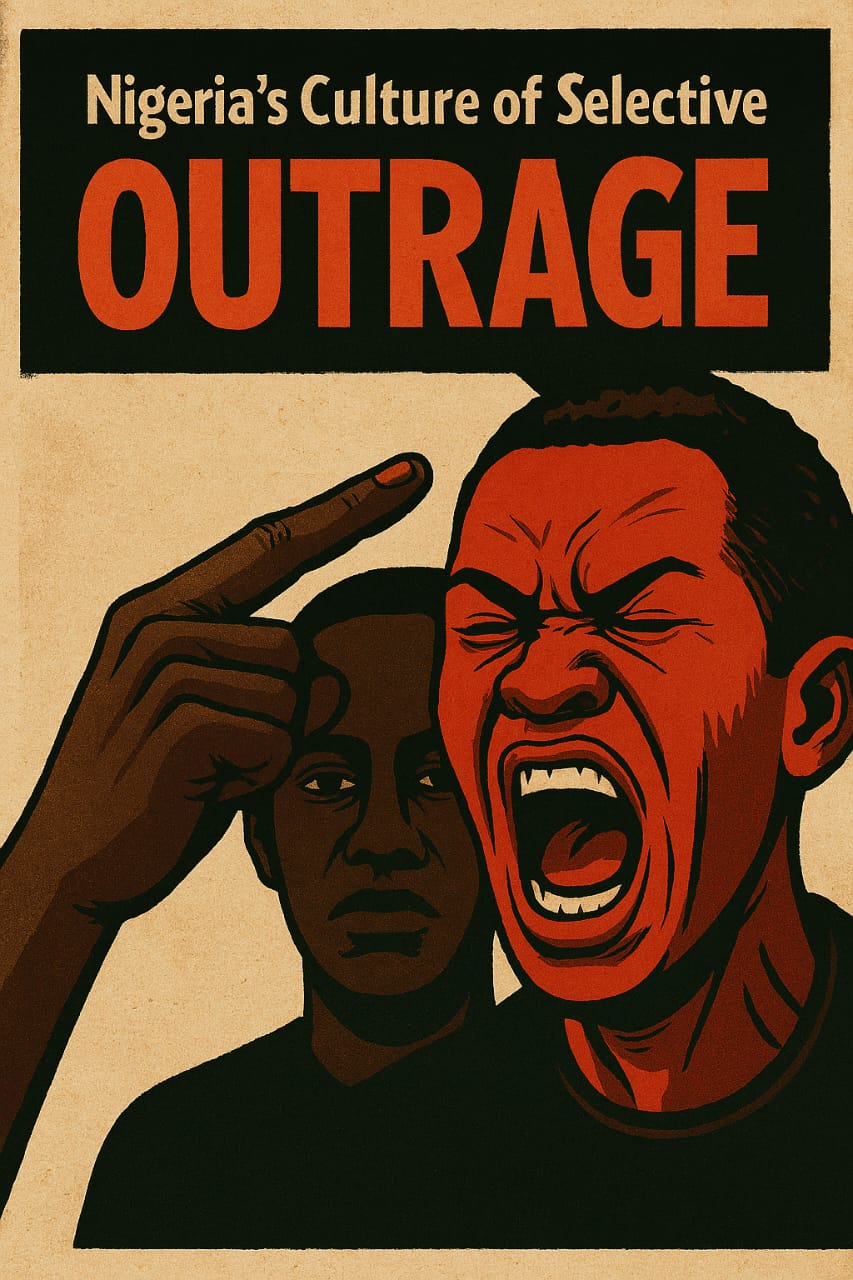
Nigeria’s democratic evolution continues to be sabotaged not only by weak institutions and leadership failures but also by a deeply rooted culture of selective outrage where citizens demand blind loyalty for “their own,” yet unleash ferocity on others for similar or lesser failings. This hypocrisy, subtle yet corrosive, is shaping national discourse, breeding mistrust, and reinforcing the polarized society Nigeria struggles daily to overcome.
One of the most troubling social patterns in today’s Nigeria is the rise of what can best be described as tribalized morality, the belief that one’s preferred politician, ethnic group, or religious bloc enjoys immunity from scrutiny, while the faults of opponents are magnified and weaponized. This attitude, evident across social media platforms and political debates, creates an environment where accountability becomes optional and criticism is interpreted as a personal attack. Analysts note that this mindset thrives because Nigeria’s political culture rewards loyalty over truth, identity over integrity, and emotional allegiance over evidence-based reasoning.
Across public conversations, from national newspapers to WhatsApp groups, any attempt to interrogate governance failures is often met with accusations of bias. If corruption, insecurity, or poor leadership is discussed, someone inevitably argues that “you’re attacking my tribe,” “you’re insulting my religion,” or “you’re targeting my region.” This defensive reflex has derailed meaningful dialogue on critical national issues such as unemployment (hovering around 33% by some estimates), inflation (which crossed 30% in 2025), and insecurity affecting virtually every region. In countries with stronger civic cultures, blunt criticism is seen as a democratic tool, not a fundamental threat. But in Nigeria, truth-telling is frequently recast as hostility.

Citizens often insist that their past misdeeds be forgotten, their contradictions excused, and their political choices protected from scrutiny. Yet, the same individuals have no hesitation producing viral skits, talk shows, and videos mocking the missteps of others. The inconsistency is glaring, Nigerians simultaneously crave immunity and indulge in ridicule. This cultural duality fuels negativity, erodes trust, and normalizes the idea that hypocrisy is not just acceptable but expected. Sociologists argue that such moral inconsistency is a key factor in Nigeria’s difficulty building consensus around reforms in policing, electoral processes, and public service delivery.




This selective outrage has profound consequences for governance. When citizens only criticize selectively, leaders learn quickly that accountability is negotiable. Political actors then exploit these divisions, framing every inquiry as an “attack on our people.” Policy failures, whether in education, healthcare, or economic planning become harder to address because honest debate is clouded by tribal and emotional loyalties. Nigeria loses the possibility of collective problem-solving, as neutrality itself becomes suspect, often equated with betrayal or hostility. This worsening insincerity reinforces a culture of fake smiles, polite silence, and suppressed truth, conditions fatal to any nation seeking progress.
If Nigeria is to break free from this cycle, the country must cultivate a new national ethic rooted in truth, introspection, and intellectual honesty. That means encouraging citizens to scrutinize their political champions with the same intensity they apply to others. It means embracing difficult conversations about corruption, insecurity, tribal prejudice, and governmental failures without personalizing the debate. Lessons from established democracies show that societies progress faster when citizens value candour over comfort, facts over feelings, and accountability over blind loyalty.


Nigeria’s long-term stability depends on its willingness to confront its own contradictions. A society that silences honesty but rewards hypocrisy cannot produce visionary leadership or an engaged citizenry. Moving forward requires normalizing blunt truth-telling, breaking the taboo around self-critique, and replacing selective outrage with consistent standards. Only then can the nation build the cohesion and institutional trust needed for real progress. This begins with choosing honesty over fake comfort and acknowledging a final truth, we are all guilty of this hypocrisy.
©️ Adebamiwa Olugbenga Michael
Lagos-based political Analyst Exploring Ethnic Economics and Urban Policy Through Open-Source Data