If we allow only external voices to define our narrative, Nigeria will be seen only as a nation of conflict, not as a nation of courage. The Church, together with peace practitioners, must engage international partners from a place of truth and dignity, not fear or victimhood.
When former U.S. President Donald Trump declared that “Christianity faces an existential threat in Nigeria” and called for the country to be designated a “Country of Particular Concern” on religious freedom grounds, the global spotlight once again turned to Africa’s most populous nation.
To many Nigerian Christians, this statement seemed like long-overdue recognition of their pain — a validation of years of fear, attacks, and loss suffered in places like the Middle Belt and the North. To others, however, it raised complex questions about narrative, context, and motive. Was this declaration truly a prophetic wake-up call, or another foreign oversimplification of a deeply layered national crisis?
The Danger of One-Dimensional Narratives

Nigeria’s security challenges are tragic but multifaceted. What appears as “religious persecution” in one region often overlaps with ethnic rivalries, resource conflicts, criminality, and weak governance. While Christians have indeed been victims of horrific violence, so too have Muslims and people of other backgrounds.




Reducing every act of violence to religion risks inflaming division rather than inspiring solutions. The Church must, therefore, respond with truth, balance, and the spirit of reconciliation, not just outrage. A peace-conscious Church refuses to weaponize pain; it channels it into purpose.
The Test Before the Church


Trump’s declaration, whether politically motivated or not, serves as a spiritual mirror for the Nigerian Church. It exposes not just external persecution, but internal fragmentation.
The Church in Nigeria has become a moral compass often clouded by competition, suspicion, and denominational walls. We preach unity but struggle to practice it. We condemn corruption but often cozy up to corrupt systems.
If the world says “Christians are under threat,” we must ask, is the greater threat outside or within? The Church’s credibility is not merely in its cries for justice but in its ability to model righteousness, unity, and compassion in a broken society.
A Call to Prophetic Responsibility
Now is not the time for the Church to play victim; it is the time to lead healing. The cross was never a symbol of self-pity but of redemptive courage.
Instead of defensive reactions, the Nigerian Church must:
Strengthen its moral voice against all forms of violence, whether by herdsmen, militants, jihadist or political actors.
Promote interfaith collaboration, showing that peace is not weakness but divine strength.
Hold the government accountable for protecting all citizens while offering spiritual frameworks for national unity.
Invest in peace education and grassroots dialogue, particularly in conflict-prone communities.
This is how the Church turns pressure into power, by becoming the moral and spiritual infrastructure of national peace.
The Role of Faith Leaders in Shaping Nigeria’s Image
Globally, this moment demands that Nigerian faith leaders rise as peace diplomats — telling the full story of Nigeria’s struggles and its strengths.
If we allow only external voices to define our narrative, Nigeria will be seen only as a nation of conflict, not as a nation of courage. The Church, together with peace practitioners, must engage international partners from a place of truth and dignity, not fear or victimhood.
Our message must be: Yes, there are challenges — b⁸ ut we are confronting them with faith, wisdom, and unity. Yes, we need help but not such that will escalate the already fragile situation.
The Real Test
Trump’s statement, whether seen as political rhetoric or prophetic alarm, has handed the Nigerian Church a divine test.
Will we react with bitterness, or respond with balance?
Will we divide further, or unite for peace?
Will we remain defensive, or rise as agents of national transformation?
As Jesus said in Matthew 5:9, “Blessed are the peacemakers, for they shall be called the children of God.”
The true test of the Nigerian Church is not how loud we shout about persecution or genocide but how boldly we live out peace in a nation desperate for healing. Let’s engage the government to embrace help that some of today’s actors requested for months or years ago from other nations. Our nation needs urgent help.
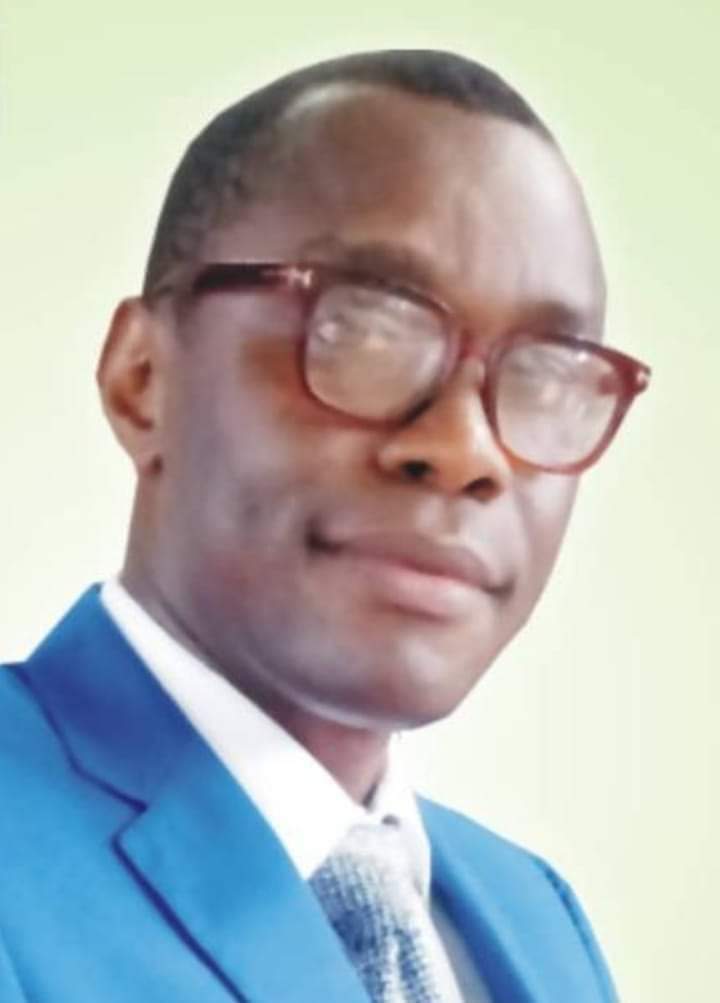
Prof. Ofonime Emmanuel Bassey is a Conflict, Peace, and Security Leadership Expert/Coach and a Public Theologian. He works with political, community, educational, corporate, and faith-based leaders to promote inclusive governance, strategic mediation, and sustainable peace in Nigeria and beyond.
With over 30 years of experience in peacebuilding, conflict resolution, law enforcement, security strategy, academia, and United Nations peace missions, he diagnoses the roots of conflict and prescribes holistic pathways for healing, reconciliation, and sustainable peace.
He currently serves as Chairman of the South-South Zone (Akwa Ibom, Cross River, Rivers, Bayelsa, Delta, and Edo States) for the Police Campaign Against Cultism and Other Vices (POCACOV). He is also a Professor at Charismatic International University, Cameroon, and ICOF-CSU University, Zambia.
An Apostolic Bishop and prolific author of more than 30 books, he is the President and Chancellor of the NISSI Safety Management Institute – www.nissiinstitute.net.
📱 WhatsApp: +234 706 582 8892 | 📧 [email protected]