
By Newspot Nigeria Editorial Desk

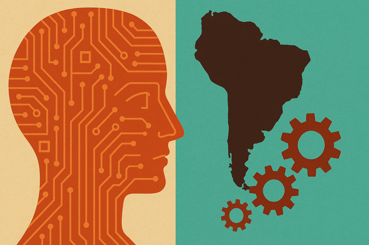
Artificial Intelligence (AI) is no longer an abstract concept confined to Silicon Valley labs or European research papers—it’s already reshaping elections, classrooms, and financial decisions around the world. In Latin America, that shift is pushing governments to ask a vital question: Should we create our own rules for AI, or copy-and-paste from others and risk becoming digital colonies?
This question matters far beyond Bogotá or Buenos Aires. For countries like Nigeria, watching from across the Atlantic, Latin America’s struggle to craft context-specific AI regulation holds valuable lessons.
As Eduardo Levy Yeyati outlines in Americas Quarterly, Latin America faces both a challenge and an opportunity. On one hand, the region’s regulatory landscape is fragmented, uneven, and slow to react. On the other, its governments still have the chance to develop AI frameworks that reflect their local cultures, institutions, and economies—not just the interests of tech giants or foreign governments.

That “third way” Yeyati advocates—between the heavy-handed control of the EU and the deregulatory wave from Washington—should spark reflection in Nigeria and across Africa. Just like Latin America, Nigeria suffers from weak infrastructure, informal labor markets, and uneven digital inclusion. Yet we also have a vibrant innovation ecosystem, especially in fintech, health tech, and education. The question is: Can we regulate in a way that protects our people without choking innovation?





Regulation Without Repression
The global AI landscape is splitting into extremes. In early 2025, the United States under President Trump revoked many safety-centered AI guidelines, favoring economic competitiveness over civil protections. Europe, meanwhile, doubled down on regulation with its upcoming Cloud and AI Development Act (CAIDA), set to enforce sovereignty rules and clamp down on unverified systems. Neither model fits Nigeria or Latin America.
For nations still catching up on broadband access, educational gaps, and data sovereignty, overregulation could crush fledgling startups. But deregulation invites exploitation, with foreign firms dumping untested algorithms into vulnerable markets.


The smart path, as Yeyati suggests, lies in clear, adaptable, homegrown regulation. Latin American countries like Brazil and Chile are already moving in that direction. Brazil’s draft bill borrows structure from the EU AI Act but adds civil liability and tiered risk controls that suit local conditions. Chile builds its laws around transparency and human oversight. Even Argentina—still without formal legislation—is holding hearings on electoral manipulation via synthetic media. These are not just gestures; they’re steps toward a more sovereign digital future.
Nigeria should take note.
Four Questions to Guide the Way
According to Yeyati and Angeles Cortesi, every country building its own AI regulation must answer four questions:
- What’s the purpose? Is the goal to protect rights, boost innovation, or defend national interests? In Nigeria, where election integrity and financial inclusion are major priorities, all three goals matter.
- Where are the risks? Not all AI tools pose equal harm. A TikTok filter isn’t the same as an AI loan officer or predictive policing tool. Nigeria’s laws must be risk-based, focusing oversight where people can be hurt most.
- What’s the approach? Should we write broad ethical principles, strict technical standards, or sandbox-style environments that let startups test innovations safely? Our patchwork of regulation today doesn’t give clarity. A tiered mix could work better.
- What’s the local context? AI systems built on English-language datasets or Western financial behavior often fail to interpret African realities. Our laws must address linguistic, cultural, and institutional differences—and make room for indigenous data.
From Copying to Leading
Too often, Nigeria’s approach to digital policy has been reactive or borrowed. We cite European privacy rules or American innovations without asking if they fit our environment. But like Latin America, we have the talent, the urgency, and the demographic momentum to lead—if we act now.
Imagine Nigerian universities hosting AI oversight labs to examine tools used in agriculture, education, or mobile lending. Imagine NITDA working with startups through regulatory sandboxes that test solutions without waiting years for a law. Imagine ECOWAS or the African Union developing shared AI standards, avoiding the trap of companies jurisdiction-shopping between weak enforcement zones.
Latin America’s moves are not just regional. They are global signals that the Global South will not be a passive recipient of AI’s impact. Nigeria must signal the same.
As Latin American governments prepare to evolve their regulations quarterly instead of yearly and prioritize training local talent over importing foreign “experts,” Nigeria must ask: Are we prepared to do the same?
The next 18 months, Yeyati warns, are decisive. That’s true for Nigeria too. If we continue on autopilot, we risk losing control over our digital future. If we act now—with clarity, courage, and coordination—we can shape AI in our own image.
Newspot Nigeria will continue to follow this conversation and spotlight how emerging economies like ours can take the driver’s seat in the race to a just digital era.
—
This commentary was prepared by the editorial team at Newspot Nigeria. For more insights and regional perspectives on technology, governance, and innovation, visit newspotng.com.