By Newspot Nigeria Editorial Desk

A groundbreaking new study by a team of top international scholars has revealed that Africa’s remarkable success in women’s political representation is not a recent phenomenon, but a powerful legacy of traditional female political authority dating back centuries before colonialism.
Published by the Becker Friedman Institute at the University of Chicago, the working paper titled “The Persistence of Female Political Power in Africa” uncovers robust historical and empirical links between precolonial female leadership roles and modern female representation in local government institutions across Africa.
Authored by economists Siwan Anderson, Sophia du Plessis, Sahar Parsa, and political economist James A. Robinson, the study provides the first large-scale econometric evidence that traditional institutions—not just modern policies—are crucial in shaping women’s political participation today.

Why It Matters:
While much of the world still struggles to increase women’s representation in politics, Africa stands out. 25 of the continent’s 54 countries have had women serve as president, vice president, or prime minister, and several boast some of the highest percentages of female legislators globally.




Yet, the usual explanation—modern gender quotas and global reforms—only tells part of the story.
🔍 “In many parts of Africa, particularly in rural areas, traditional political structures govern alongside more modern democratic institutions. But until now, no one has systematically investigated the link between traditional and modern representation,” the authors write.
What the Data Show:
To investigate, the research team compiled two original datasets:


- Precolonial Female Political Leadership Data: Covering 320 ethnic groups, they mapped out where women historically held authority as queens, chiefesses, royal advisors, priestesses, or matriarchal clan leaders.
- Contemporary Local Electoral Data: Spanning 2,768 local administrative units in 23 African countries, they documented the share of seats won by women in local elections between 2011–2016.
🔑 Their key finding? In regions where women held traditional political power, modern female representation is approximately 13% higher on average, even after controlling for economic development, geography, religion, and cultural factors.
Examples of Traditional Female Power
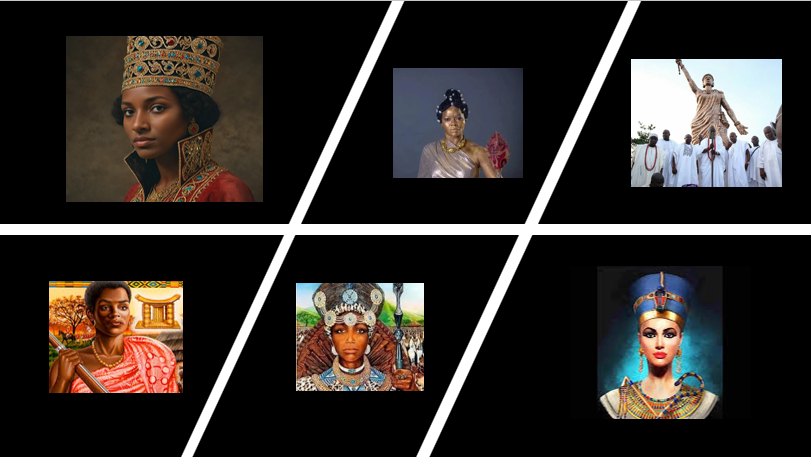
African history, the study notes, is rich with examples of women exercising authority:
- In Hausaland (northern Nigeria), women founded cities and led armies.
- Among the Asante in Ghana, Queen Mothers held parallel power with male rulers, overseeing their own courts and armies.
- Among the Igbo and Yoruba, a dual-sex system allowed men and women to govern their own spheres through separate but equal institutions.
Even more telling, in societies like the Mamprusi of Ghana and Togo, female chiefs—pwaanaba or “female kings”—wielded military and political powers. In others like the Pimbwe of Tanzania, women shared leadership at the highest level as queen mothers beside paramount chiefs.
How Colonialism Reversed the Gains
The study also documents how colonialism deliberately undermined female political structures:
- British and French colonial officers formalized male chieftaincy systems, often ignoring or abolishing existing female titles.
- Under indirect rule, only men were salaried and integrated into colonial administration.
- Christian missionaries and Islamic movements—though not always—also helped sideline women’s leadership roles, especially in areas forcibly Islamized like parts of the Hausa empire.
Even arbitrary borders drawn by colonial authorities disrupted entire ethnic societies, weakening female representation where groups were split across countries.
Institutions, Not Economics, Drive Representation
Contrary to earlier theories (e.g., Esther Boserup, Alesina et al.) that link women’s power to economic activities, the study finds no significant relationship between women’s economic roles and their political representation.
Instead:
- Political centralization—i.e., whether a society had organized states or paramount chiefs—is the strongest predictor of female representation.
- Matrilineal inheritance systems—where lineage passes through women—only increase political power in centralized states.
- Matrilocality—where husbands move into wives’ homes—matters more in smaller societies like petty chiefdoms, where women’s solidarity networks boost their political clout.
Methodological Rigor
The researchers used three statistical approaches to strengthen their findings:
- Ethnic pair comparison: Neighboring ethnic groups with similar geography but differing traditions of female leadership showed statistically significant differences in today’s female political representation.
- Regression discontinuity design (RDD): By comparing modern political outcomes in adjacent territories with different historical legacies, they minimized the influence of confounding variables.
- Robust OLS models with over 20 control variables, including religious mission exposure, crop suitability, ecological factors, and colonial administration type.
Policy Implications: Reclaiming African Feminist History
The implications are profound. As African countries strive to improve gender equity in governance, this study suggests:
Recognizing and revitalizing traditional female-led institutions may be just as impactful—if not more—than imposing Western-designed quotas.
Tailoring political reforms to local histories and indigenous structures can unlock long-standing legacies of women’s authority.
Empowering women in traditional governance systems—such as Queen Mothers in Ghana, female regents in Nigeria, and clan elders in Sudan—can bridge the gap between formal and informal power.
This is one of the most important studies to date linking Africa’s precolonial past to its democratic present. For more updates on cutting-edge policy, gender research, and governance trends, stay with Newspot Nigeria—your front-row seat to the continent’s unfolding story.