
By Newspot Nigeria Business Desk


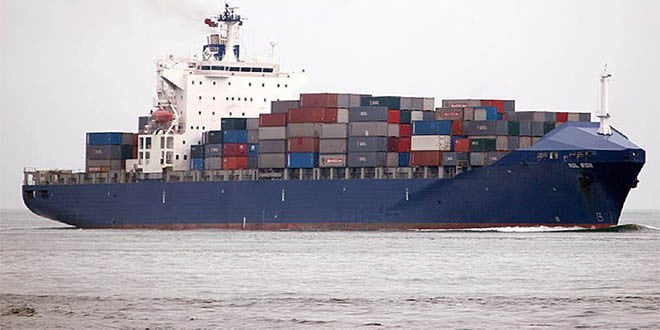
Nigeria’s maritime sector has once again come alive, as 20 ships anchored across Apapa, Tin Can Island, and Lekki Deep Seaport, discharging petroleum products, bulk sugar, frozen fish, fertiliser, and gas — a movement that economists say carries major implications for inflation, employment, and industrial growth.
💰 Fuel for Stability
The influx of petroleum and energy products is expected to stabilize fuel supply and dampen inflationary trends, especially in transportation and food logistics. With import volumes rising, Lagos ports are once again the nerve center of Nigeria’s price stability mechanism.
⚙️ Industry Reawakening
Industrial analysts see a 90% positive impact on local production as factories gain access to cheaper diesel, lubricants, and fertiliser. Bulk urea arrivals will benefit farmers heading into dry-season farming, while gas and oil cargoes provide the energy backbone for manufacturers struggling with erratic power.
💼 Jobs and Portside Revenue
Every vessel means money — and work. From clearing agents and dock workers to truck operators, the arrival of these ships translates to an estimated 70% boost in employment and port revenue. The NPA and terminal operators also stand to collect substantial fees, improving government revenue from maritime operations.





💱 Exchange Rate Woes
However, the development isn’t entirely rosy. The surge in imports exerts around 50% negative pressure on the naira, as importers demand more foreign exchange to settle payments. Economists caution that without matching export expansion, Nigeria risks deepening its trade deficit despite strong port activity.
🛣️ Infrastructure Strain and Modernization Push
With cargo volumes climbing, Lagos’s aging road networks face congestion. Yet, the Lekki Deep Seaport offers some relief and represents Nigeria’s step toward modern maritime logistics. Experts rate the infrastructure impact at 60% mixed, balancing opportunity with strain.


🌾 Fertiliser and Food Supply
Agriculture stands to gain roughly 70% positive influence, as bulk fertiliser imports will strengthen planting cycles and stabilize local food prices. Still, dependency on imports raises policy questions about Nigeria’s self-sufficiency agenda.
🧭 Summary Table: Estimated Economic Impact
| Sector | Positive Impact (%) | Negative Impact (%) | Overall Outlook |
|---|---|---|---|
| Inflation Control | 80 | 0 | ✅ Strongly Positive |
| Industrial Growth | 90 | 0 | ✅ Very Positive |
| Employment & Port Revenue | 70 | 0 | ✅ Positive |
| Exchange Rate Impact | 0 | 50 | ⚠️ Risk Area |
| Infrastructure Pressure | 60 | 0 | ⚖️ Balanced |
| Agriculture & Food Supply | 70 | 0 | ✅ Positive |
📈 Newspot Nigeria Commentary
The docking of 20 ships is not just a trade statistic. It’s a pulse check on Nigeria’s economic resilience. It underscores Lagos’s enduring status as West Africa’s commercial lifeline while exposing the country’s ongoing challenge: import dependency without export balance.
Economists argue that the long-term win will come only when Nigeria shifts from being an import destination to becoming an export powerhouse, using these same ports as launchpads for locally produced goods.
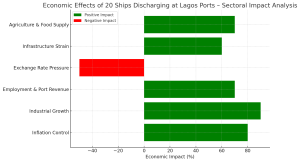
🖋️ Credit:Chart created by Newspot Nigeria Business Desk (2025), based on analytical estimates of short-term sectoral effects from Nigerian Ports Authority data.