
By Newspot Nigeria Editorial Desk


A Major Overhaul of Taxes, Social Programs, and Border Funding
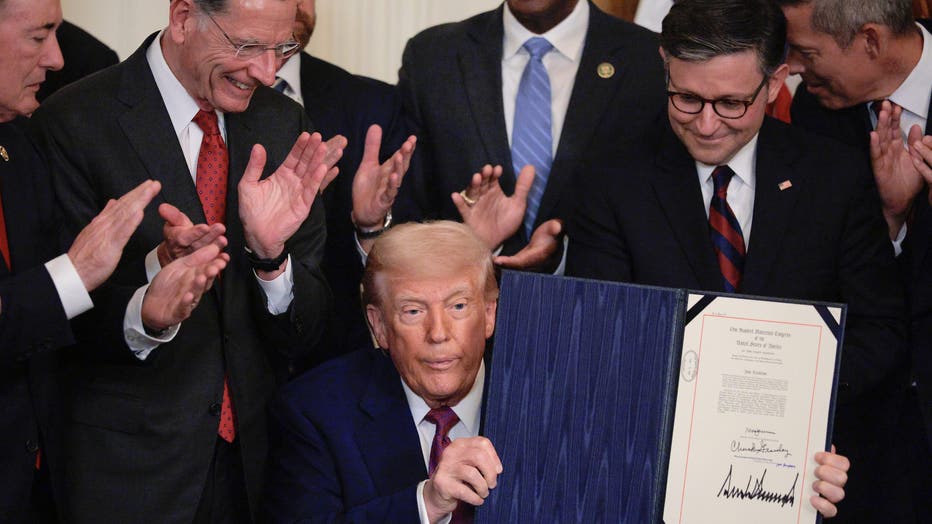
WASHINGTON — July 4, 2025 — In a striking Independence Day ceremony at the White House, President Donald J. Trump signed into law a sweeping package of tax cuts, spending shifts, and policy reforms known as the “Big, Beautiful Bill.” The law, which passed Congress after months of heated debate, marks a significant legislative victory for the president in his second term.
The signing took place on the South Lawn, surrounded by lawmakers, military families, and supporters, as Trump hailed the measure as
“a gift to American families and workers.”
How It Passed

Senate: Passed narrowly on July 1 in a 51–50 vote, with Vice President J.D. Vance breaking the tie.





House: Approved the final version 218–214 on July 3, with no Democratic support.
The bill was passed through budget reconciliation, allowing it to bypass the Senate’s 60-vote threshold.


📜 What’s in the New Law?
Tax Cuts & Deductions
Extends the 2017 tax cuts permanently.
Increases the Child Tax Credit to $2,200.
Expands the standard deduction, continuing a key part of Trump’s earlier tax policy.
Creates a new tax break on tips and overtime pay, allowing workers to deduct up to $25,000—phased out for high earners and set to expire in 2028.
State and Local Tax Deduction (SALT)
Raises the SALT deduction cap from $10,000 to $40,000 for five years, then returns it to $10,000.
This change was crucial to winning over House Republicans from high-tax states.
Medicaid Changes
Adds work requirements and frequent eligibility checks for adults aged 19 to 64.
According to the Congressional Budget Office, these changes could lead to 11.8 million people losing coverage over the next decade.
Phases in provider tax reductions used by states to fund Medicaid.
Includes a $50 billion fund to help rural hospitals affected by the cuts.
Food Assistance (SNAP)
Shifts some costs of food stamp programs to the states, depending on how accurately they distribute benefits.
Expands work requirements to include recipients up to age 64.
Alaska and Hawaii may receive waivers if they show they’re trying to comply.
🧱 Border and Immigration Spending
Provides over $46 billion for border wall construction and surveillance.
Allocates $45 billion for expanding detention capacity for undocumented immigrants.
Invests $30 billion in hiring and training for immigration enforcement.
Sets a $100 application fee for asylum seekers (down from the House’s original $1,000 proposal).
🌱 Cuts to Green Energy Programs
Ends tax credits for:
New and used electric vehicles
Home energy efficiency upgrades
EV chargers
Shuts down the Greenhouse Gas Reduction Fund, though existing contracts will be honored.
Debt Limit Raised
Increases the federal debt ceiling by $5 trillion, heading off a separate fiscal showdown.
Treasury Secretary Scott Bessent had warned that the U.S. could run out of borrowing room by August.
What It Means for Americans
Tax Relief: Most working Americans will see savings through permanent tax cuts and expanded deductions.
Healthcare Access: Millions could lose Medicaid coverage if states enforce the new rules strictly.
Higher Costs for States: States with less efficient benefit systems could pay more to fund food assistance.
Environmental Programs Rolled Back: Consumers may lose access to clean energy incentives.
Federal Debt Rising: The law is projected to add $3.4 trillion to the national deficit over 10 years.
Reactions
“This law delivers what I promised—relief for workers, not bureaucrats,”
— President Donald Trump
“It’s a dangerous shift of burden onto states and the poor, with giveaways to the wealthy,”
— Senator Bernie Sanders
“This bill restructures the safety net in ways we haven’t seen in a generation,”
— Kaia Hubbard, CBS News Politics Reporter
What’s Next?
Tax changes take effect in the 2025 tax year.
Medicaid and SNAP reforms begin rolling out in 2026.
Lawsuits are likely from civil rights and healthcare advocacy groups.
The law is expected to shape the 2026 midterm elections, with Republicans campaigning on tax relief and border security, and Democrats highlighting healthcare and welfare cuts.
⚠️ Final Word
The Big, Beautiful Bill is one of the most ambitious pieces of legislation in recent American history. It reflects Trump’s governing priorities: lower taxes, tighter immigration control, reduced social spending, and increased military and border investments. Whether it ultimately boosts the economy or deepens inequality will be debated for years to come—but its impact will be felt immediately.