

By Newspot Nigeria Editorial Board


Despite months of unrelenting missile and drone attacks by Russia, Ukrainian power workers in the southern city of Mykolaiv are racing against time—and terror—to restore energy supply before the winter freeze.
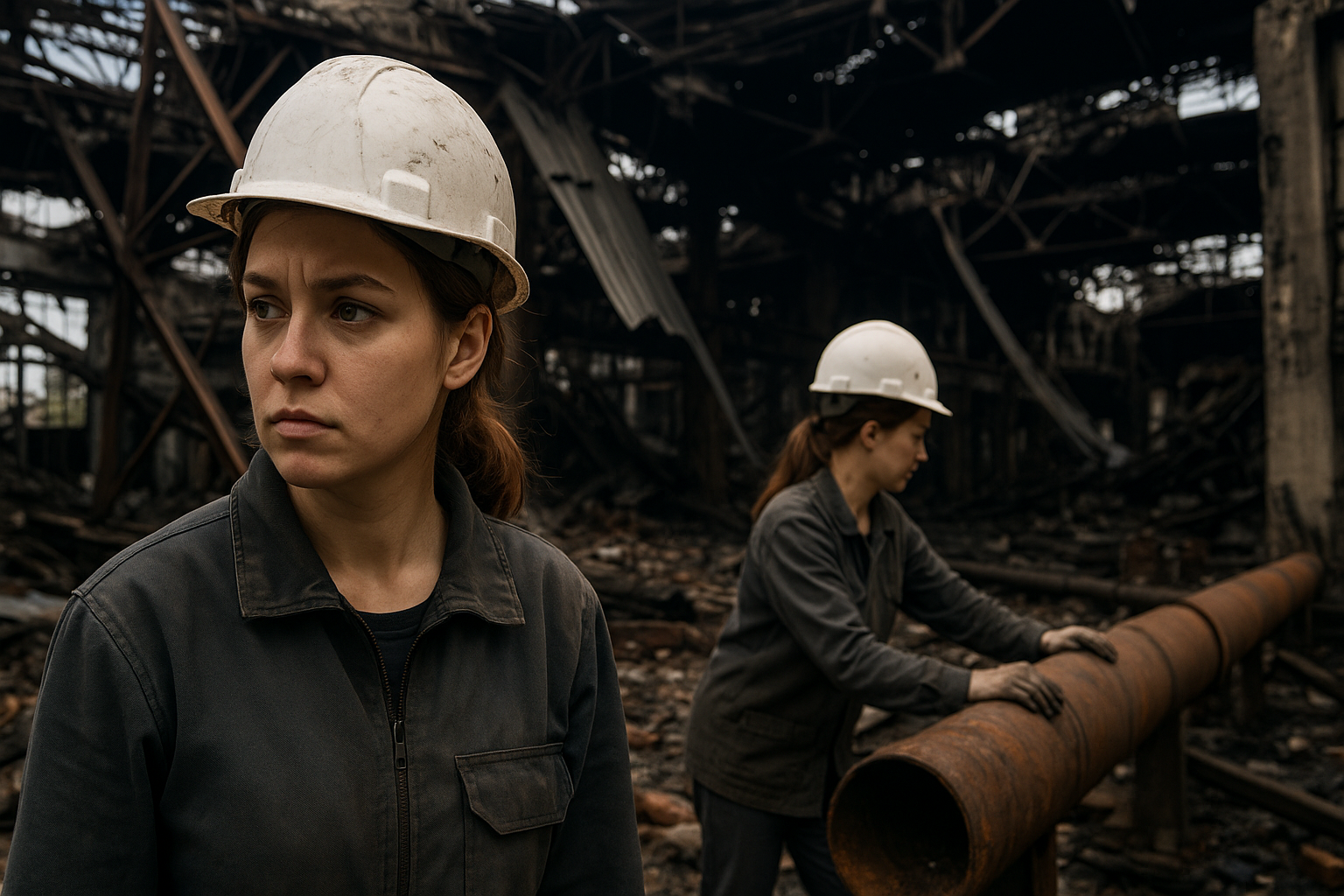
In a chilling reminder of the human cost of war, 27-year-old Valeria Khymnyets and her twin sister Alyona were eating lunch when a Russian Iskander missile slammed into the Mykolaiv Combined Heat and Power (CHP) plant. The blast shattered windows, ignited fires, and scattered shrapnel through their canteen. Just moments later, a second strike devastated the boiler room. The twins and a colleague barely escaped with their lives.
The plant has been targeted repeatedly—in October, January, February, and May—by both missiles and Iranian-made Shahed drones. Its infrastructure, once capable of heating 160,000 homes and supplying 26MW of power, now bears scars of war: twisted rebar, collapsed turbine rooms, and makeshift repairs where full replacements are unaffordable.

Thursday night saw a fresh wave of attacks on Ukraine’s energy infrastructure, breaking a ceasefire Russian President Vladimir Putin had reportedly agreed to in March during a call with U.S. President Donald Trump. Cities like Ternopil, Kharkiv, and Dnipro were hit again, with the Kharkiv mayor calling it the “most powerful attack” of the war so far. At least three people died and over 20 were wounded.






Dmytro Myroshnychenko, chairman of the Mykolaiv CHP, revealed that keeping the plant running has required extraordinary effort from his dwindling team. After the first strike in October, engineers rerouted pipelines from the damaged boilers to a 1930s-era backup unit. Workers now manually control surviving parts of the system, climbing ladders and braving shrapnel holes—because the digital controls are gone.
Even as Ukraine’s energy grid faces a severe gas shortage—with storage pipelines destroyed and $2.5 billion urgently needed to replenish reserves—employees continue their work with gallows humor and quiet heroism. Four new air raid shelters and three underground bunkers dot the plant, offering workers modest protection during strikes.


Winter looms large. Experts warn that without quick interventions—including small mobile boilers and coal deliveries—cities like Mykolaiv, Odesa, and Kryvyi Rih could face humanitarian disaster. If the blackouts are severe, waves of refugees could flee westward, while those who stay risk freezing to death.
Alyona, now reinsulating pipes in the battered plant, represents the spirit of many Ukrainians who refuse to be broken. Her sister Valeria no longer eats pizza at work—a dark joke among colleagues ever since the attack that interrupted their last meal.
Meanwhile, the looming fear of more air raids hovers over Mykolaiv’s workers, just as portraits of Lenin and remnants of Soviet-era machinery echo the plant’s long history of surviving war.
Newspot Nigeria continues to monitor global developments and their impact on energy, conflict, and resilience around the world.