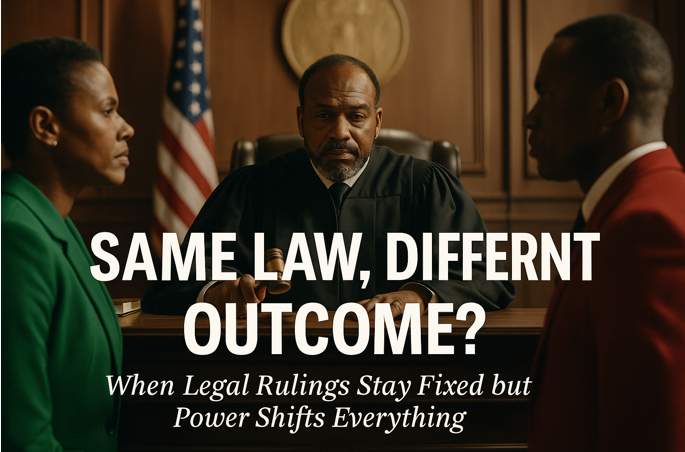

By the Legal Desk, Newspot Nigeria
June 14, 2025


A curious argument has surfaced in Osun State’s ongoing legal and political storm over the 2022 local government elections. It centers on the February 10, 2025 Court of Appeal ruling and the June 13 refusal to relist a similar case. APC leaders have argued that these events amount to a reinstatement of their sacked LG chairmen and a rejection of all court rulings against their 2022 victory.
But what if the parties had been reversed? Would the same legal outcome mean a different political reality? Let’s explore alternative scenarios involving the All Progressives Congress (APC), the People’s Democratic Party (PDP), and the Action People’s Party (APP) — and how law, power, and perception interact.
🔄 SCENARIO 1: APC in Power, PDP Loses the Appeal
In this scenario, PDP had challenged APC’s LG victories, and the Court of Appeal struck out PDP’s appeal on February 10 — just as it happened in real life. But here, APC is the ruling party in Osun State.

- Legal Outcome: The February 10 ruling remains procedural — the court struck out the PDP case on technical grounds, without affirming APC’s LG chairmen.
- Political Effect: APC, now holding the governorship, uses its executive power to reinstate its 2022 chairmen and control OSSIEC.
- Perception: Media narratives and party loyalists amplify the ruling as total vindication, even though no merits were discussed.
- Institutions: Without opposition resistance, civil servants and OSSIEC comply with APC’s reinstatement directives.
🧠 Outcome: Same legal facts, but full APC enforcement due to control of the state apparatus.





🔄 SCENARIO 2: PDP in Power, APP Filed the Case, APC Lost Appeal
In this closer-to-reality version, APP filed the lawsuit against APC’s LG victories and won at the Federal High Court. APC failed to appeal promptly. PDP won the governorship and now refuses to relist the APP case, citing delay and lack of diligence.
- Legal Outcome: The Federal High Court’s judgment against APC stands, having never been reversed.
- Political Effect: PDP cites the valid APP case to sweep out APC’s local government officials.
- APC’s Position: APC claims its officials were “reinstated” by the February 10 procedural ruling in the PDP case — but courts and the state government disagree.
- Enforcement: Without executive power, APC can only seek public sympathy, not implementation.
🧠 Outcome: PDP enforces court victories, while APC cries foul, despite lacking legal or enforcement leverage.


🔄 SCENARIO 3: APC Files to Relist — But Is Out of Power
Here, APC loses both the PDP and APP cases, files to relist the APP case, and is denied by the Court of Appeal (as actually happened on June 13).
- Legal Outcome: The refusal to relist is not a ruling on the merits, and doesn’t invalidate the APP’s earlier FHC judgment against APC.
- Political Effect: PDP — being in power — refuses to recognize APC’s claim of reinstatement.
- Judicial Clarity: Courts reiterate that the February 10 judgment was procedural, and the June 13 ruling confirms that the prior nullification of APC’s LG officials stands.
- Public Misunderstanding: APC loyalists call it a victory, but the judiciary insists otherwise.
🧠 Outcome: APC lacks the political power to enforce its interpretation, even if it still argues the law supports it.
🧾 Final Thought: Power Doesn’t Change the Law — But It Does Shape What Happens Next
In each of these scenarios, the law remains the same: a refusal to relist is not a reversal, and a procedural dismissal is not a substantive victory. But when APC is in power, it can enforce its version of events. When PDP holds the reins, it resists reinterpretation and upholds a different narrative.
This tension between law and power is precisely why Nigerians must pay attention not just to what courts rule, but to who gets to enforce the rulings.