

By Newspot Nigeria Editorial Desk

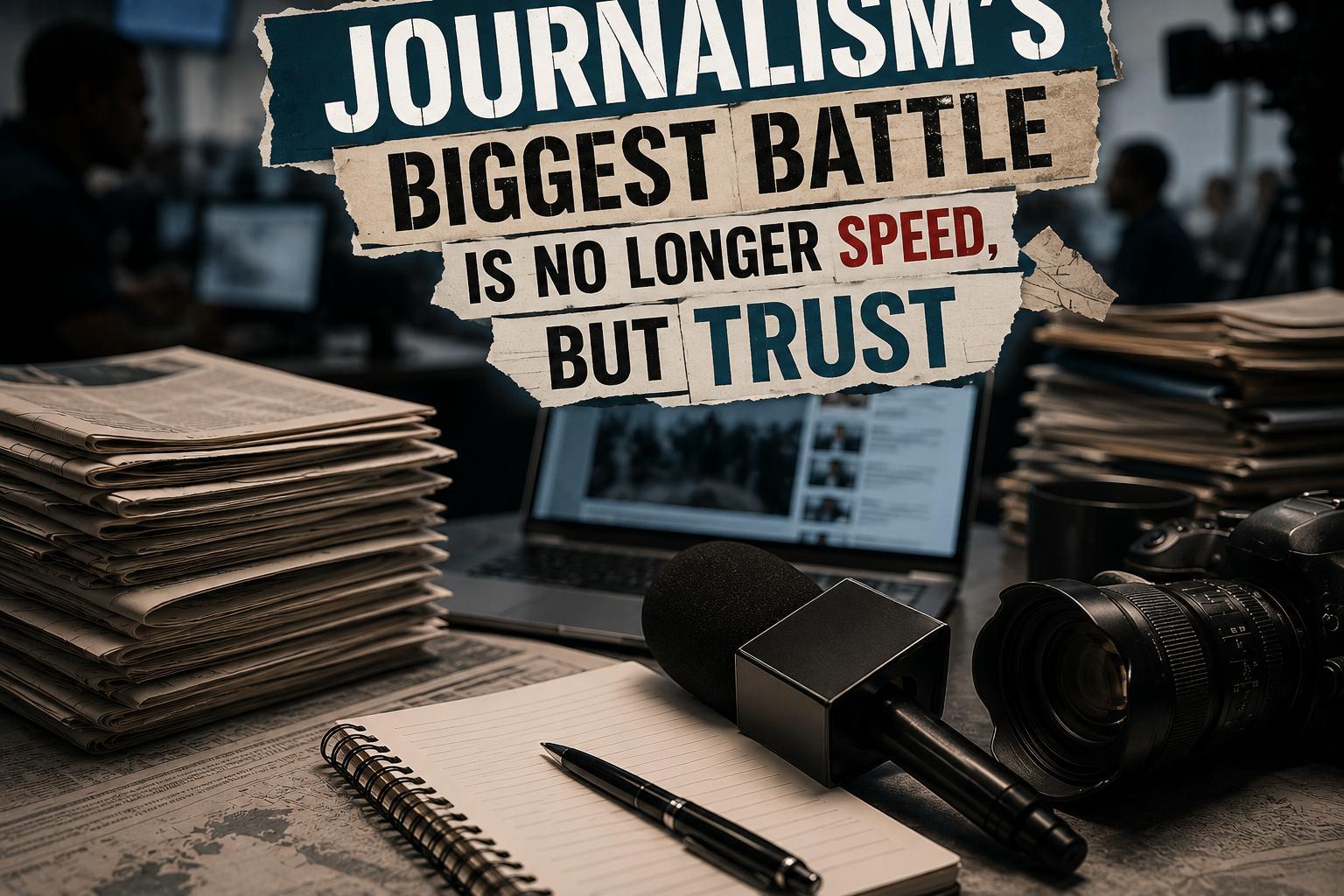
Journalism has spent many years chasing speed. Every newsroom wanted to be first. Every reporter wanted the breaking line. Every platform rewarded the quickest headline.
But the 2026 State of Journalism report by Muck Rack shows that the bigger struggle is now trust. Journalists are dealing with disinformation, weak funding, public distrust, safety fears and the growing use of artificial intelligence in newsrooms.
The report says disinformation and lack of funding are the top concerns for journalists, each at 32%. Concern about unchecked AI has also risen to 26%, up from 18% in 2025. That rise matters because AI is no longer outside the newsroom. It is already inside it.

According to the report, 82% of journalists now use AI tools. ChatGPT leads at 47%, while transcription tools remain widely used. Gemini and Claude are also gaining ground. This shows that journalists are not rejecting technology; they are trying to survive with it.





Still, technology cannot replace judgment. AI may help with speed, transcription, research support and editing, but it cannot take responsibility for fairness, accuracy or context. Those remain the duties of editors and reporters.
The report also shows the pressure inside the profession. 65% of journalists say their work feels meaningful, but 47% say it is exhausting and 38% describe it as precarious. That is the reality of many newsrooms today: the work still matters, but the people doing it are stretched.


Social media is also changing. Only 21% of journalists now say it is very important for producing their work, a clear drop from previous years. Yet 45% still say social media is very important for promoting their stories. In plain terms, journalists are trusting social media less as a source, but still need it to reach readers.
Safety is another warning sign. Nearly 1/3 of journalists say safety concerns have affected how they work. A larger number say harassment, personal safety and reputation concerns shape how they use social media professionally. This is not a small matter. When journalists are afraid, the public loses stories that should have been told.
The report’s findings on public relations are also useful. 86% of journalists say PR pitches inspire at least some stories, but 88% delete pitches that do not match their beat. Journalists want relevance, source access, original data and clear community value. They do not want long, promotional emails pretending to be news.
For Nigerian media, the lesson is direct. Speed may bring clicks, but trust keeps readers. A newsroom that publishes first but corrects later will slowly lose its audience. A newsroom that checks facts, understands its community and separates news from promotion will build something stronger.
The future of journalism will include AI, social media and new business models. But none of them will save journalism if the public no longer believes journalists. Trust is now the real currency of the profession.
That is the point Nigerian newsrooms must not miss. Journalism can use faster tools, but it must not lose its human responsibility. Accuracy, fairness, courage and relevance are still what make the work matter.
— Newspot Nigeria