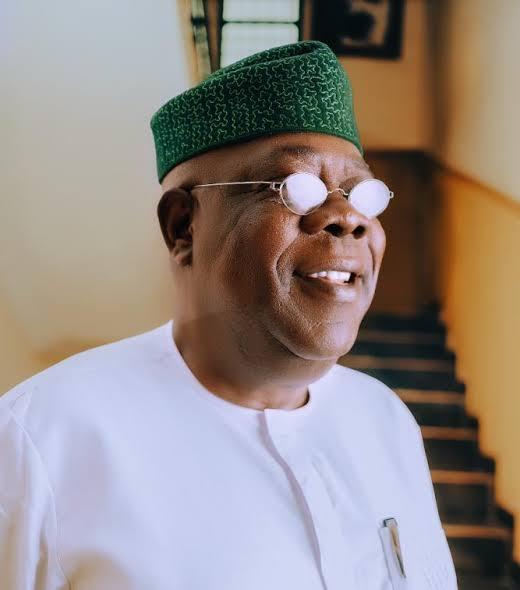
By Asiwaju Kunle Kalejaye, SAN
I am an Ijebu Christian, and I make that distinction deliberately because, in the communal life I knew growing up, Christianity and Islam were never treated as rival identities. In our daily relationships, they often flowed into one another as part of the same social fabric.
The much celebrated Ojude Oba festival has its roots in Eid al-Adha, the Islamic Feast of Sacrifice. But for us in Ijebuland, Ileya was everybody’s festival. Whether Christian, Muslim, or traditionalist, it belonged to the community.
Within my extended family in Ilese-Ijebu, our branch of the Lajoogan family was the only Christian branch. The other branches were Muslim. Yet this difference never created distance. It created rhythm, exchange, obligation, laughter, and shared memory.

On Ileya morning in Ilese-Ijebu, the Christian Boys’ Brigade would rise as early as 7 a.m., take their drums, and visit the homes of Muslim leaders and imams. They would beat their drums to Muslim songs and accompany them to the Eid praying ground.




Christian leaders, including priests in their cassocks, would also follow and stand respectfully by the side while Muslims offered their prayers. As a village lad, it was one of the festivals my friends and I looked forward to with excitement.
After the prayers, we boys would move from house to house, helping our Muslim cousins and relations skin their rams. For our efforts, we received what was called eeja, portions of meat given as gifts. If one was fast enough to visit about five families, the eeja collected could supply protein for a whole month.


After the eeja runs, we would return home with an exercise book to record those who brought fresh meat, cooked meat, fried meat, rice, or other gifts to our parents. That list would be kept until Odun Nla, the New Year celebration, when Christians would slaughter their own rams or chickens and return gifts to those who had remembered us during Ileya.
Life was interesting, uncomplicated, and joyful.
I have often told my children and grandchildren about the beauty of growing up in a multi-religious society where no faith was permitted to bully another. In those days, even the fearsome Egungun masquerade could not act above communal order. One Egungun who disturbed Muslims during their Ramadan prayers was banned from appearing in public for seven years.
This morning, my grandson called and asked questions that may require another lecture to answer properly. The boy is a mnemonist, a child with an exceptional ability to remember information, including things I said years ago when he was about six.
He wanted to know why, if there are good Christians and bad Christians, good Muslims and bad Muslims, good traditionalists and bad traditionalists, people in Nigeria who claim to be religious still do terrible things. Conscious that my eleven-year-old grandson was laying a mine for me, I changed my tone and asked gently, “My son, what do you suggest we do to end this phenomenon?”
He paused for a long time. I could almost hear the components of his brain clinking. Then, in a quiet voice, he said, “Grandpa, get your government to outlaw all religions so the bad ones will have nothing to latch on to do evil.”
So there it was, the solution from a child’s mind: outlaw all religions and bring an end to terrorism committed in the name of religion.
He asked whether I agreed with him. I told him no. I explained that being religious does not necessarily mean being godly.
He fired back, “Then scrap religion. God will not mind.”
I told him religion is not our problem. He asked, “Then what is the problem?”
I pretended to be tired and asked about his siblings. I was about to end the call when his small, musical voice came again: “Grandpa, how do you solve the problem, and how does the country rescue all the kids in captivity?”
I had no answer.
All I could tell him was that religion gave us peace when I was growing up. Now, I am no longer sure what we have done with it.
Asiwaju Kunle Kalejaye, SAN, is a Senior Advocate of Nigeria and public affairs commentator.
— Newspot Nigeria