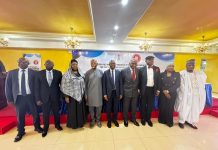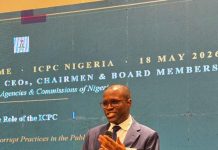


From Dispatch Room
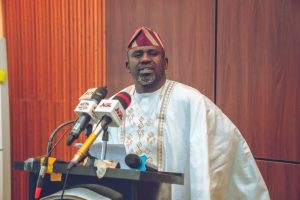
The Chairman of the Independent Corrupt Practices and Other Related Offences Commission (ICPC), Dr. Musa Adamu Aliyu, SAN, has called for stronger integrity systems and wider stakeholder collaboration in the fight against corruption, warning that anti-graft agencies alone cannot defeat systemic corruption in Nigeria.
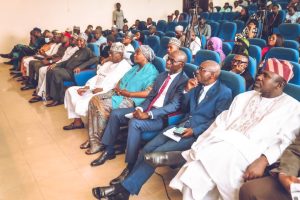
Dr. Aliyu made the remarks on Wednesday while delivering his opening address at the International Conference on Anti-Corruption, Transparency and Integrity in Governance organised by the Anti-Corruption Academy of Nigeria (ACAN), the training arm of the ICPC, in Keffi, Nasarawa State.
The conference was held under the theme: “Strengthening Integrity Systems for Sustainable Development and Public Trust in Nigeria.”

Represented by the Director of Special Services Department, Prince Hassan Mohammed, the ICPC Chairman described the conference as timely and strategic, stressing that Nigeria urgently requires stronger ethical standards and accountability systems across both public and private institutions.





According to him, weak integrity structures and ethical failures remain central to many of the country’s governance and development challenges.
“It is an acknowledged fact that lack of integrity and failure in ethical compliance is at the centre of most of the challenges our country is facing today,” he said.


Dr. Aliyu stated that the anti-corruption battle requires collective action involving public institutions, civil society organisations, the private sector, professional associations, faith-based organisations, the media, academia and ordinary citizens.
He explained that the objectives of the conference include promoting scholarly and policy discussions on anti-corruption strategies, encouraging the exchange of experiences and best practices, generating innovative and evidence-based solutions, strengthening stakeholder partnerships, and advancing practical governance reforms.
The ICPC Chairman added that these goals align with President Bola Ahmed Tinubu’s Renewed Hope Agenda.
He expressed optimism that sustained collaboration and institutional reforms would help deepen public trust, strengthen integrity systems and promote sustainable national development.
In his welcome address, the Provost of the Anti-Corruption Academy of Nigeria, Professor Sheriff Ghali Ibrahim, lamented the impact of corruption on Nigeria’s socio-economic development.
He said the conference was designed to mobilise intellectual engagement, policy recommendations and practical solutions aimed at confronting barriers to transparency and integrity.
Professor Ibrahim urged participants to develop clear and actionable recommendations capable of reducing corruption and promoting ethical governance in the country.
The Governor of Nasarawa State, Engr. Abdullahi Sule, represented by the Commissioner for Security and Home Affairs, CP Usman Baba (rtd.), officially declared the conference open and commended the ICPC for its efforts in combating corruption.
Former Chairman of the Economic and Financial Crimes Commission (EFCC), Abdulrasheed Bawa, also delivered a goodwill message at the conference.
Bawa stressed that the anti-corruption fight must move beyond rhetoric and be driven by discipline, institutional reforms and concrete action.
According to him, corruption can only be effectively addressed through collective commitment and the rejection of corrupt practices at all levels of society.
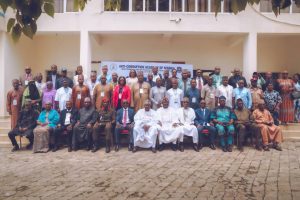
The conference attracted representatives from government institutions, academia, development partners, researchers, students, the private sector, media organisations and anti-corruption advocates.
Participants are expected to deliberate on practical approaches to strengthening transparency, accountability and integrity in governance across Nigeria.
— Newspot Nigeria