From Dispatch Room


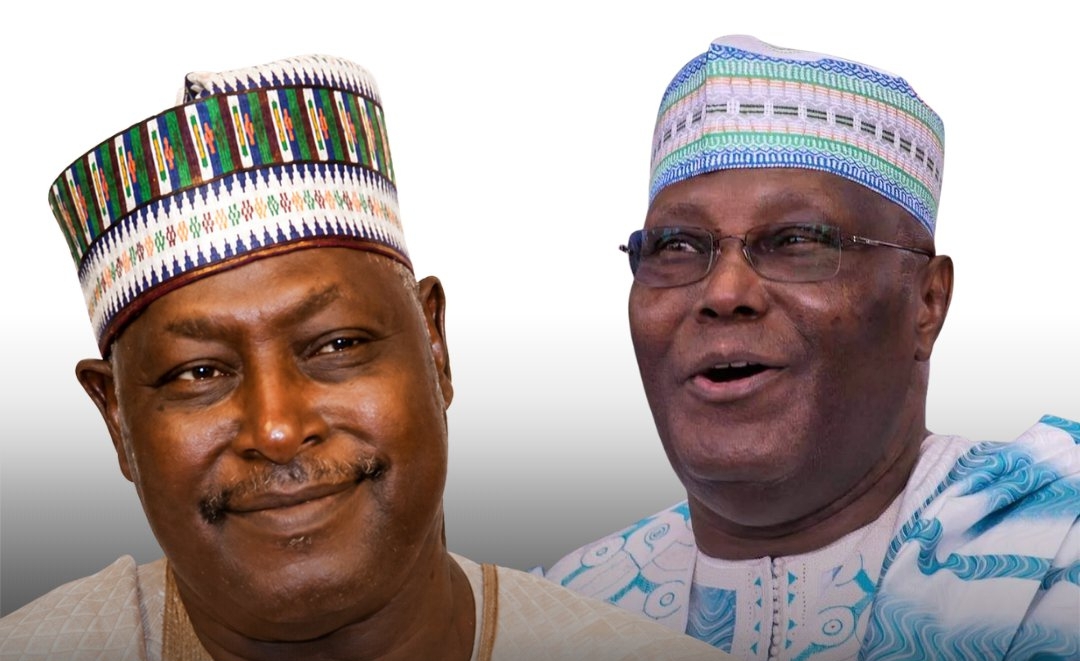
Former Secretary to the Government of the Federation (SGF), Babachir David Lawal, has launched a fresh criticism of former Vice President Atiku Abubakar, questioning his leadership credentials, political alliances, and role within opposition coalition politics ahead of the 2027 general elections.
Lawal made the remarks during an interview on *Frontline*, a current affairs programme on Eagle 102.5 FM, Ilese-Ijebu, Ogun State, where he discussed opposition realignments, internal party disputes, and the future of coalition politics in Nigeria.
The comments come a day after Lawal announced his resignation from the African Democratic Congress (ADC), citing what he described as irregularities in the party’s recent presidential primary election.

According to Lawal, his concerns about Atiku are based on what he considers observable patterns of leadership and public engagement rather than personal differences.





He argued that national leaders and presidential aspirants should demonstrate visible empathy and engagement with communities affected by insecurity, insurgency, and economic hardship.
Lawal alleged that Atiku has not sufficiently connected with communities impacted by violence and national crises, a claim he said raises broader questions about leadership and public trust.


Beyond Atiku, the former SGF criticised coalition politics in Nigeria, arguing that many alliances are driven more by personal ambition than ideological commitment or national interest.
According to him, coalition arrangements often become unstable when political actors begin competing for candidacies and leadership positions.
Lawal said he joined the ADC coalition because he believed it could provide an alternative platform capable of addressing Nigeria’s challenges, but claimed internal disagreements eventually weakened the arrangement.
He also criticised what he described as deficiencies in internal party democracy, arguing that transparent and credible electoral processes are essential for sustaining democratic institutions and public confidence.
Speaking on possible opposition alternatives, Lawal assessed several political figures, including Peter Obi, Rotimi Amaechi, and Mohammad Hayatu-Deen.
He described Hayatu-Deen as highly competent and well-rounded, particularly in economic and corporate management, while also discussing the complexities surrounding coalition negotiations involving other opposition figures.
Lawal further raised concerns about political entourages, inclusiveness, and representation within leadership structures, arguing that Nigerians should carefully examine not only campaign promises but also the networks and alliances surrounding candidates seeking public office.
The former SGF also revisited long-standing political tensions between former President Olusegun Obasanjo and Atiku Abubakar, suggesting that their disputes reflected deeper issues relating to power, trust, and governance within Nigeria’s political elite.
Responding to references to corruption allegations during his tenure as SGF, Lawal maintained that he was cleared after investigations by the Economic and Financial Crimes Commission (EFCC), insisting that the case against him lacked merit.
He concluded by arguing that Nigeria’s future depends on selecting leaders based on competence, empathy, inclusiveness, and their ability to address insecurity and economic challenges confronting the country.
Atiku Abubakar has not publicly responded to the latest remarks as of the time of filing this report.
— Newspot Nigeria