By Newspot Nigeria Politics Desk
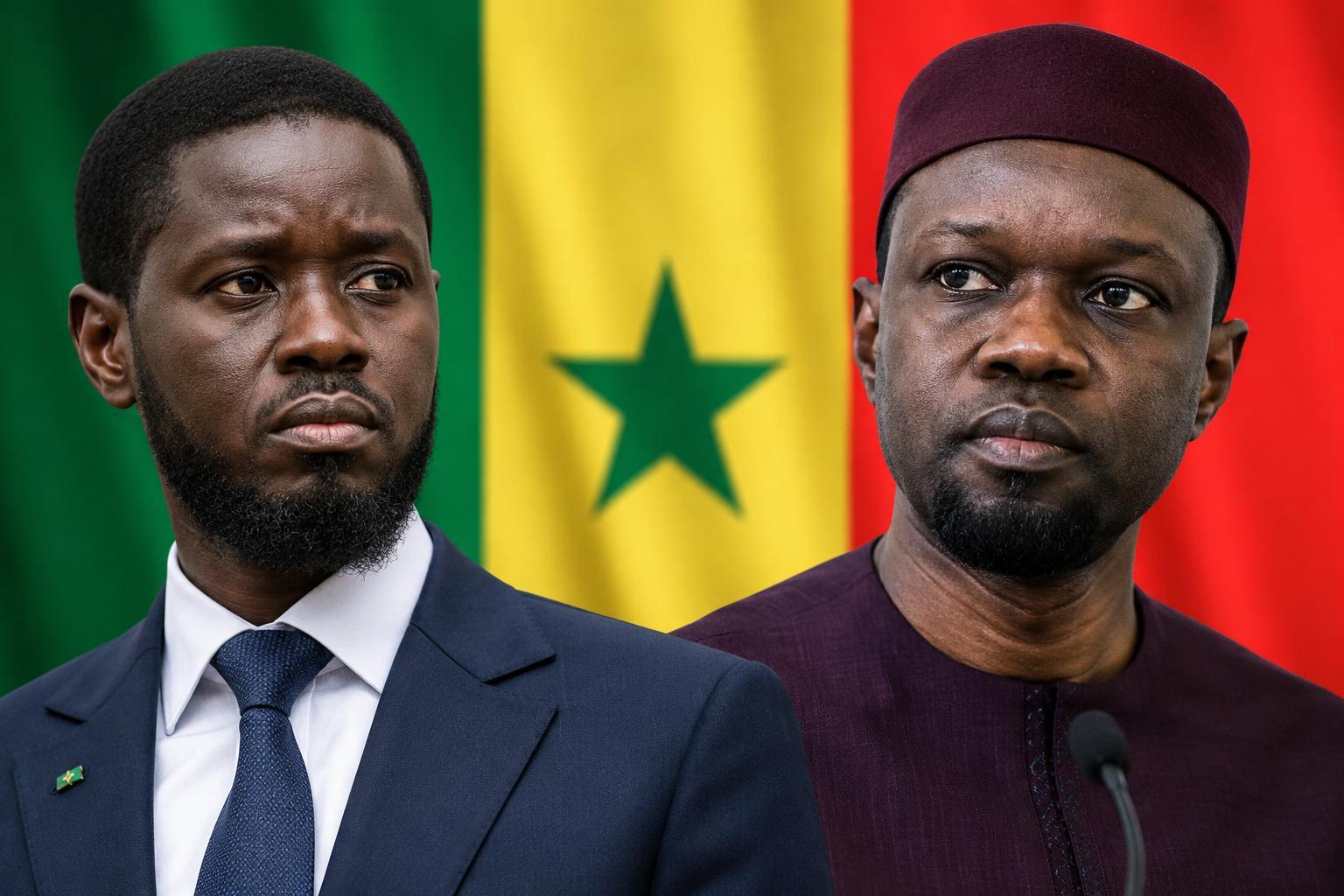
Senegalese President Bassirou Diomaye Faye has dismissed Prime Minister Ousmane Sonko and dissolved the country’s government, bringing a dramatic rupture to the political alliance that swept the PASTEF movement into power in 2024.
The decision was announced through a presidential decree read on state television by presidential secretary-general Oumar Samba Ba, with all ministers removed from office pending the formation of a new government. The outgoing administration is expected to temporarily oversee routine state affairs.
The fallout marks the most serious political crisis yet within Senegal’s ruling movement, which emerged from a wave of anti-establishment sentiment and youth-driven political mobilisation. Sonko, widely seen as the ideological force behind the movement, had backed Faye’s presidential bid after being barred from contesting the 2024 election himself before later becoming prime minister.

Although both men entered office presenting a united reform agenda, tensions reportedly intensified in recent months over economic policy, debt restructuring, negotiations with the International Monetary Fund, and the direction of the government itself. Senegal has faced mounting economic pressure after concerns surrounding previously undisclosed public debt complicated discussions with international lenders.





Before his dismissal, Sonko had publicly suggested that his political camp could reconsider its place within the administration if President Faye drifted away from the movement’s original political vision, fuelling speculation about an escalating struggle over authority inside the government.
Political analysts say the crisis reflects a broader pattern often seen in revolutionary political coalitions after they transition from opposition movements into governing institutions. Lamin Keita, a Democracy Postdoctoral Researcher at the University of Notre Dame’s Kellogg Institute for International Studies, said alliances built around charismatic leadership, protest movements, and anti-establishment politics frequently begin facing internal strain once the realities of state power introduce competition over appointments, policy direction, and institutional control.


According to Keita, Senegal’s institutions are unlikely to collapse because of Sonko’s removal, with President Faye remaining the constitutional head of state and the machinery of government expected to continue functioning. However, he warned that the deeper challenge may lie in whether the political hopes that energised many young Senegalese voters can survive another cycle of elite rivalry and fractured reform movements.
— Newspot Nigeria