
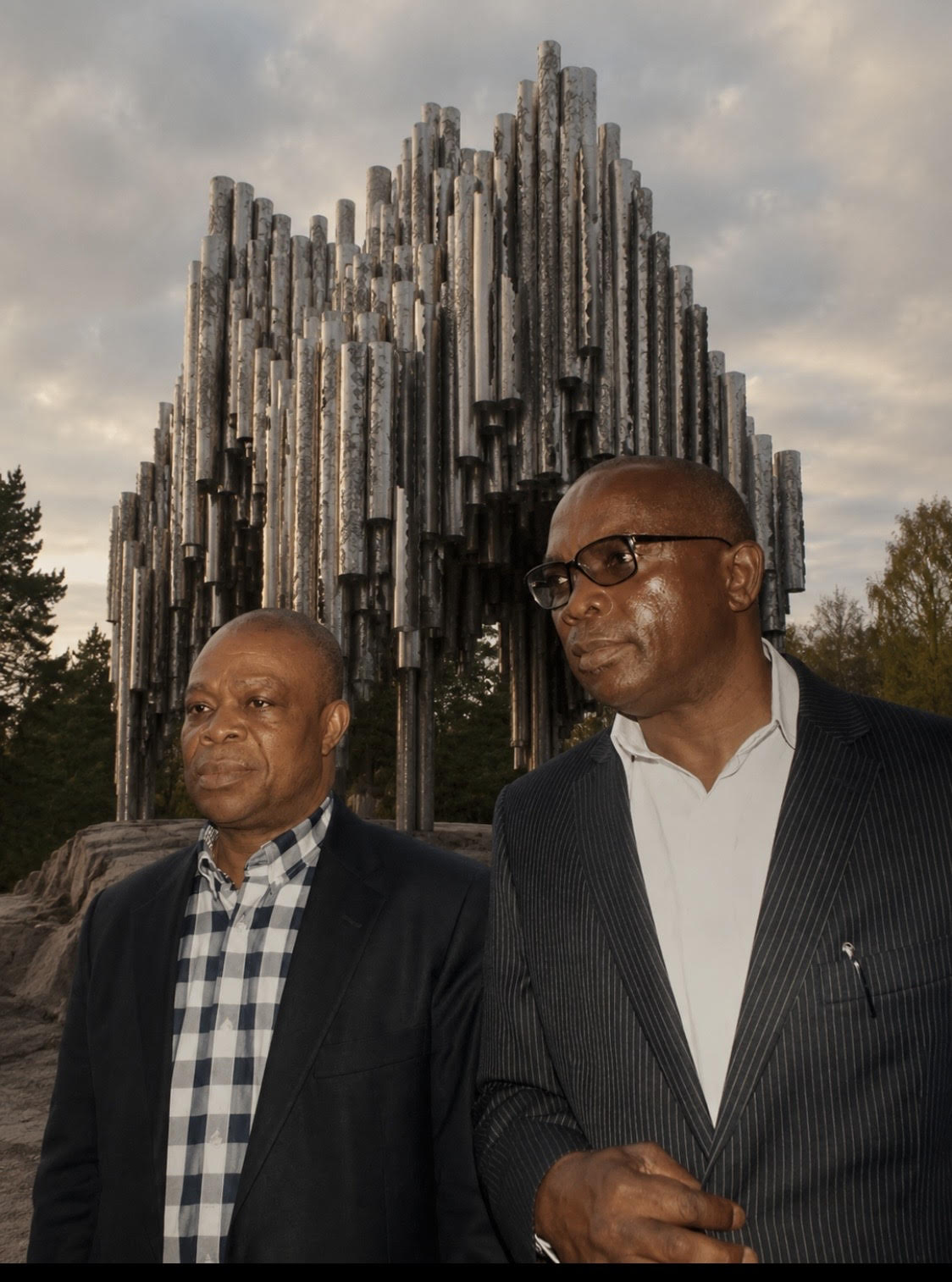

I did not set out to write about Jean Sibelius, the great Finnish classical composer, this morning. No grand plan. No literary ambition. Just a man on his morning walk, wearing his headphones from which he listens to Classic FM radio broadcasting classical music all the way from London. A poet minding his thoughts, waiting for his Muse. Then suddenly—like a whisper from another world—Sibelius’s Violin Concerto in D Minor found me.


I stopped. Not physically, but inwardly. Because when Sibelius comes, he does not knock. He enters—quietly, completely—and before you know it, you are no longer where you are. You are somewhere else… somewhere colder, deeper, more reflective.
And in that moment, I knew I had to write this column. I could not resist putting something down in my iPhone—this multipurpose modern machine. Jean Sibelius’s Violin Concerto in D minor is special because it combines icy Nordic beauty, deep loneliness, wild passion, and breathtaking virtuosity in a way few violin concertos ever have. Many musicians and listeners consider it one of the most emotionally haunting concertos ever written.
This ode, however, is not for Sibelius alone. It is also for my friend, my soul brother, my companion on that unforgettable journey—Dimgba Igwe—who would have turned 70 today. But he was killed in Okota, Lagos, by a hit-and-run driver while jogging on an early Saturday morning. I was on holidays with my family in Ipswich, England, when the terrible news hit us—after returning from my own jogging that very Saturday of 6 September 2014. A day of infamy—to quote Franklin D. Roosvelt’s description of the attack on Pearl Harbor.

Back to Sibelius, there are composers—and then there are companions of the soul. There are musicians—and then there are men whose music enters your bloodstream, sits quietly in your bones, and speaks when words fail. Jean Sibelius, you are not just a composer to me. You are a presence. A climate. A memory that refuses to fade. And somehow, Dimgba, you too have become part of that memory—woven into every note I now hear.





I did not find Sibelius in books. I did not stumble on him in some dusty archive of European greatness. I “met” him in Helsinki, that serene, almost mystical city of light and quiet dignity—the Land of the Midnight Sun. I was there with Dimgba, for the General Assembly of the International Press Institute. We came as journalists, seekers of truth—curious, observant, alive to the world. But we left with something neither of us had planned for. A transformation. An orchestra came—not to entertain, but to reveal. And when they began to play Sibelius, something shifted.
I remember glancing at Dimgba. There was that look—quiet, knowing, attentive. The look of a man who understood that something important was happening, even if it could not yet be explained. We did not speak. We did not need to. The music spoke for us. It was not noise. It was not mere sound. It was a calling. Since that day, I have never been the same. And now, years later, with Dimgba gone, that memory has deepened. What was once a shared experience has become a sacred one.


You are often called underrated, Sibelius. They will not always place your name beside Ludwig van Beethoven, nor rank you among the predictable pantheon of ten. But what do rankings know of memory? What do lists know of friendship? In my private universe—in the cathedral of my listening soul—you are Number One.
And Dimgba… you are part of that music now. What is this thing you do, Sibelius? This Nordic melancholy that wraps itself around the spirit like a slow, deliberate embrace? It is not sadness. It is something deeper. It is beautiful sorrow. It is dignified loneliness. It is the kind of emotion that reminds me of absence—the kind I feel now when I think of my bosom friend whom I was compelled to go view at the mortuary—led by his wife. Sad! So sad!
When I hear your Violin Concerto in D minor, I do not just listen—I remember. That violin… it does not perform; it confesses. It leans, hesitates, searches—like a voice trying to hold on to something slipping away. And I, walking alone now, feel that quiet ache. Not just for the music—but for the man who once listened with me.
When my wife saw me writing this column, she asked, half-curious, half-amused: “Who or what are you writing on?”
“Jean Sibelius,” I replied. Who doesn’t know me with Sibelius in our home?
She smiled and replied, “Only mad men like you will read it.”
I paused… then smiled. Because she meant it lightly—but I received it deeply. Yes, perhaps it takes a certain madness to love this kind of music. A quiet, reflective madness. The kind that remembers. The kind that refuses to forget. And in that moment, I remembered William Wordsworth—who described poetry as “emotion recollected in tranquility.”
That is what this is. Not just an ode. But memory—recollected, arranged, and offered in stillness. So if this is madness, then it is a madness I share—with Sibelius… and with Dimgba.
We visited the Sibelius Monument, where steel pipes rise like frozen music into the sky. I remember us walking through it—observing, reflecting, perhaps even joking in that quiet way journalists do. We did not know then that one day, I would stand alone in memory.
Your Finlandia—they say it is an adopted national anthem of Finland. And the late General Odumegwu Ojukwu also loved Sibelius, such that he made Finlandia the anthem of Biafra. To me, Finlandia is a hymn of endurance. A song of quiet strength. The kind of strength my friend carried. Back home, far from Finland, I tune in to Classic FM. And then, without warning—Sibelius returns. And with him… Dimgba.
BEETHOVEN, FELA SOWANDE
I love Ludwig van Beethoven too. I admire his fire. But Sibelius—you are different. You are snowfall. And now, that snowfall carries memory. And then there is Fela Sowande, our own father of classical music. Sometimes, when his African Suite plays, I smile. Because in that moment, Finland meets Nigeria. Sibelius meets Sowande. And memory meets identity.
My children ask: “Daddy, what do you enjoy in classical music?” And I reply in pidgin:
“When you grow, you too go know.”
Because some things cannot be taught. They must be felt. They must be lived. I sleep with this music. Classical music, I mean. I wake with it. But now, I also remember with it.
So today, I raise this ode—not just to a composer, but to a moment… a journey… a friendship.
Jean Sibelius—you gave me music.
Dimgba Igwe—you gave me the memory of discovering it.
And long after the music fades, and long after we are all gone—that memory will remain.
O Sibelius…
O Dimgba…
I found music in Helsinki.
But truly—
I found something far greater.
I found friendship beyond time.