

From Dispatch Room


A new phase in modern military aviation is emerging as General Atomics Aeronautical Systems, Inc. introduces its Gambit Series, a family of AI-enabled unmanned combat aircraft designed to operate alongside traditional fighter jets.
The concept reflects a broader shift in defense strategy. Rather than relying solely on a limited number of high-cost, crewed aircraft, militaries are increasingly exploring the use of autonomous systems that can be deployed at scale. Analysts say this approach could reshape how air operations are conducted, particularly as artificial intelligence becomes more deeply integrated into defense planning.
A Different Approach to Air Power

At its core, the Gambit concept emphasizes a balance between scale and capability. Instead of placing pilots and expensive aircraft directly in high-risk environments, unmanned systems can take on surveillance, combat support, and strike roles.





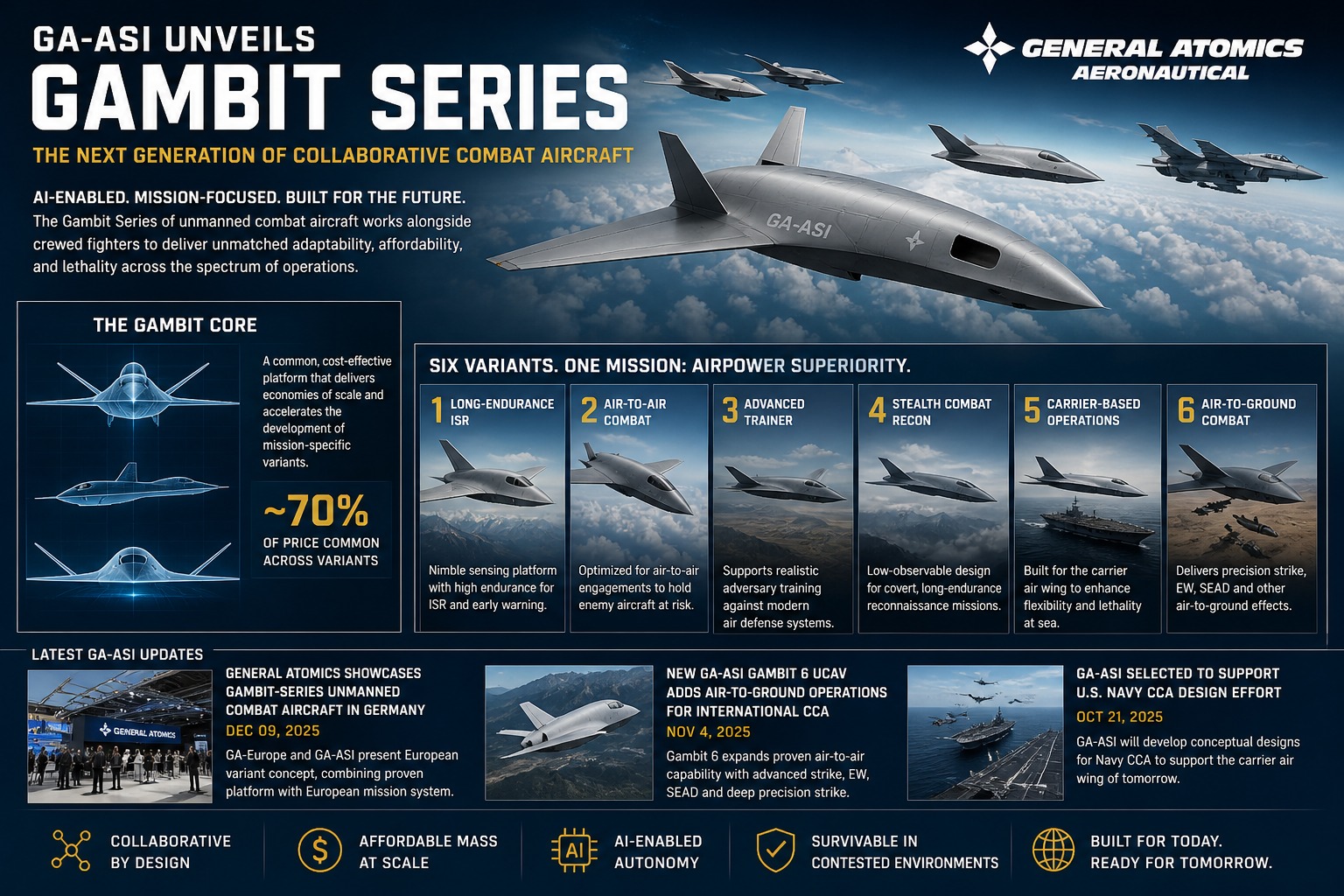
According to the manufacturer, the aircraft are designed to carry out intelligence, surveillance and reconnaissance missions, engage in both air-to-air and air-to-ground combat, support electronic warfare operations, assist naval aviation through carrier-based deployment, and provide realistic training support for pilots.
These systems can function independently or in coordination with crewed aircraft, serving as support assets that extend operational reach and situational awareness.


Modular Design and Cost Efficiency
A key feature of the platform is what the company describes as the “Gambit Core,” a standardized base that accounts for a significant portion of the aircraft’s structure and systems.
This modular design allows different variants to be developed more quickly and adapted for specific missions by modifying components such as engines, wings, and onboard systems. The approach is intended to reduce production timelines while lowering maintenance and operational costs over time.
A Range of Mission-Specific Variants
The Gambit Series includes six variants, each configured for distinct operational roles.
Gambit 1 focuses on long-endurance surveillance and early warning missions.
Gambit 2 is designed for air-to-air combat operations.
Gambit 3 serves as a training platform for simulating advanced adversary scenarios.
Gambit 4 emphasizes stealth and reconnaissance in contested environments.
Gambit 5 is tailored for carrier-based operations to support naval forces.
Gambit 6 is configured for air-to-ground strike missions, including electronic warfare and precision targeting.
Together, these variants form a system intended to operate as a coordinated network rather than as standalone aircraft.
Global Context and Implications
The development of systems like the Gambit Series highlights the growing role of artificial intelligence in military strategy. Countries investing in such technologies may improve operational flexibility and expand their capabilities without proportionally increasing costs.
For regions such as Africa, where defense modernization is evolving at a different pace, the emergence of autonomous systems could influence future procurement decisions, partnerships, and regional security dynamics.
At the same time, the rapid advancement of AI-enabled weapons systems continues to raise concerns among policymakers and researchers. Questions around regulation, accountability, and the ethical use of autonomous systems in combat remain largely unresolved.
Looking Ahead
While the Gambit Series is still part of a broader evolution in military technology, it reflects a clear direction in which airpower is heading. Increasingly, the focus is shifting toward integrated systems where human-operated and autonomous platforms work together.
As global defense strategies continue to adapt, unmanned aircraft are expected to play a more prominent role—not as replacements for traditional forces, but as part of a more complex and interconnected battlefield environment.
Newspot Nigeria