By Newspot UK Correspondent


President Bola Ahmed Tinubu is quietly weighing a far-reaching rethink of Nigeria’s governance structure, following high-level engagements in the United Kingdom that, according to sources, have sharpened his interest in elements of parliamentary democracy as a pathway to economic stability.
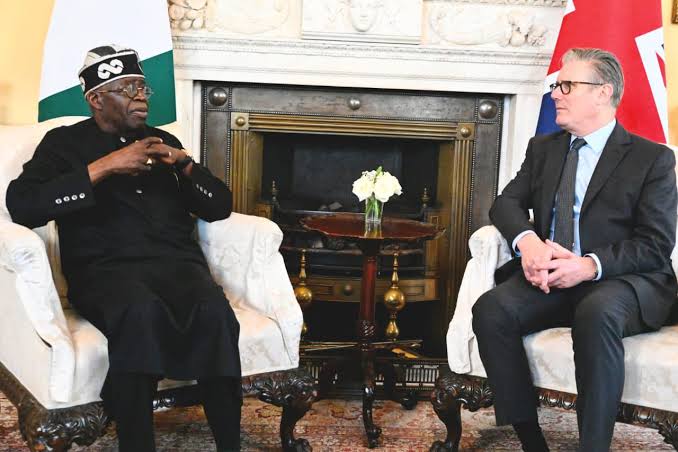
Officials familiar with the President’s recent visit to Britain say private conversations with Keir Starmer and senior parliamentarians left a distinct impression: that a leaner, more fiscally disciplined system of government could help rein in Nigeria’s spiralling cost of governance and restore investor confidence.






At the heart of the President’s reflection is a persistent structural concern – the expanding weight of Nigeria’s legislature. Critics have long argued that the National Assembly of Nigeria operates with limited fiscal restraint, commanding a disproportionate share of public resources in a country grappling with revenue constraints and widening social pressures.


One Abuja-based political analyst, speaking on condition of anonymity, described the imbalance in stark terms. “The President is aware of his official earnings,” he said, “yet a serving senator takes home multiples of that figure monthly. It raises fundamental questions about equity and sustainability in public service.”
Such disparities, analysts argue, have fuelled a perception of the legislature as a financial drain – a “conduit pipe” in the words of one policy commentator – at a time when Nigeria is seeking to stabilise its macroeconomic environment and address deep-rooted inefficiencies.
The comparison with the United States’ presidential model, which Nigeria adopted, has also come under renewed scrutiny. While the American system incorporates layers of institutional checks, critics say its Nigerian adaptation lacks equivalent safeguards, allowing fiscal excesses to persist with limited- oversight.
Sources indicate that Mr Tinubu is exploring whether aspects of the British parliamentary framework – where executive authority is fused with legislative accountability – could offer a more coherent structure for policy execution and cost control. Though no formal proposal has emerged, the conversations signal a willingness at the highest level to revisit long-settled constitutional assumptions.
Beyond institutional reform, the President’s concerns remain anchored in immediate economic realities. Nigeria continues to face acute challenges in the power sector, fiscal management, and public sector efficiency – pressures that have intensified calls for systemic change rather than incremental adjustments.
For now, any shift towards parliamentary elements would require extensive consultation, constitutional amendments, and political consensus – a complex undertaking in a diverse federation. Yet the signals from the Presidency suggest that the debate over Nigeria’s governance model, long confined to academic circles, may be edging closer to the centre of policy consideration.