

By Olugbenga Adebamiwa


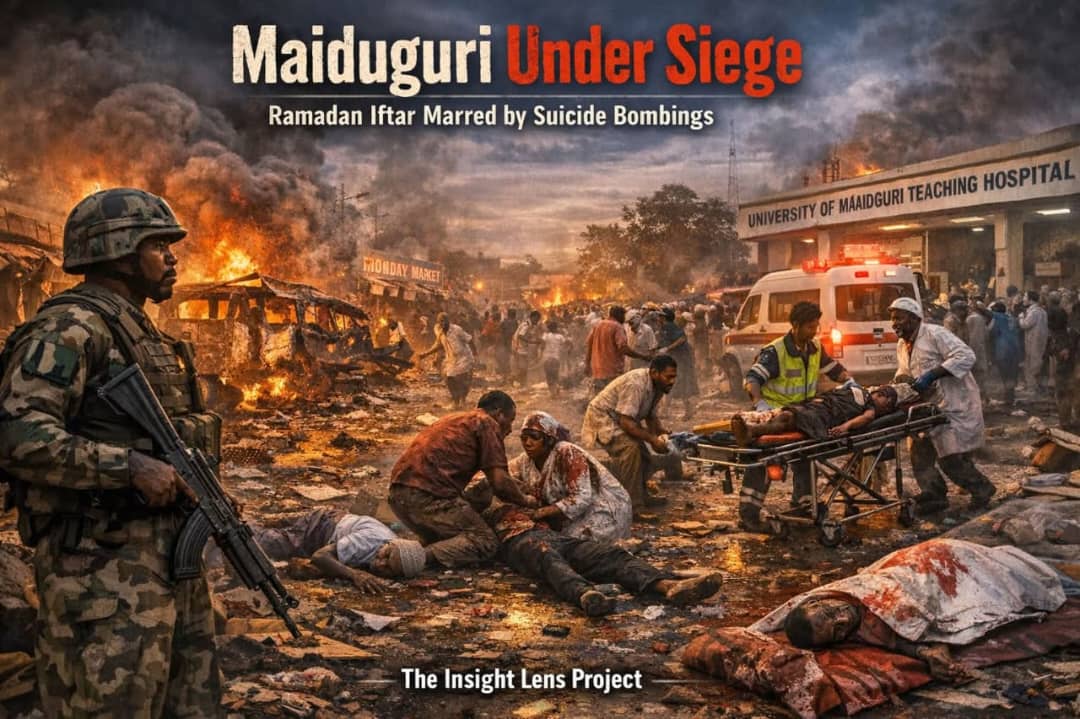
Maiduguri, the heart of Nigeria’s troubled northeast, was plunged into horror on Monday evening, March 16, 2026, when three coordinated suicide bombings tore through the city between 7:05 and 7:24 p.m., a time when families were breaking their fast for Ramadan. Crowded streets, bustling markets, and the gates of the University of Maiduguri Teaching Hospital became the epicenters of terror. By the night’s end, at least 23 lives had been lost and more than 100 people wounded, though eyewitnesses suggest the true toll could be far higher.
The attacks unfolded with a chilling precision. The first blast struck the Post Office area, followed almost immediately by a second at the adjacent Monday Market, and a third at the hospital entrance, where those already wounded were seeking help. It was a calculated assault on civilians, timed to inflict maximum pain at a moment meant for communal reflection and gratitude. Amid the chaos, screams filled the streets, and survivors spoke of a city gripped by fear and disbelief, its normal rhythms shattered in mere minutes.
Authorities have pointed to suspected suicide bombers using improvised explosives, with the Nigerian Army linking the carnage to Boko Haram operatives, and possibly their splinter faction, ISWAP. No group has officially claimed responsibility, yet the pattern is familiar to residents and analysts alike, Maiduguri has been the epicenter of a conflict that has lingered for nearly two decades, a city both resilient and haunted by the long shadow of insurgency.

In the immediate aftermath, emergency responders, hospitals, and humanitarian agencies scrambled to contain the devastation. The National Emergency Management Agency and Borno State’s emergency services coordinated evacuations while doctors and nurses worked tirelessly to tend to the injured, many of whom arrived in critical condition. Security forces quickly cordoned off the blast sites, but the city remains on edge, with patrols and counter-terror measures heightened across Maiduguri.





Governor Babagana Zulum condemned the attacks as “barbaric and inhumane,” linking them to ongoing military operations in the Sambisa Forest, an insurgent stronghold. His words echoed the grim reality that Maiduguri’s citizens often bear the brunt of a conflict fought in shadows, where victories in the field are measured against the cost of civilian suffering.
Maiduguri has endured the insurgency’s horrors for 17 years. Tens of thousands have died, millions have been displaced, and yet, the city continues to live, work, and hope amid persistent threats. This latest attack is a clear reminder that peace remains fragile, that violence can erupt without warning, and that even in moments of faith and family, terror seeks to intrude.


As the city tends to the wounded and counts its losses, a larger question lingers: how does a society rebuild normalcy in the face of repeated tragedy, and what lessons remain for those entrusted with protecting it? For the people of Maiduguri, the answer is not immediate, but the resilience that has carried them this far remains their quiet defiance against fear.
©️The Insight Lens Project.