By Newspot Nigeria News Desk
U.S. President Donald Trump has threatened that journalists who publish what he described as false information about the ongoing conflict with Iran could face treason charges. The warning came in a lengthy message posted Sunday on his social media platform, Truth Social. Trump accused several media organizations of spreading misinformation about the war.
In the 401-word post, the president alleged that Iran is deliberately manipulating global media narratives. According to him, Iranian actors have been circulating AI-generated videos and fabricated battlefield footage that some Western outlets later broadcast as real. Trump argued that these materials are designed to mislead the public about the course of the conflict.
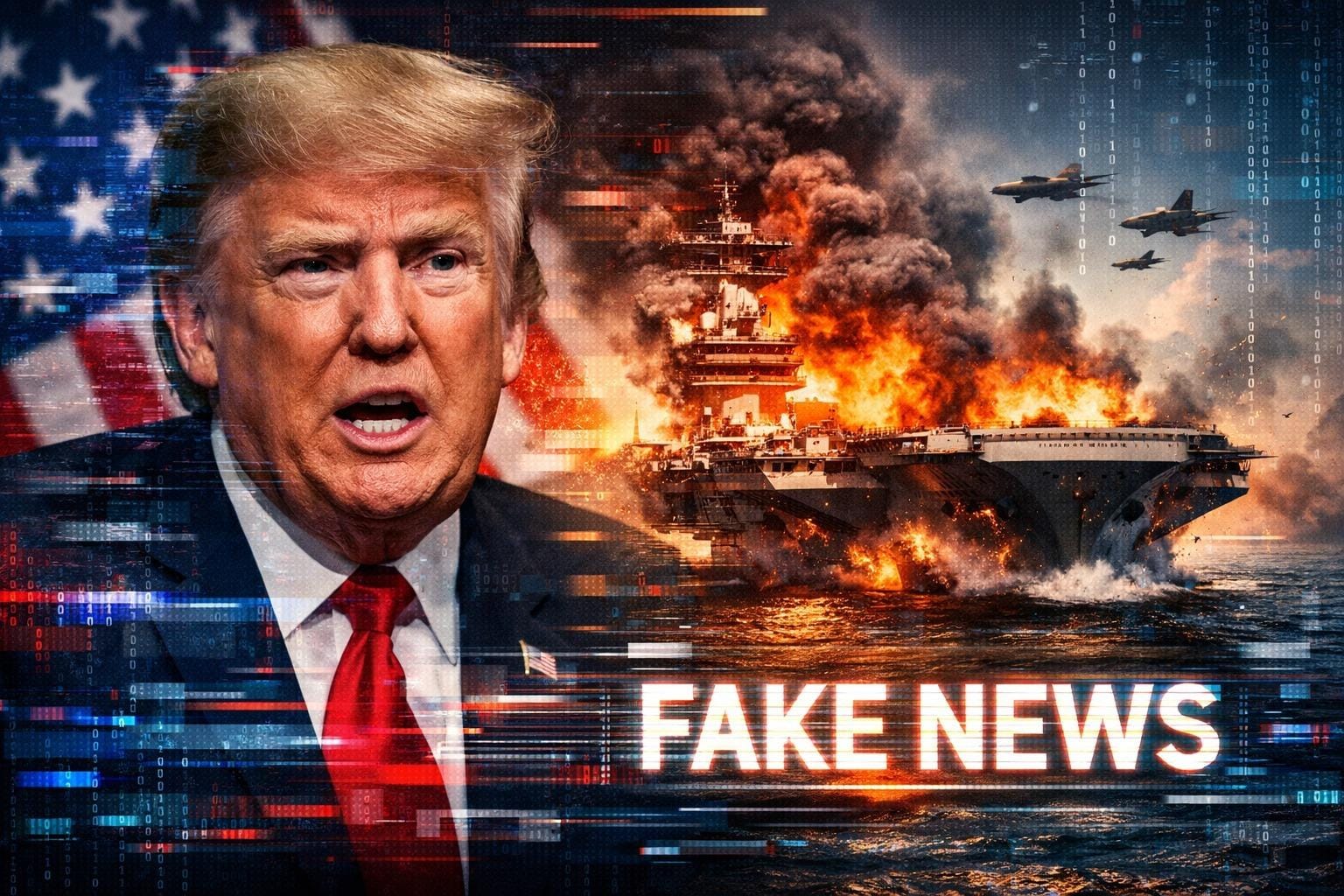
The president specifically mentioned a viral video that appeared to show the USS Abraham Lincoln aircraft carrier burning at sea. Trump insisted the footage was entirely fabricated. He said the carrier was neither attacked nor damaged and described the circulating video as an example of “deliberate disinformation.”

“Not only was it not burning, but it also was not even shot at—Iran knows better than to do that,” Trump wrote in the post. He argued that the footage had been intentionally distributed to create panic and damage American credibility during the conflict.





Trump also thanked Brendan Carr, the chairman of the Federal Communications Commission (FCC), for reportedly examining whether certain broadcasters could lose their licenses. The president described some news outlets as “corrupt and highly unpatriotic,” suggesting that regulators should consider sanctions against them.
The remarks quickly drew attention from media freedom advocates and constitutional scholars in the United States. Critics argue that charging journalists with treason for publishing disputed information would face enormous legal hurdles under the First Amendment, which protects press freedom.


The controversy highlights a broader concern emerging from the war: the growing role of artificial intelligence in information warfare. Analysts say AI-generated images and videos are increasingly being used to manipulate public perception during conflicts, making it more difficult for audiences to distinguish between authentic and fabricated battlefield reports.
As tensions between the United States and Iran continue, the dispute over media coverage underscores the expanding information battle accompanying modern warfare.